
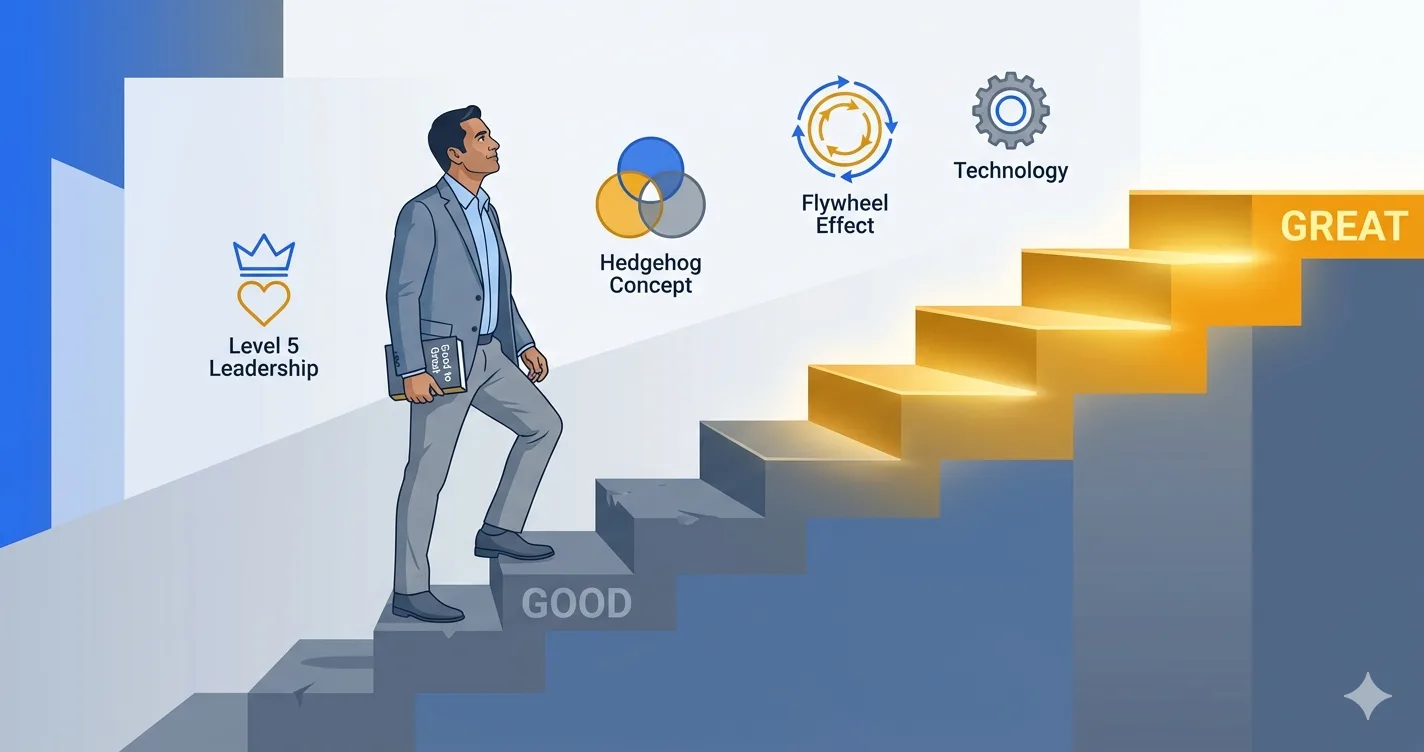
अगर आप एक Entrepreneur हैं, Corporate Professional हैं, या अपने Career को Next Level पर ले जाना चाहते हैं, तो आपने एक बात Notice की होगी: बहुत सारी Companies “theek-thaak” (Good) होती हैं, लेकिन बहुत कम Companies “Mahan” (Great) बन पाती हैं।
Jim Collins और उनकी Team ने दशकों का Data-Analyzed शोध किया और उन Factors का Pattern निकाला जो Sustainable Greatness बनाते हैं। अगर आप Founder, Manager, या Senior Leader हैं और चाहते हैं कि आपकी Company एक साधारण Commodity से निकलकर Category Leader बने — तो यह Guide आपका Roadmap है।
Section 1: Zero-Click Intro
Busy readers के लिए, यहाँ इस Book के 5 सबसे मुख्य takeaways हैं:
- Level 5 Leadership: विनम्रता (Humility) + कठोर दृढ़ता (Professional Will) = Sustainable Leadership.
- Good is the Enemy of Great: “ठीक-ठाक” वाला Mindset ही असल में Growth का सबसे बड़ा दुश्मन है।
- Hedgehog Concept: वह Sweet Spot जहाँ आपकी Passion, World-class Ability और Economic Engine (Profit) का Intersection होता है।
- Confront the Brutal Facts: Reality से भागो मत; Data-driven decisions लो और Stockdale Paradox को अपनाओ।
- Flywheel Effect: सफलता रातों-रात नहीं आती; छोटे, सही काम लगातार करने से Momentum बनता है।
Section 2: Jim Collins कौन हैं?
Jim Collins एक world-renowned Management Researcher और Bestselling Author हैं, जिनकी पहचान Evidence-based Business Strategy के लिए है। उन्होंने Stanford Graduate School of Business में पढ़ाया है और उनकी Research Teams ने हजारों Companies के Long-term Performance डेटा और Case Studies को Analyze किया है।
Good to Great (2001) कोई साधारण Motivational Book नहीं है, बल्कि एक Landmark Study है। Collins का Method Qualitative Interviews और Quantitative Financial Analysis को जोड़ता है—यानी यहाँ आपको सिर्फ Inspirational Stories नहीं, बल्कि Proof-based Insights मिलते हैं। जब आप Collins को पढ़ते हैं, तो आप Opinion नहीं, बल्कि Proven Patterns पढ़ते हैं।
Section 3: “Good is the Enemy of Great” — भारतीय Startups और Corporate Culture की सबसे बड़ी बाधा
Jim Collins की सबसे Powerful line है: “Good is the enemy of great.”
इसका मतलब सरल है: अक्सर Leaders और Teams “ठीक काम चल रहा है” वाली State में रुक जाते हैं। India में यह Mindset खासकर Prevalent है, जिसके कारण कई भारतीय Companies Incremental Improvement तो करती हैं, लेकिन Great नहीं बन पातीं। इसके मुख्य कारण हैं:
- Risk Aversion और Short-term Targets: Investors या Stakeholders जल्दी Results चाहते हैं, इसलिए Leaders Safe Choices prefer करते हैं।
- Scarcity Mindset: Limited resources वाले Small-town Startups Innovation के बजाय Immediate Cash Flow पर Focus करते हैं।
- Status-quo Comfort: अगर Company Market में स्थिर है, तो बड़े Structural Change के लिए Appetite कम रहता है—“अगर अभी Profit हो रहा है, तो बदलने की क्या ज़रूरत?”
- Cultural Respect for Seniority: नई Ideas को Challenge करना मुश्किल होता है; Dissent suppress हो जाता है और Real Problems छिप जाते हैं।
Great बनने के लिए Comfort-zone से निकलना पड़ेगा—Risk लेना, Candid Feedback स्वीकारना, और Long-term Value पर स्थिर रहना होगा। यह Shift सिर्फ Strategy का नहीं, बल्कि Culture का काम है।
Strategic Connection: Strategy Discussions में अक्सर “Think and Grow Rich” और “Zero to One” जैसी किताबों के विचार भी काम आते हैं—Clarity of Purpose और Monopoly-like thinking से Hedgehog Concept और Product Differentiation मज़बूत बनते हैं। आप leadership aur strategy ki aur kitaabein यहाँ explore कर सकते हैं।
Section 4: Level 5 Leadership — विस्तृत Deep-Dive
Jim Collins की सबसे Striking खोज यह थी कि Great Companies को lead करने वाले लोग “Charismatic Superstars” नहीं, बल्कि Level 5 Leaders होते हैं।
परिभाषा और Core Idea
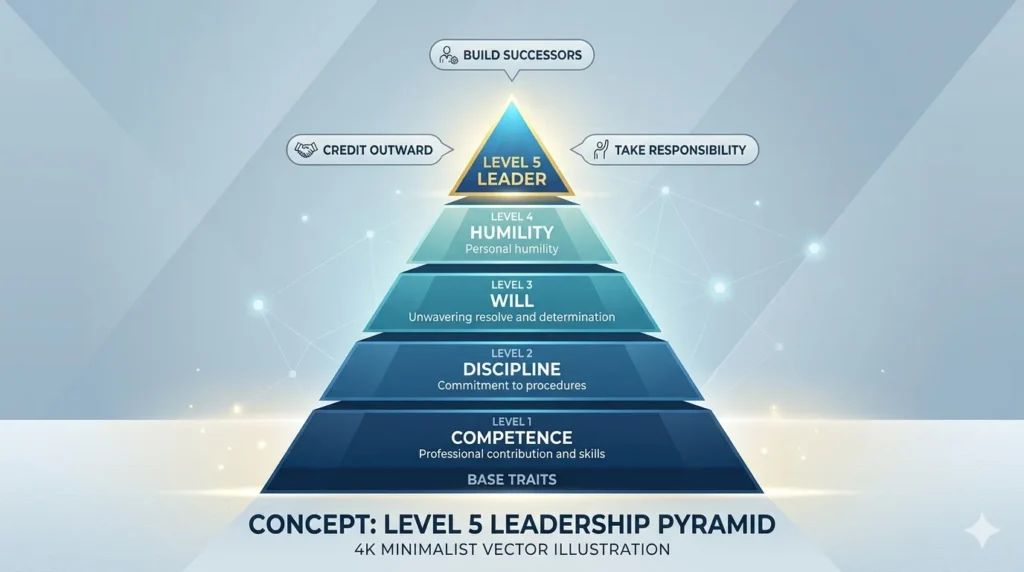
Level 5 Leadership वह उच्चतम स्तर है जहाँ Leader में दो Seemingly Opposite Traits एक साथ मौजूद होते हैं: Personal Humility (विनम्रता) और Intense Professional Will (कठोर दृढ़ इच्छा-शक्ति)।
ऐसे Leaders Spotlight खुद पर नहीं रखते; Success का Credit अपनी Team और Systems को देते हैं, लेकिन Failure की पूरी Responsibility खुद लेते हैं।
The “Mirror and the Window” Concept
Level 5 Leaders की पहचान उनके Credit लेने के तरीके से होती है:
- The Window (खिड़की): जब Success मिलती है, तो वे खिड़की के बाहर देखते हैं और Credit अपनी Team, Luck या External factors को देते हैं।
- The Mirror (आईना): जब Failure होता है, तो वे आईने में देखते हैं और पूरी Accountability अपने ऊपर लेते हैं।
Level 5 का Behavioural Profile
- Quiet Determination: Loud Charisma नहीं, बल्कि Goals पर Relentless Focus।
- Build Successors: वे खुद को irreplaceable नहीं बनाते, बल्कि अपने बाद आने वाले Leaders को तैयार करते हैं।
- Pragmatic Ego Control: Ego को Organization के हित से ऊपर नहीं आने देते।
Indian Context में Level 5 Leadership की ज़रूरत
- Family-run Firms: यहाँ अक्सर Succession Issues और Ego-driven Control की समस्या होती है। Level 5 Leaders संस्थागत Decision-making (Institutionalized decision-making) को बढ़ावा देते हैं।
- Startups: VC Pressure और Quick Exits के दौर में, Level 5 Leaders “Hacks” के बजाय Sustainable Moats बनाने पर focus करते हैं।
- Talent Retention: India में Talent Mobility बहुत High है; Humble और Mission-driven Leaders टॉप Performers को बेहतर तरीके से Retain कर पाते हैं।
How to Develop Level 5 Traits — Practical Steps
- Daily Humility Practices: Team के लिए Handwritten gratitude notes लिखें और Publicly दूसरों के Contribution को Recognize करें।
- Build a “Stop-Doing” List: उन Ego-driven projects को बंद करें जो सिर्फ दिखावे के लिए हैं।
- 360-Degree Feedback: Anonymous Upward Feedback सिस्टम बनाएँ ताकि आपके Blind Spots identify हो सकें।
- Hire for Humility: Interview में ऐसे Candidates चुनें जो “I” के बजाय “We” का इस्तेमाल करते हों।
Danger Signs: जब Leader Level 5 नहीं होता
- Charisma over Substance: Media-friendly Founders लेकिन internal systems कमज़ोर।
- Blame Culture: Failures को छुपाया जाता है और Finger-pointing होती है।
- Short-term Obsession: सिर्फ Quarterly bonuses या Headline-driven metrics पर Fixation।
🌐 Scaling Your Infrastructure for Greatness
जब आप Level 5 Leadership के साथ एक Great Company बनाने की राह पर होते हैं, तो आपको एक Scalable Foundation की ज़रूरत होती है। जिस तरह एक Leader अपनी Ego को side रखकर System build करता है, उसी तरह एक Entrepreneur को अपने Business के लिए एक Reliable Digital Infrastructure build करना चाहिए।
अगर आपकी Strategy Great है लेकिन आपकी Website slow है या crashes होती है, तो आप अपने Customers का Trust खो देंगे। एक Scalable Business के लिए Hostinger Business Hosting सबसे बेहतरीन विकल्प है, क्योंकि यह आपको वह Speed और Stability देता है जो एक “Great” Company के growth momentum को support कर सके।
जब हम Leadership और Long-term thinking की बात करते हैं, तो “The Psychology of Money” के financial discipline lessons बहुत उपयोगी होते हैं। इन सभी Master-summaries के लिए यहाँ जाएँ: leadership aur strategy ki aur kitaabein.
Section 5: First Who, Then What — सबसे पहले लोग, फिर दिशा
ज़्यादातर Managers पहले यह तय करते हैं कि उन्हें कहाँ जाना है (Strategy) और फिर उस काम के लिए लोगों को Hire करते हैं। लेकिन Jim Collins की Research ने एक Shocking Fact निकाला: Great Companies अपनी Strategy तय करने से पहले सही लोगों को Bus में लाती हैं।
क्यों “Who” पहले आता है, “What” नहीं?
अगर आप पहले Strategy (What) तय करते हैं और फिर People (Who) Hire करते हैं, तो आप एक बड़े Risk में होते हैं। इसके 3 मुख्य कारण हैं:
- Strategy Volatile होती है: Market बदलता है, Competition बढ़ता है और Customer Needs evolve होती हैं। अगर आपकी Strategy बदली, तो आपके Hire किए हुए लोग (जो सिर्फ उस specific strategy के लिए आए थे) Fit नहीं बैठेंगे।
- Self-motivated People Adapt करते हैं: जब आप Right People को Hire करते हैं, तो उन्हें Micromanage करने की ज़रूरत नहीं होती। वे खुद-ब-खुद सही Direction ढूँढ लेते हैं।
- Toxic Culture का बचाव: गलत व्यक्ति को Hire करके फिर Strategy बदलने से Employee Turnover बढ़ता है और Team का Morale गिरता है।
Collins का Golden Rule: “First Who, Then What” — पहले सही लोगों को चुनें, फिर उनके साथ मिलकर Direction तय करें।
Indian Context: Sir A.P.J. Abdul Kalam का Example
Kalam sir ने इस Principle को बखूबी Follow किया। चाहे वह Agni Missile Program हो या Pokhran-II, उन्होंने पहले देश के सबसे Talented Scientists और Engineers को Select किया (Who), और फिर उनके साथ मिलकर Mission की Direction सेट की (What)। India का Nuclear Program इसलिए सफल हुआ क्योंकि Team First-class थी।
Practical Hiring Framework for Indian Startups & SMEs
| Step | Action | Timeline |
| 1 | Define Core Values और Behaviors जो आपके Culture में Fit हों | 1 Week |
| 2 | Hire Slow, Fire Fast — Rigorous 3+ rounds of interviews | 2-4 Weeks |
| 3 | Try Period: 90-day Probation के साथ Clear KPIs | 90 Days |
| 4 | Regular “Culture Fit” Check-ins (Monthly 1-on-1) | Ongoing |
| 5 | Remove Toxic People immediately — No exceptions | As needed |
Right People की पहचान: Hiring Checklist
- Core Values Match: क्या इसमें Humility, Ownership और Accountability है?
- Intellectual Curiosity: क्या इसमें खुद से सीखने की Capacity है?
- Coachability: क्या यह Feedback को Positive तरीके से Handle कर सकता है?
- Proven Track Record: क्या Past Performance का Data उपलब्ध है?
- Team Player: क्या यह Credit देने और Blame accept करने को तैयार है?
Strategic Insight: अगर आप Hiring और Team Building पर और Deep Dive करना चाहते हैं, तो “The Psychology of Money” में Financial Discipline और Long-term Thinking के बारे में पढ़ें—यह Team Culture और Decision-making दोनों को Improve करता है। आप leadership aur strategy ki aur kitaabein यहाँ explore कर सकते हैं।
Section 6: Confronting the Brutal Facts — कड़वा सच सामने लाना
हर Successful Company को कभी न कभी Tough Facts face करने पड़ते हैं—जैसे Declining Sales, Customer Churn, या Cash Flow Crisis। ज़्यादातर Companies इन Facts को Ignore करती हैं, लेकिन Great Companies इन्हें Openly Confront करती हैं।
Reality से भागने की कीमत (The Cost of Denial)
भारतीय Startups में अक्सर “Optimism” के नाम पर Denial (अस्वीकार) का Culture होता है:
| Company Type | Common Denial (झूठा दिलासा) | Real Consequence (असली नतीजा) |
| E-commerce | “Market Expand होगा, हम Grow करेंगे” | Cash Burn Control नहीं हुआ →→ Bankruptcy |
| SaaS | “Product Perfect है, Sales Team Weak है” | Product-Market Fit नहीं मिला →→ High Churn |
| Manufacturing | “Competition कम है, हम Dominant रहेंगे” | New Tech से Disrupt हुए →→ Market Share गिरा |
The Stockdale Paradox: Faith + Reality
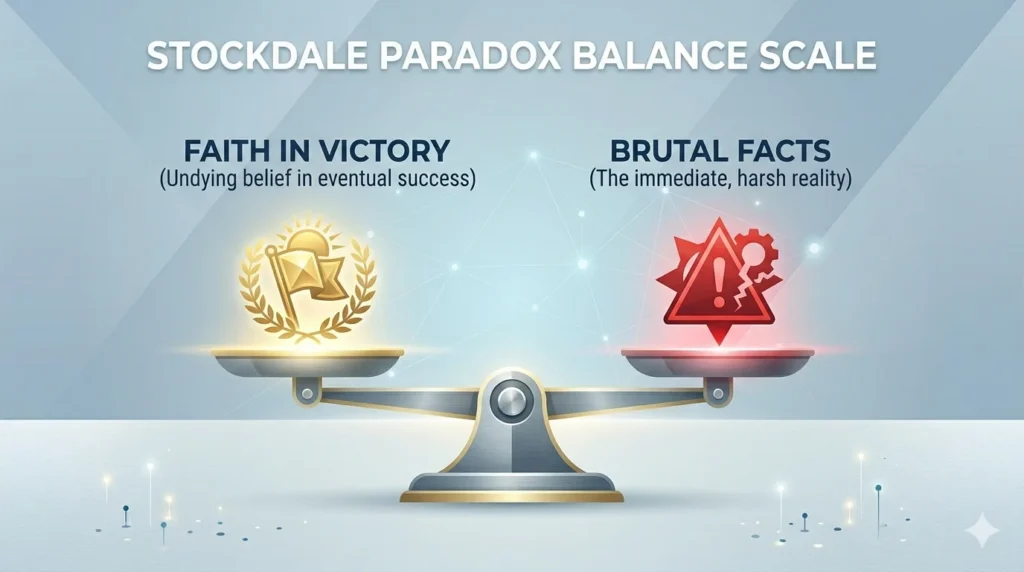
Collins ने Admiral James Stockdale का उदाहरण दिया, जो Vietnam War में 7 साल Prisoner रहे। उनका Principle था:
“आपको यह अटूट विश्वास (Faith) होना चाहिए कि आप अंत में जीतेंगे, लेकिन साथ ही आपको अपनी वर्तमान स्थिति के सबसे कड़वे सच (Brutal Facts) का सामना भी करना होगा।”
- Faith: यह विश्वास कि हम Overcome कर सकते हैं।
- Reality: वर्तमान Problems को Ignore नहीं करना, बल्कि उन्हें Acknowledge करना।
Culture of Truth कैसे बनाएँ? (Tactical Steps)
- Lead by Example: Founder खुद कड़वे सच admit करे—“हमारा Churn Rate 15% है, और यह Unacceptable है।”
- Anonymous Feedback: Slack Bot या Google Forms के ज़रिए Employees को Safe Space दें।
- Monthly “Brutal Facts” Meeting: Raw Data (Sales, NPS, Burn Rate) को पूरी Team के सामने रखें।
- Red Flag System: कोई भी Team Member बिना डर के “Red Flag” raise कर सके।
- Data over Opinions: “मुझे लगता है” के बजाय “Data कहता है” पर Decisions लें।
Tool: Brutal Facts Dashboard Template
MONTHLY BRUTAL FACTS DASHBOARD
────────────────────────────────
Revenue: ₹XX lakhs (YOY: -12%) ⚠️
Customer Churn: 18% (Target: <10%) 🔴
NPS Score: 22 (Industry Avg: 45) 🔴
Cash Runway: 4 months ⚠️
Action Items: 🔴=Immediate | ⚠️=Monitor | ✅=On track
Strategic Insight: Reality check के बारे में और गहराई से समझने के लिए, “Zero to One” में Peter Thiel का Monopoly-building framework पढ़ें—यह सिखाता है कि Competitive Reality को accept करके Unique Position कैसे बनाई जाए। leadership aur strategy ki aur kitaabein यहाँ देखें।
Section 7: Connecting “First Who” + “Brutal Facts”
ये दोनों Concepts अलग नहीं हैं, बल्कि एक-दूसरे के Complementary हैं।
- Right People = Honest Feedback: जब आप Humble और Accountable लोग Hire करते हैं, तो वे Facts को Hide नहीं करते।
- Bad Facts = Team Solves Together: जब Brutal Facts सामने आते हैं, तो Right Team Blame Game खेलने के बजाय Solution ढूँढती है।
- Culture of Trust: “First Who” से Trust आता है, और Trust से ही “Brutal Facts” discuss हो पाते हैं।
Real Indian Case Study: Bengaluru SaaS Startup
- Problem: Churn Rate 22% तक पहुँच गया, लेकिन CEO ने इसे Ignore किया क्योंकि Revenue बढ़ रहा था।
- Turnaround:
- CEO ने 3 Data-driven और Humble Leaders Hire किए (First Who)।
- इन New Hires ने Monthly Brutal Facts Meeting शुरू की।
- Data ने दिखाया कि Root Cause “Poor Onboarding Experience” था।
- Team ने 90 दिनों में Process Redesign किया।
- Result: Churn 22%
→→9% और NPS 22→→48।
🌐 Scaling Your Truth-Driven Business
जब आप Data-driven Decisions लेते हैं और Brutal Facts Dashboard का इस्तेमाल करते हैं, तो आपको एक ऐसे Digital Infrastructure की ज़रूरत होती है जो Real-time Analytics और Dashboards को Support कर सके।
अगर आपकी Hosting slow है या Uptime कम है, तो आपका Data-tracking system fail हो जाएगा, जो कि एक “Brutal Fact” बन सकता है। एक Scalable और High-performance Foundation के लिए Hostinger Business Hosting सबसे Reliable है, ताकि आप Technical Glitches के बजाय Strategy पर Focus कर सकें।
Section 8: Quick Action Checklist — Part 2 Takeaways
7-Day Action Plan
- Day 1: Team Audit करें: Toxic लोगों को Identify करें और Removal Plan बनाएँ।
- Day 2: अपने Culture के लिए 3-5 Core Values लिखें।
- Day 3: अपना “Brutal Facts Dashboard” तैयार करें।
- Day 4: अगली Monday के लिए पहली “Brutal Facts Meeting” Schedule करें।
- Day 5: Anonymous Feedback Channel (Google Form/Slack) implement करें।
- Day 6: 3 Potential Hires का Interview “Culture Fit” Questions के साथ लें।
- Day 7: Review करें: पिछले महीने आपने किस सच को Ignore किया? उसे आज Address करें।
⚠️ Red Flags: अगर यह हो रहा है, तो तुरंत Action लें!
- ❌ Team meetings में कोई भी Negative feedback नहीं देता।
- ❌ Founder/CEO को “Always Right” माना जाता है।
- ❌ Data को Hide या Manipulate किया जाता है।
- ❌ Turnover Rate Industry Average से 2x ज़्यादा है।
- ❌ Decisions “Gut Feeling” पर ज़्यादा और Data पर कम आधारित हैं।
Section 9: Hedgehog Concept — तीन Circles का Intersection
Jim Collins अपनी Research में एक दिलचस्प तुलना करते हैं: The Fox (लोमड़ी) vs. The Hedgehog (साही)।
- The Fox: लोमड़ी बहुत चालाक होती है और हज़ारों चीज़ें जानती है। वह अलग-अलग Strategies आज़माती है, लेकिन उसका Focus Scattered होता है।
- The Hedgehog: साही सरल होता है। उसे हज़ारों चीज़ें नहीं पता, लेकिन वह एक ऐसी बड़ी बात जानता है जो सबसे Important है। जब खतरा आता है, तो वह बस एक काम करता है—खुद को एक Ball की तरह रोल कर लेता है। उसकी यह एक Simple Strategy हमेशा काम करती है।
Business Lesson: Great Companies “Fox” नहीं, बल्कि “Hedgehog” बनती हैं। वे अपनी एक Core Strength ढूँढती हैं और उसमें World-best बन जाती हैं।
The Three Circles: आपका “Sweet Spot” कहाँ है?
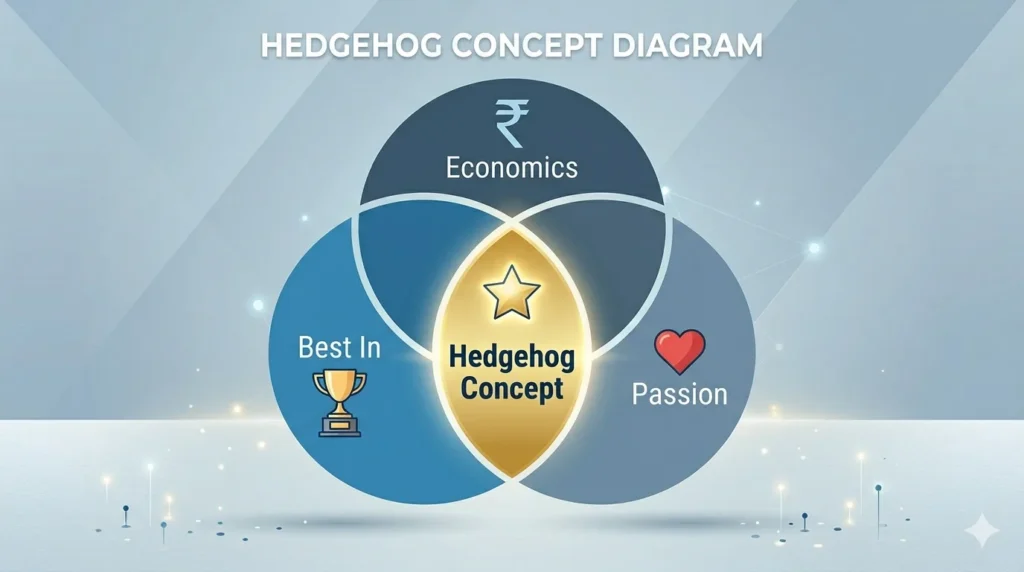
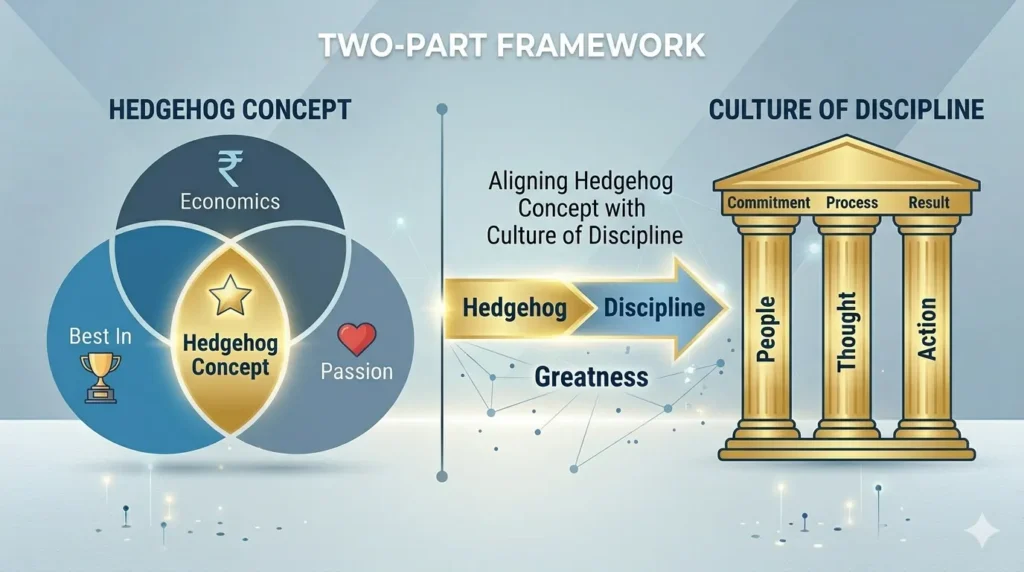
Hedgehog Concept तीन Circles का Intersection है। जहाँ ये तीनों मिलते हैं, वही आपकी Company का Sweet Spot है।
Circle 1: What You Can Be the Best In (आप किस चीज़ में दुनिया में सबसे बेहतर बन सकते हैं?)
यह वह क्षेत्र है जहाँ आपके पास Unique Capability है। ध्यान रहे, यह वह नहीं है जिसमें आप आज बेस्ट हैं, बल्कि जिसमें आप World-class बनने का Potential रखते हैं।
| Company | “Best In” Capability | Advantage |
| Zomato | Food Delivery UX + Network | Premium Positioning & Scale |
| Infosys | IT Services at Scale | Global Delivery Model |
| Amul | Dairy Supply Chain | Farmer-owned Model & Trust |
Self-Assessment: क्या आपकी Core Competency ऐसी है जिसे Competitors आसानी से Copy नहीं कर सकते? अगर जवाब “नहीं” है, तो आप अभी अपने Hedgehog Concept तक नहीं पहुँचे हैं।
Circle 2: What Drives Your Economic Engine (आपका Economic Engine क्या है?)
Great Companies सिर्फ “Revenue” नहीं देखतीं, वे Profit per X को Define करती हैं।
| Business Type | Profit per X Metric | Example |
| E-commerce | Profit per Customer | Amazon: Profit per Prime Member |
| SaaS | Profit per Subscription | Zoho: Profit per Monthly User |
| Manufacturing | Profit per Unit Sold | Tata Motors: Profit per Car |
Calculated Logic: यदि आपका
CAC (Customer Acquisition Cost)>LTV (Lifetime Value)CAC (Customer Acquisition Cost)>LTV (Lifetime Value), तो आपका Economic Engine खराब है और आपका Business Sustainable नहीं है।
Circle 3: What You Are Deeply Passionate About (आप किस काम के लिए जुनूनी हैं?)
Passion का मतलब Temporary Excitement नहीं, बल्कि वह काम है जिसे आप बिना पैसों के भी करना चाहेंगे और 10 साल बाद भी उसी में Invest करना चाहेंगे।
Section 10: Culture of Discipline — अनुशासन से ही Freedom मिलती है
जब आप अपना Hedgehog Concept ढूँढ लेते हैं, तो सबसे बड़ी चुनौती होती है Execution। यहाँ Collins एक Paradox पेश करते हैं: Discipline से ही True Freedom मिलती है।
The Three Pillars of Discipline
- Disciplined People: जब आपने “First Who” Principle से सही लोगों को Hire किया है, तो आपको उन्हें Micromanage नहीं करना पड़ता। वे Self-motivated होते हैं।
- Disciplined Thought: इसका मतलब है Brutal Facts को स्वीकार करना और केवल उन्हीं Opportunities को चुनना जो आपके Hedgehog Concept के अंदर आती हैं।
- Disciplined Action: अपनी Strategy पर बिना विचलित हुए Consistent Execution करना।
The “Stop-Doing” List: Disciplined Companies सिर्फ यह नहीं तय करतीं कि क्या करना है, बल्कि वे एक “Stop-Doing” List बनाती हैं ताकि वे Distractions से बच सकें।
Indian Case Study: Infosys का Discipline
Infosys ने 80s और 90s में इन Principles को Follow किया:
- Disciplined People: Rigorous Hiring और 6-month Training Program।
- Disciplined Thought: Global Delivery Model पर गहराई से Research।
- Disciplined Action: CMM Level 5 जैसे Quality Standards से कभी समझौता नहीं किया।
Result: India को एक Global IT Hub बनाना और $100B+ Market Cap हासिल करना।
Section 11: Connecting Hedgehog + Culture of Discipline
जब Focus (Hedgehog) और Execution (Discipline) मिलते हैं, तब Sustainable Greatness पैदा होती है।
| Hedgehog Concept (Focus) | Culture of Discipline (Execution) | Combined Effect |
| Clear Focus | Consistent Execution | Sustainable Growth |
| Knowing what NOT to do | Saying NO to Distractions | Resource Efficiency |
| Passion-driven | Self-motivated Team | Employee Retention |
Example: Amazon का Approach
- Hedgehog: Customer Obsession + Scale
→→Profit per Prime Member. - Discipline: Data-driven Decisions (Metrics-based) और Consistent Delivery.
🌐 Scaling Your Hedgehog Concept with the Right Tech
जब आपका Hedgehog Concept Clear हो जाता है और आप Scale करना शुरू करते हैं, तो आपका Digital Infrastructure आपका सबसे बड़ा Support या सबसे बड़ी रुकावट (Bottleneck) बन सकता है।
एक Great Company को ऐसा Infrastructure चाहिए जो उसके “Economic Engine” को Slow न करे। यदि आप अपने Profit per X को Optimize करना चाहते हैं और Data-driven Decisions लेना चाहते हैं, तो आपको एक Fast और Scalable Server की ज़रूरत है। Hostinger Business Hosting आपको वह Performance और Uptime देता है जो एक High-growth Business के लिए Critical है।
Section 12: Quick Action Checklist — Part 3 Takeaways
14-Day Hedgehog + Discipline Action Plan
- Day 1-2: Circle 1 Audit करें—आप किस चीज़ में World-best बन सकते हैं?
- Day 3-4: Circle 2 Calculate करें—आपका “Profit per X” Metric क्या है?
- Day 5-6: Circle 3 Reflection—क्या यह काम आपका Deep Passion है?
- Day 7: अपना 1-sentence Hedgehog Philosophy लिखें।
- Day 8-9: एक “What NOT to do” List बनाएँ (10 items)।
- Day 10-11: कंपनी के लिए 5 Non-negotiable Principles तय करें।
- Day 12-13: KPI Dashboard और Accountability System सेटअप करें।
- Day 14: पूरी Team के साथ इस Vision को Share करें।
⚠️ Red Flags: तुरंत Action लें अगर…
- ❌ आपकी Team हर नए Trend (Shiny Object Syndrome) के पीछे भागती है।
- ❌ आपको अपना “Profit per X” Metric नहीं पता।
- ❌ Decisions “Gut Feeling” पर ज़्यादा और Data पर कम आधारित हैं।
- ❌ Employees में Ownership की कमी है और वे Micromanagement चाहते हैं।
Section 13: Technology Accelerators — Technology सिर्फ Tool है, Solution नहीं
एक बहुत बड़ा Misconception यह है कि Great Companies Technology की वजह से Great बनती हैं। Jim Collins की Research कहती है कि Technology कभी भी “Driver” नहीं होती, वह सिर्फ एक “Accelerator” होती है।
इसका मतलब यह है कि Technology आपकी Company को महान नहीं बना सकती, लेकिन अगर आप पहले से महान बनने की राह पर हैं, तो Technology आपकी Speed को 10x बढ़ा सकती है।
Technology Accelerators के 3 सुनहरे नियम
Great Companies Technology को तभी अपनाती हैं जब वह इन 3 शर्तों को पूरा करे:
- Hedgehog Alignment: Technology आपके Hedgehog Concept को Support करे, न कि आपको Distract करे।
- Existing Momentum: वह किसी नए काम को शुरू करने के बजाय, पहले से चल रहे Momentum को Accelerate करे।
- Specific Problem Solving: वह किसी खास Problem को Solve करे, न कि सिर्फ इसलिए लाई जाए क्योंकि वह “Cool” या “Trending” (Shiny Object) है।
Approach Comparison: Good vs. Great Companies
| Feature | Good Companies (The Fox Approach) | Great Companies (The Hedgehog Approach) |
| Selection | “क्या सब यह Technology use कर रहे हैं?” | “क्या यह हमारे Hedgehog Concept को support करता है?” |
| Implementation | “जल्द से जल्द Implement करो” | “सोच-समझकर और धीरे-धीरे Integration करो” |
| Measurement | “कितनी Cost saving हुई?” | “इससे Momentum कितना बढ़ गया?” |
Indian Example: Zomato का Technology Approach
Zomato ने Technology को अपने Hedgehog Concept (Best Food Discovery & Delivery) के हिसाब से इस्तेमाल किया:
- AI-based Recommendations
→→Order Frequency बढ़ाई। - Real-time Order Tracking
→→Customer Experience को World-class बनाया। - Restaurant Dashboards
→→Supply-side Efficiency बढ़ाई।
Result: Technology यहाँ “Driver” नहीं थी, बल्कि एक “Enabler” थी जिसने Growth को Accelerate किया।
Decision Matrix: कोई भी Technology अपनाने से पहले 3 सवाल
प्रश्न 1: क्या यह Technology हमारे Hedgehog Concept को Directly support करती है?
YES→YES→प्रश्न 2 पर जाएँ।NO→NO→तुरंत Reject करें (चाहे वह कितनी भी “Cool” क्यों न हो)।
प्रश्न 2: क्या हमारा Culture और Processes इस Technology को अपनाने के लिए तैयार हैं?
YES→YES→प्रश्न 3 पर जाएँ।NO→NO→पहले Culture ठीक करें, फिर Technology लाएँ।
प्रश्न 3: क्या यह Technology existing momentum को Accelerate करेगी?
YES→YES→Pilot Test करें और Metrics measure करें।NO→NO→Reject करें (यह सिर्फ आपका खर्च बढ़ाएगा)।
Section 14: Flywheel Effect — Momentum से ही Greatness मिलती है
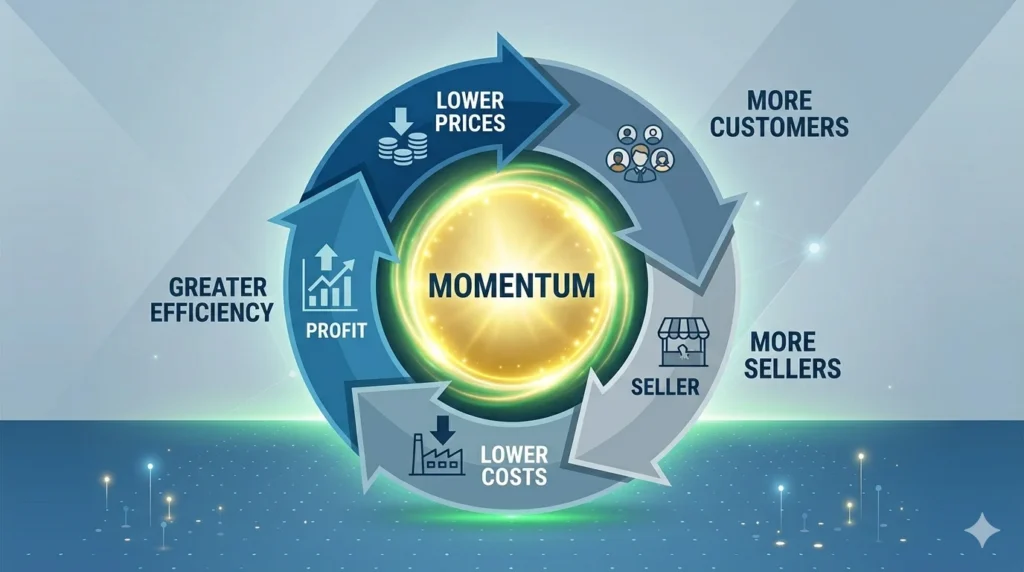
ज़्यादातर लोग सोचते हैं कि Greatness किसी एक “Magic Moment” या “Breakthrough” का नतीजा होती है। लेकिन Collins कहते हैं कि यह एक Flywheel की तरह काम करता है।
Flywheel Effect क्या है?
Imagine कीजिए एक बहुत भारी Metal Wheel (Flywheel) को।
- The First Push: शुरू में इसे घुमाना बहुत मुश्किल होता है। आप पूरी ताकत लगाते हैं, लेकिन यह मुश्किल से हिलता है।
- The Consistent Push: आप हार नहीं मानते और एक ही दिशा में लगातार धक्का देते रहते हैं।
- The Momentum: धीरे-धीरे पहिया अपनी Speed पकड़ता है। एक समय ऐसा आता है जब पहिये का अपना Momentum इतना बढ़ जाता है कि वह अपने आप तेज़ी से घूमने लगता है। अब वह Unstoppable हो जाता है।
Business Lesson: सफलता छोटे और Consistent Actions का Cumulative result है।
Amazon का प्रसिद्ध Flywheel Model
Jeff Bezos ने Amazon को इसी Loop पर बनाया:
[Lower Prices] → [More Customer Traffic] → [More Sellers] → [More Selection] → [Better Customer Experience] → [Lower Cost Structure] → [Lower Prices] (Cycle repeats and strengthens).
Result: यह Flywheel 25+ साल से चल रहा है। हर नया “Push” पिछले Push से ज़्यादा असरदार होता है।
Build Your Own Flywheel: Step-by-Step Guide
Step 1: अपने Core Loops को पहचानें
सोचिए कि आपकी Company में कौन सा Action दूसरे Action को Trigger करता है?
(Example: Better Product → Happy Customer → More Referrals → Lower CAC → More Budget for Product Improvement).
Step 2: First Push Identify करें
वह सबसे छोटा और Sustainable action क्या है जिससे Momentum शुरू हो सकता है?
Step 3: Momentum Track करें
Flywheel को मापने के लिए इन Metrics का उपयोग करें:
- Momentum Score: (Current Month Growth) / (3-Month Avg)
→→Target:>1.2>1.2 - Compounding Rate: Revenue growth per quarter
→→Target:>15%>15%
Section 15: Connecting Technology + Flywheel
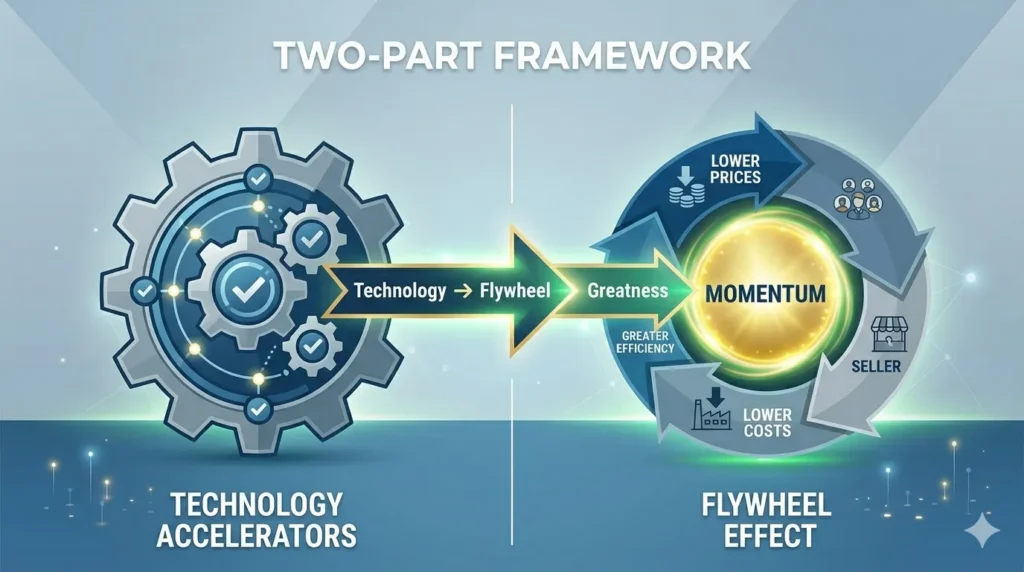
जब Technology Accelerators और Flywheel Effect एक साथ मिलते हैं, तब Exponential Growth पैदा होती है।
| Technology Accelerator | Flywheel Effect | Combined Effect |
| Hedgehog-aligned tools | Consistent momentum | Accelerated growth |
| Purpose-driven tech | Compounding loops | Sustainable scale |
| No shiny objects | Focus on core loops | Resource efficiency |
Real Case: Swiggy
Swiggy ने AI-based route optimization (Tech) का उपयोग अपने “Faster Delivery” loop (Flywheel) को तेज़ करने के लिए किया। इससे Orders बढ़े → Restaurants बढ़े → Cost कम हुई → Delivery और तेज़ हुई।
🌐 Scaling Your Flywheel: The Infrastructure Need
एक तेज़ी से घूमता हुआ Flywheel बहुत ज़्यादा Energy और Load पैदा करता है। अगर आपका Digital Infrastructure (Hosting/Server) कमज़ोर है, तो वह इस Momentum को झेल नहीं पाएगा और Crash हो जाएगा। यह आपके लिए एक “Doom Loop” बन सकता है।
जब आप अपने Flywheel के Metrics (जैसे Real-time Analytics, User Traffic, Dashboards) को Track करते हैं, तो आपको एक Scalable और High-performance Foundation की ज़रूरत होती है। Hostinger Business Hosting आपको वह Stability और Speed देता है जिससे आपका Flywheel बिना किसी Technical रुकावट के घूमता रहे।
Section 16: Quick Action Checklist — Part 4 Takeaways
21-Day Technology + Flywheel Action Plan
- Day 1-3: अपने current Technology stack का Audit करें।
- Day 4-6: हर Tool को Hedgehog Concept के साथ Align करें (Score 1-5)।
- Day 7-9: अपने Business के 3-5 Core Flywheel Loops ड्रा करें।
- Day 10-12: वह “First Push” action तय करें जिसे आप अगले 6 महीने तक बिना रुके करेंगे।
- Day 13-15: Momentum tracking के लिए Dashboard सेटअप करें।
- Day 16-18: किसी एक Loop पर एक specific Technology को Pilot Test करें।
- Day 19-21: Results review करें और पूरी Team के साथ “Push” शुरू करें।
⚠️ Red Flags: तुरंत Action लें अगर…
- ❌ आप Technology इसलिए अपना रहे हैं क्योंकि “सब कर रहे हैं”।
- ❌ आपका Flywheel clearly defined नहीं है।
- ❌ आप पहले 3-4 Pushes के बाद results न मिलने पर Strategy बदल रहे हैं (Doom Loop)।
- ❌ आपके पास Momentum मापने के लिए कोई Data-driven metric नहीं है।
Good to Great के original text को गहराई से समझने और Case studies पढ़ने के लिए, इसे Amazon से Order करें: Good to Great on Amazon — यह आपकी Business Journey की सबसे valuable investment होगी।
Section 17: The Cumulative Effect — छोटे कदम, बड़े Results
Jim Collins की सबसे Powerful Finding यह है कि Greatness रातों-रात नहीं आती। यह छोटे, Consistent Actions का Cumulative Effect है जो समय के साथ Compounding होता है।
“Overnight Success” का भ्रम (The Mythology vs. Reality)
Media अक्सर “Overnight Success” की कहानियाँ सुनाता है, लेकिन सच्चाई बिल्कुल अलग होती है:
| Company | “Overnight” Claim | Actual Timeline (The Grind) |
| Zomato | 2015 में Viral हुआ | 2008-2015: 7 साल की Consistent मेहनत |
| Blinkit | 2021 में Success मिला | 2014-2021: 7 साल का Iteration और Pivot |
| Amazon | 1997 IPO Success | 1994-1997: 3 साल का कठिन संघर्ष + 25 साल की Growth |
Business का Compound Interest: 1% का जादू
Finance में जैसे Compound Interest काम करता है, Business में Cumulative Effect काम करता है।
The 1% Formula:
अगर आप हर दिन अपनी Efficiency या Product में सिर्फ 1% Improvement करते हैं, तो एक साल बाद आप कहाँ होंगे?
Calculation: (1.01) 365 =37.78मतलब: सिर्फ 1% Daily Improvement = 1 साल में 37 गुना (37x) Growth!
Indian Example: Amul की Cumulative Growth
Amul ने 1946 में एक छोटे स्तर पर शुरुआत की थी:
- Year 1-5: Local milk collection (सिर्फ 100 किसान)।
- Year 6-10: District-level expansion (10,000 किसान)।
- Year 11-20: State-level network (1 Million किसान)।
- Year 21-40: National Brand और Global Export।
Result: 70+ साल की Consistency ने उन्हें $5B+ Revenue वाली Global Leader कंपनी बनाया।
Section 18: Complete Transformation Roadmap — 5-Year Plan
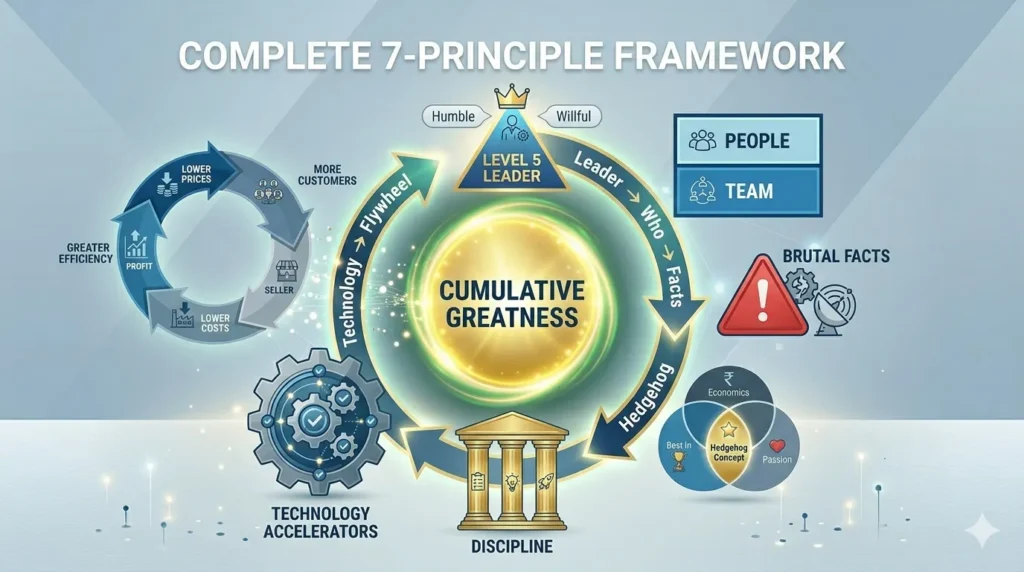
एक साधारण Business को Great बनाने के लिए आपको एक Long-term Horizon चाहिए। यहाँ आपका 5-Year Master Roadmap है:
| Year | Phase | Focus | Key Action Items | Success Metric |
| Year 1 | Foundation | Level 5 + First Who | Toxic लोगों को हटाना, Right People को Hire करना, Hedgehog Concept Define करना। | Right Team in key positions |
| Year 2 | Discipline | Culture + Systems | Non-negotiable Principles बनाना, Flywheel Design करना, Tech Audit करना। | Discipline Culture established |
| Year 3 | Acceleration | Momentum Build | Flywheel को Push करना, Tech Scale करना, NPS (Customer Satisfaction) बढ़ाना। | Momentum Score >1.2>1.2 |
| Year 4 | Scaling | Category Leadership | Market Expansion, Senior Leaders की Hiring, Brand Building। | Market Share ↑↑ |
| Year 5 | Greatness | Sustainable Performance | Succession Planning, Innovation, Industry Standards सेट करना। | Sustained Superior Performance |
Section 19: 90-Day “Good-to-Great” Quick Start Plan
अगर आप आज से शुरू करना चाहते हैं, तो इस 90-Day Tactical Plan को Follow करें:
Weeks 1-4: Assessment & Foundation (नींव रखना)
- Week 1: Level 5 Leadership self-assessment करें और अपनी “Ego” को identify करें।
- Week 2: Team Audit करें—कौन “Right Person” है और कौन “Toxic”?
- Week 3: अपना Brutal Facts Dashboard तैयार करें (Revenue, Churn, NPS)।
- Week 4: अपने 3 Circles (Passion, Best-in-world, Economics) का Intersection ढूँढकर Hedgehog Concept लिखें।
Weeks 5-8: Execution & Discipline (क्रियान्वयन)
- Week 5: Toxic लोगों को Remove करें और Right People को onboard करें।
- Week 6: पहली “Brutal Facts Meeting” आयोजित करें और कड़वे सच को स्वीकार करें।
- Week 7: कंपनी के 5 Non-negotiable Principles तय करें।
- Week 8: अपने Flywheel का पहला “Small Push” शुरू करें (1% improvement goal)।
Weeks 9-12: Momentum & Scaling (गति बढ़ाना)
- Week 9: किसी एक Loop पर एक specific Technology को Pilot Test करें।
- Week 10: Employee Recognition program शुरू करें ताकि Ownership बढ़े।
- Week 11: Customers से Direct Feedback लें और Retention Plan बनाएँ।
- Week 12: 90-Day Review करें और अगले Quarter का Target सेट करें।
🌐 Scaling Your Legacy: Digital Infrastructure
जब आप इस 5-Year Roadmap पर चलते हैं, तो आपका Business Scale होता है। Year 3 और Year 4 तक पहुँचते-पहुँचते, आपका Traffic और Data इतने बढ़ जाते हैं कि साधारण Hosting आपका साथ छोड़ देती है।
एक “Great” Company वह है जो अपने Infrastructure को Growth से पहले Scale करती है। यदि आप चाहते हैं कि आपके Analytics Dashboards, Flywheel Metrics और Customer Portal बिना किसी Crash के चलें, तो आपको एक Enterprise-grade foundation चाहिए। Hostinger Business Hosting आपको वह Performance और Reliability देता है जो एक Category Leader बनने के लिए ज़रूरी है।
Section 20: Leadership & Strategy Resource Hub
अगर आप अपनी Journey को और Accelerate करना चाहते हैं, तो इन Essential Books की Summaries ज़रूर पढ़ें:
| Book | Core Lesson | Link |
| Think and Grow Rich | Mindset + Wealth Creation | [Summary] |
| Zero to One | Monopoly + Unique Positioning | [Summary] |
| The Psychology of Money | Behavioral Finance + Discipline | [Summary] |
| Atomic Habits | Small Habits + Compounding | [Summary] |
| Deep Work | Focus + Execution | [Summary] |
| The Lean Startup | Rapid Experimentation | [Summary] |
→→सभी Summaries यहाँ उपलब्ध हैं: leadership aur strategy ki aur kitaabein.
Section 21: Final Call-to-Action
📚 Amazon — The Original Text
इस Master Guide ने आपको Framework दे दिया है, लेकिन Jim Collins की original research, 40+ Case Studies और detailed Data केवल किताब में है। अपनी Leadership Journey को Serious बनाने के लिए original text ज़रूर पढ़ें।
👉 Order Good to Great on Amazon
🚀 Hostinger — Scalable Digital Foundation
Greatness के लिए Speed और Stability अनिवार्य है। अपने Business को एक World-class डिजिटल घर दें।
👉 Get Hostinger Business Hosting
Section 22: Final Motivation — आप Great बन सकते हैं
Jim Collins ने 28 साल की Research के बाद एक सरल निष्कर्ष निकाला: “Greatness एक Choice है, Accident नहीं।”
चाहे आप एक Small-town Startup चला रहे हों या एक Corporate Team को lead कर रहे हों, आप Great बन सकते हैं। लेकिन याद रखिए, यह रातों-रात नहीं होगा। यह होगा:
Level 5 Leadership→Right People→Brutal Facts→Hedgehog Concept→Discipline→Flywheel→Cumulative Growth.Level 5 Leadership→Right People→Brutal Facts→Hedgehog Concept→Discipline→Flywheel→Cumulative Growth.आपका आज का Action Plan:
- इस Guide को Bookmark करें।
- 90-Day Action Plan को Print करें।
- कल सुबह अपना पहला 1% Improvement शुरू करें।
5 साल बाद, आप पीछे मुड़कर देखेंगे और गर्व से कहेंगे: “हाँ, हमने Good से Great तक का सफर तय किया।”
FAQs
Good to Great book kya hai aur ye kyun important hai?
Good to Great Jim Collins ki bestselling business book hai jo explains karti hai ki kuch companies kaise “good” (achhi) se “great” (mahaan) ban jaati hain, jabki zyadatar companies wahi “good” par stuck reh jaati hain. Ye book 28 years ki research par based hai jisme 1,435 companies ko analyze kiya gaya aur 11 companies ko identify kiya jo sustained superior performance dikhaate hain. Ye important hai kyunki ye practical, evidence-based frameworks deta hai (Level 5 Leadership, Hedgehog Concept, Flywheel Effect) jo aap apne business, startup, ya career mein apply kar sakte ho.
Level 5 Leadership kya hai aur ye normal leadership se kaise alag hai?
Level 5 Leadership Jim Collins ke research ka sabse powerful finding hai. Ye leadership ka highest level hai jahan leader mein do seemingly opposite traits hoti hain: personal humility (vinamrata) aur intense professional will (drid ichchha-shakti). Normal leadership mein leader ego-driven hote hain, spotlight chahte hain, aur failure pe doosron ko blame karte hain. Level 5 leaders credit team ko dete hain, failure pe khud ko accountable maante hain, aur organization ki long-term greatness ke liye personal ego sacrifice karte hain. Ye leadership sustainable greatness banati hai.
Hedgehog Concept kya hai aur ise kaise define karein?
Hedgehog Concept ek simple par powerful framework hai jo teen circles ke intersection par based hai:
Kis mein aap best ho? (What you can be the best in)
Aapka economics kya hai? (What drives your economic engine — profit per X metric)
Aapkin passion kya hai? (What you are deeply passionate about)
Jab ye teen circles overlap karte hain, wahi aapka Hedgehog Concept hai. Ise define karne ke liye:
Self-assessment karo har circle ke liye
Data aur feedback use karo (na ki assumptions)
Ye decide karo ki aap kya NOT karenge (focus ke liye boundaries set karo)
1-sentence philosophy likho jo aapka Hedgehog Concept summarize kare
Flywheel Effect kya hai aur ye business growth mein kaise help karta hai?
Flywheel Effect ek concept hai jahan chhote, consistent actions ka compounding effect hota hai aur time ke saath momentum build hota hai. Business mein Flywheel ka matlab hai:
Small + consistent pushes → Momentum build → Sustainable growth
No single “magic moment” — growth gradual hai
Har push pehle se aasaan hota hai kyunki previous momentum already exist karta hai
Ye business growth mein help karta hai kyunki:
Short-term shortcuts ki jagah long-term sustainability deta hai
Compounding effect se exponential growth hoti hai
Self-reinforcing loop hai (ek loop dusre ko strengthen karta hai)
Good se Great banne mein kitna time lagta hai?
Jim Collins ke research ke hisaab se, Good se Great banne mein average 4-7 saal lagte hain. Ye overnight success nahi hai — ye cumulative effect hai jahan chhote, consistent actions time ke saath compounding hote hain. Research mein dekha gaya ki great companies jo 1965-1995 tak sustained superior performance dikhaati hain, unhone average 5 saal tak consistent work kiya before breakthrough point tak pahunchne ke. Key hai patience aur consistency — 1% daily improvement = 37x growth in 1 year (compound interest formula).
Kya ye book sirf large companies ke liye hai ya startups ke liye bhi useful hai?
Ye book sirf large companies ke liye nahi hai — ye startups, SMEs, family businesses, aur even individual careers ke liye bhi bahut useful hai. Jim Collins ke principles universal hain:
Startups: Level 5 Leadership se founder ego control kar sakta hai, First Who se right team hire kar sakta hai
SMEs: Hedgehog Concept se focus maintain kar sakta hai, Culture of Discipline se scalability build kar sakta hai
Family businesses: Succession planning aur institutionalize decision-making ke liye Level 5 Leadership helpful hai
Individuals: Career growth ke liye Flywheel Effect aur Cumulative Effect apply kar sakte ho
Research mein small companies bhi include thi, aur frameworks scalable hain.
Kya Good to Great principles India ke business context mein apply ho sakte hain?
Haan, bilkul apply ho sakte hain! Jim Collins ke principles universal hain aur India ke business context mein bahut relevant hain:
Indian startups: Zomato, Blinkit, Infosys ne Level 5 Leadership aur Hedgehog Concept follow kiya
Family businesses: Amul, Tata Group ne Culture of Discipline aur succession planning implement kiya
SMEs: Flywheel Effect se small businesses sustainable growth achieve kar sakte hain
Cultural fit: Indian culture mein humility (vinamrata) already valued hai, jo Level 5 Leadership ke core trait hai
Research mein global companies شامل thi, lekin frameworks adaptable hain aur Indian market ki volatility, competition, aur cultural context mein bhi kaam karte hain.
Good to Great book se sabse important takeaway kya hai?
Sabse important takeaway ye hai: “Greatness choice hai, accident nahi.”
Specific key takeaways:
Good is the enemy of great — “Thik hai” wali mindset se bahar niklo
Level 5 Leadership — Humility + Professional Will = Sustainable leadership
First Who, Then What — Pehle sahi log, phir strategy
Confront Brutal Facts — Reality se mat bhago, data-driven decisions lo
Hedgehog Concept — 3 circles ka intersection find karo (Best + Economics + Passion)
Culture of Discipline — Freedom within framework
Flywheel Effect — Consistent small actions = Compounding momentum
Ye sab milkar cumulative effect banate hain jo 4-7 saal mein sustainable greatness deliver karta hai.
Kya ye book read karna zaroori hai ya aapke guide se kaam chal jayega?
Aapke guide se quick understanding aur action plan mil jayega, lekin original book padhna strongly recommended hai kyunki:
Original research: 28 years, 1,435 companies, 6,000+ articles ka data original text mein complete hai
Case studies: 40+ real company case studies (Amazon, Walmart, Kroger, etc.) with detailed analysis
Depth: Frameworks ki underlying logic aur examples guide se zyada detail mein hain
Lifetime reference: Book ko baar-baar refer kar sakte ho, new insights milte rahega
Recommendation: Guide se quick start karo (90-Day Action Plan follow karo), phir original book padho depth ke liye. Dono together best results dete hain.
👉 Book order here: Good to Great on Amazon