
The Intelligent Investor Book Summary in Hindi — Benjamin Graham का Value Investing Guide
SECTION 1: Target Definition Snippet & The Ultimate Mentor
The Intelligent Investor, Benjamin Graham द्वारा 1949 में लिखी गई investing की सबसे महत्वपूर्ण किताबों में से एक है। Warren Buffett — दुनिया के सबसे अमीर investors में से एक — ने इसे ‘the best book on investing ever written’ कहा है। यह किताब Value Investing का foundation है, जो बताती है कि stocks को उनके actual value से कम दाम पर कैसे पहचानें और कैसे खरीदें।
Benjamin Graham और Warren Buffett — गुरु-शिष्य की अमर कहानी
अगर आप Warren Buffett की सफलता का रहस्य जानना चाहते हैं, तो आपको उनके “Guru” के इतिहास को समझना होगा। 1950 के Columbia University, New York में एक 20-वर्षीय युवक — Warren Buffett — Benjamin Graham की class में पहुँचा। वह Graham की “Security Analysis” से इतना प्रभावित था कि उसने सिर्फ Graham की पढ़ाई करने के लिए Columbia University join किया।
Graham ने Buffett को Grade A+ दिया — जो उनके पूरे टीचिंग करियर में सिर्फ दूसरी बार किसी student को मिला था। Buffett अक्सर कहते हैं: “मैं जो भी हूँ, Benjamin Graham की वजह से हूँ। उन्होंने मुझे सिखाया कि investment क्या है — speculation नहीं।”
Graham की Intellectual Legacy:
- 1929 Crash: Graham खुद इस बड़े क्रैश में नुकसान झेल चुके थे, और इसी experience ने “Intelligent Investor” की नींव रखी।
- 1934 (Security Analysis): Value Investing की ‘Bible’ publish की।
- 1949 (The Intelligent Investor): General investors के लिए एक simplified और timeless masterpiece पेश किया।
- 1973 (Revised Edition): वह version जिसे आज भी पूरी दुनिया पढ़ती है।
Graham ने सिर्फ Buffett को ही नहीं, बल्कि Walter Schloss और William Ruane जैसे legendary investors को भी तैयार किया। उनकी methodology Timeless Human Psychology पर आधारित है—जो 1949 में भी काम करती थी और 2026 के Indian market में भी उतनी ही सटीक है।
SECTION 2: Book at a Glance (Knowledge Panel Box)
| पहलू (Feature) | विवरण (Details) |
|---|---|
| Book Title | The Intelligent Investor |
| Author | Benjamin Graham (Father of Value Investing) |
| First Published | 1949 |
| Revised Edition | 1973 (Graham की अंतिम revision) |
| Updated Commentary | Jason Zweig (Modern Context के लिए) |
| Core Philosophy | Value Investing — Stocks को intrinsic value से कम पर खरीदना |
| 3 Core Pillars | 1. Thorough Analysis, 2. Safety of Principal, 3. Adequate Return |
| Warren Buffett Endorsement | “The best book on investing ever written” |
| Indian Relevance (2026) | NSE Nifty 50, SIP, Blue-chip stocks, P/E based valuation |
| Target Audience | Long-term wealth builders (Defensive & Enterprising) |
| Difficulty Level | Intermediate (Financial concepts की समझ आवश्यक) |
SECTION 3: Chapter 1 — Investment vs. Speculation (निवेश बनाम सट्टा)
Graham का सबसे पहला और सबसे powerful lesson है: Investment और Speculation में फर्क। अगर आप यह अंतर नहीं जानते, तो आप wealth बना नहीं रहे, बल्कि उसे धीरे-धीरे खत्म कर रहे हैं। धन संचय के बुनियादी नियमों को समझने के लिए आप The Richest Man in Babylon Summary in Hindi भी देख सकते हैं।
Graham की Exact Definition
Hindi में: एक investment वह है जो — thorough analysis के बाद — आपके मूल धन (Principal) की सुरक्षा और एक पर्याप्त रिटर्न (Adequate Return) का वादा करे। जो इस criteria को पूरा नहीं करता, वह Speculation (सट्टा) है।
Investment के 3 Mandatory Elements
| Element | Description | Indian Example (2026) |
|---|---|---|
| 1. Thorough Analysis | Company के fundamentals और financials का गहरा अध्ययन | HDFC Bank की balance sheet और P/E ratio check करना |
| 2. Safety of Principal | मूल पैसा safe रहे — total loss की संभावना न्यूनतम हो | Blue-chip stocks, strong cash flow वाली companies |
| 3. Adequate Return | Inflation से ज़्यादा return — realistic expectations | Nifty 50 का historical 12% CAGR return |
Speculation क्या है? (The Indian Retail Investor Trap)
आज के Indian market में, retail investors अक्सर इन 5 चीज़ों को “Investment” समझकर गलती करते हैं:
- Intraday Trading: Technical charts पर आधारित Same-day buy-sell। (Reality: SEBI 2024 के अनुसार, 95%+ day traders पैसा खोते हैं)।
- F&O (Futures & Options) Gambling: Leverage का उपयोग करके बड़ा bet लगाना। (Reality: SEBI report 2024 के अनुसार, 93% F&O traders को नुकसान होता है)।
- Crypto “Investing”: Bitcoin/Altcoins में बिना intrinsic value analysis के पैसा लगाना। Graham इसे “Speculation का modern avatar” मानते हैं।
- Momentum/Tip-Based Buying: WhatsApp/Telegram tips और FOMO (Fear of Missing Out) के आधार पर खरीदना।
- IPO Flipping: केवल Grey Market Premium (GMP) देखकर apply करना।
Investment vs. Speculation — Comparison Table
| पहलू (Feature) | Investment (निवेश) | Speculation (सट्टा) |
|---|---|---|
| Analysis | Thorough fundamental analysis | कोई नहीं — केवल Tips, Charts, FOMO |
| Time Horizon | Long-term (5–20 years) | Short-term (minutes to months) |
| Risk | Calculated and Managed | Unlimited (due to leverage) |
| Principal Safety | Top Priority | No concern |
| Return Expectation | Adequate and Realistic | 100x, overnight wealth |
| Indian Context | Nifty 50 SIP (20 years) | F&O trading, Crypto, Penny stocks |
| Graham’s Verdict | ✅ Do This | ❌ Avoid Completely |
(तेज़ी से अमीर बनने की हकीकत और उसकी तुलना वेल्थ क्रिएशन से करने के लिए पढ़ें: The Millionaire Fastlane Book Summary in Hindi)

SECTION 4: Chapters 2 & 3 — Inflation, Purchasing Power & Market History
Chapter 2: The Investor and Inflation — महंगाई का Silent Tax
Graham चेतावनी देते हैं कि Inflation (महंगाई) investor का सबसे खतरनाक और अदृश्य दुश्मन है। अगर आपका return inflation से कम है, तो आप आर्थिक रूप से गरीब हो रहे हैं।
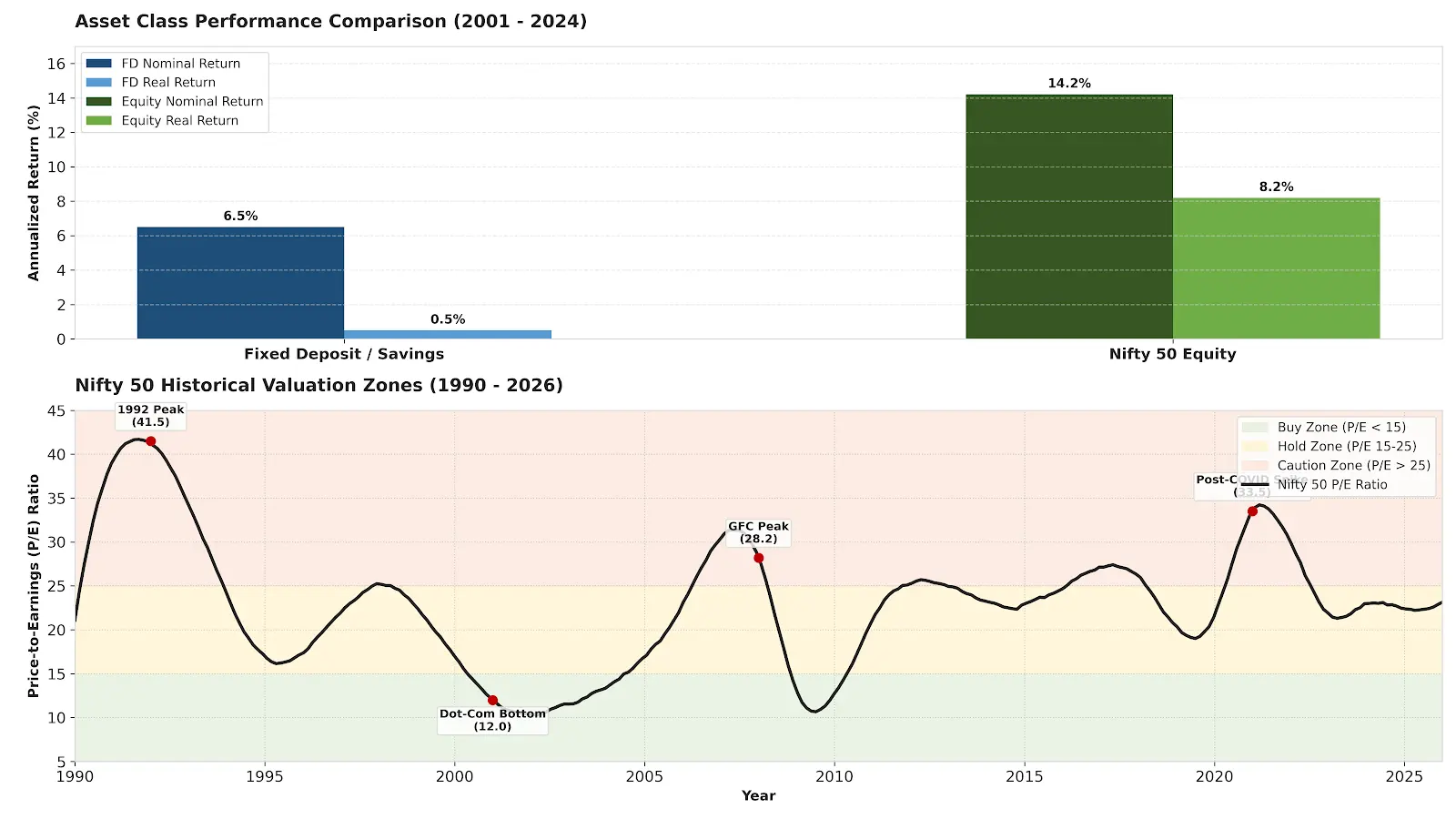
Indian Context Comparison (2026 Analysis):
| Investment Type | Nominal Return (Avg) | Inflation (India Avg) | Real Return (Purchasing Power) |
|---|---|---|---|
| Savings Account | 3.5% | 5.5% | -2% (Loss!) |
| Fixed Deposit (FD) | 6.5% | 5.5% | +1% (Barely) |
| Gold | 8% | 5.5% | +2.5% |
| Nifty 50 Equity | 12% | 5.5% | +6.5% (Real Wealth) |
Graham के अनुसार, Equities (Stocks) ही एकमात्र asset class हैं जो long-term में inflation को consistently beat कर सकते हैं।
Chapter 3: A Century of Stock Market History — History से क्या सीखें
“History repeat नहीं होती, लेकिन rhyme ज़रूर करती है।” Graham सिखाते हैं कि past cycles को समझना peaks पर buying avoid करने के लिए ज़रूरी है।
Indian Market Cycle History (1990–2026):
| Period | Event | Nifty Movement | Lesson |
|---|---|---|---|
| 1992 | Harshad Mehta Scam | +250% then -56% crash | Speculation = Destruction |
| 2000 | Dot-com Bubble | +200% then -55% crash | Tech hype ≠ Value |
| 2008 | Global Financial Crisis | +200% then -60% crash | Leverage kills |
| 2020 | COVID-19 Crash | -40% in 1 month | Panic selling = Permanent loss |
| 2024-26 | AI/Tech Bull Market | Nifty 24,000+ | P/E stretched — Caution needed |
Graham’s Solution: P/E Ratio Guide
Market में कब निवेश करना है और कब सावधान रहना है, इसके लिए Graham P/E (Price-to-Earnings) Ratio को एक compass की तरह इस्तेमाल करने की सलाह देते हैं:
| Nifty 50 P/E Range | Market Condition | Graham’s Action |
|---|---|---|
| P/E < 15 | Undervalued | Aggressively Invest |
| P/E 15–20 | Fair Value | Continue SIP normally |
| P/E 20–25 | Slightly Overvalued | Reduce new lump-sum investment |
| P/E > 25 | Overvalued (Danger) | Shift to debt, wait for correction |
| P/E > 30 | Extreme Bubble | Defensive mode only |
2026 Indian Context: वर्तमान में Nifty P/E ~22-24 के range में है, जिसका मतलब है कि market “Slightly Overvalued” है। आपको SIP continue रखनी चाहिए, लेकिन भारी “Lump-sum” निवेश से बचना चाहिए।
PORTFOLIO POLICIES & THE TWO INVESTOR ARCHETYPES
पिछले भाग में हमने समझा कि Investing और Speculation में क्या फर्क है। अब सबसे महत्वपूर्ण सवाल यह है: “आप किस तरह के investor हैं?” Benjamin Graham का मानना था कि हर इंसान के पास एक ही strategy काम नहीं कर सकती। आपकी strategy आपके समय (time), आपकी मेहनत (effort), और आपकी psychology (मनोविज्ञान) पर निर्भर करती है। अपनी वित्तीय मानसिकता को गहराई से समझने के लिए आप The Psychology of Money Summary in Hindi भी पढ़ सकते हैं।
SECTION 5: Defensive vs. Enterprising Investor — आप कौन हैं?
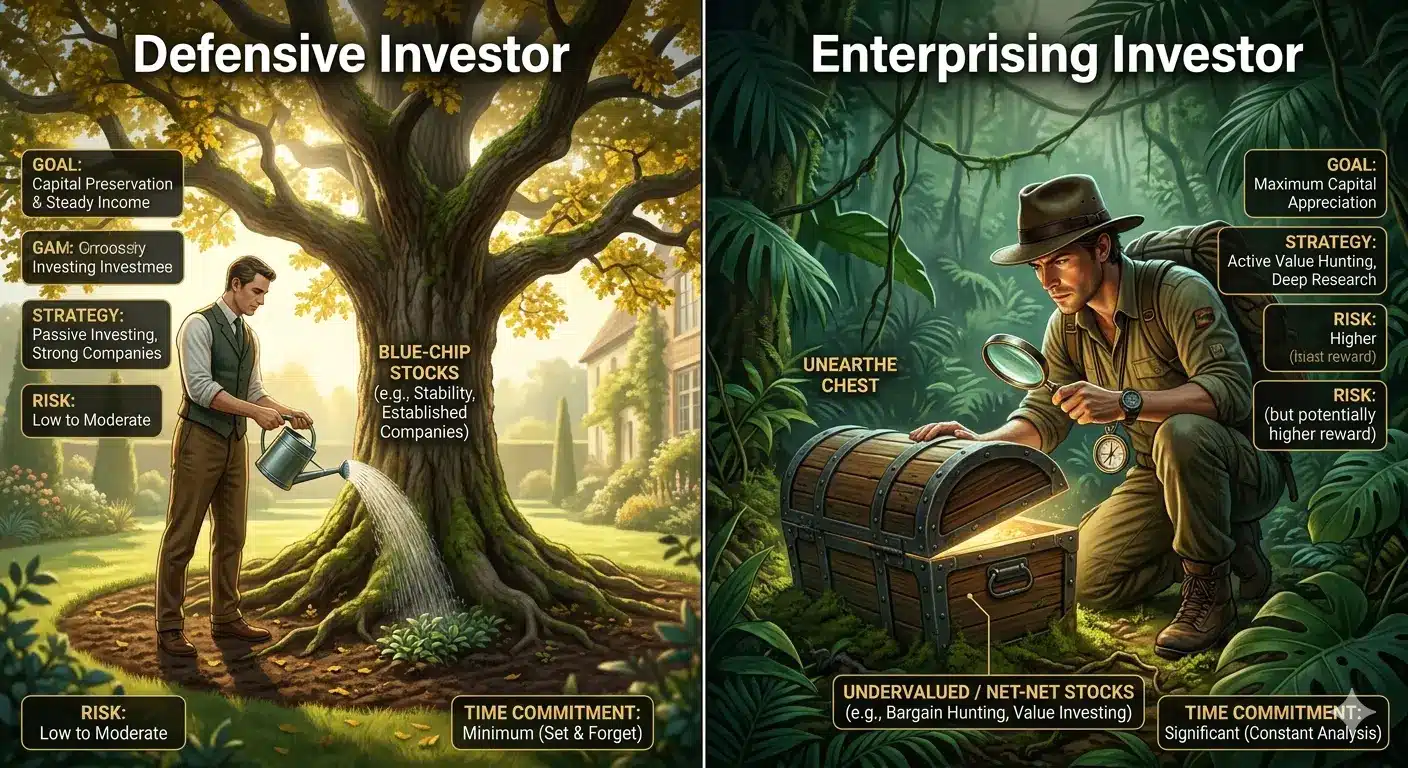
Graham ने investors को दो मुख्य categories में बाँटा है। गलत category चुनना वैसा ही है जैसे बिना लाइसेंस के Formula 1 कार चलाना—आप बहुत जल्दी crash कर सकते हैं।
5-Question Self-Assessment Quiz (अपना investor profile जानें)
नीचे दिए गए 5 सवालों के जवाब दें — अपनी personality को पहचानें:
• Mostly (A): आप Defensive Investor हैं → Section 6 आपके लिए है।
• Mostly (B): आप Enterprising Investor हैं → Section 7 आपके लिए है।
• Mix of A & B: आप Defensive Investor से शुरू करें — experience बढ़ने पर enterprising strategies add करें।
Comprehensive Comparison: Defensive vs. Enterprising
| पहलू (Feature) | Defensive Investor (सुरक्षित निवेशक) | Enterprising Investor (साहसी निवेशक) |
|---|---|---|
| Time Commitment | Minimal (महीने में 1–2 घंटे review) | High (Daily research, screening, analysis) |
| Stock Selection | Graham’s 7 Rules (Large-cap, stable) | Bargain stocks, Net-Net, Growth at reasonable price |
| Diversification | Broad (15–30 blue-chip stocks या Index Fund) | Concentrated (10–15 deeply researched positions) |
| Target Returns | Market return (~12% CAGR) — inflation beat | Market outperformance (15–20%+ CAGR) |
| Risk Profile | Low — Capital preservation priority | Moderate-High — Temporary loss tolerate कर सकते हैं |
| Knowledge Required | Basic financial literacy | Advanced security analysis & valuation |
| Indian Vehicle | Nifty 50 Index Fund SIP + Blue-chips | Individual stock picking (Screener.in/Tijori) |
| Common Mistake | Panic selling during market corrections | Half-hearted active investing (Worse than passive) |
SECTION 6: Chapters 4, 5 & 14 — Portfolio Policy for the Defensive Investor (Graham’s 7 Rules)
एक Defensive Investor का मुख्य उद्देश्य है “Capital Protection” और “Steady Growth”। अपने धन निर्माण की मजबूत नींव रखने के तरीकों को समझने के लिए आप प्राचीन बेबीलोन के इन स्वर्णिम सिद्धांतों को The Richest Man in Babylon Summary in Hindi में भी देख सकते हैं।
Graham’s Asset Allocation Rule (The Golden Range)
Graham कहते हैं — never go all-in on either stocks or bonds। आपको market condition के हिसाब से allocation बदलना चाहिए:
| Market Condition | Stocks Allocation | Bonds/Debt Allocation |
|---|---|---|
| Normal Market | 50% | 50% |
| Market Undervalued (P/E < 15) | 75% (maximum) | 25% (minimum) |
| Market Overvalued (P/E > 25) | 25% (minimum) | 75% (maximum) |
Indian 2026 Adaptation:
- Equity (50–75%): UTI/SBI Nifty 50 Index Fund (Low cost, high diversification)।
- Debt (25–50%): PPF + Short-term Debt Mutual Funds (Tax-efficient, stable)।
- Rebalancing: साल में एक बार (December में) अपने target allocation को review करें।
Graham के 7 Strict Rules for Defensive Stock Selection
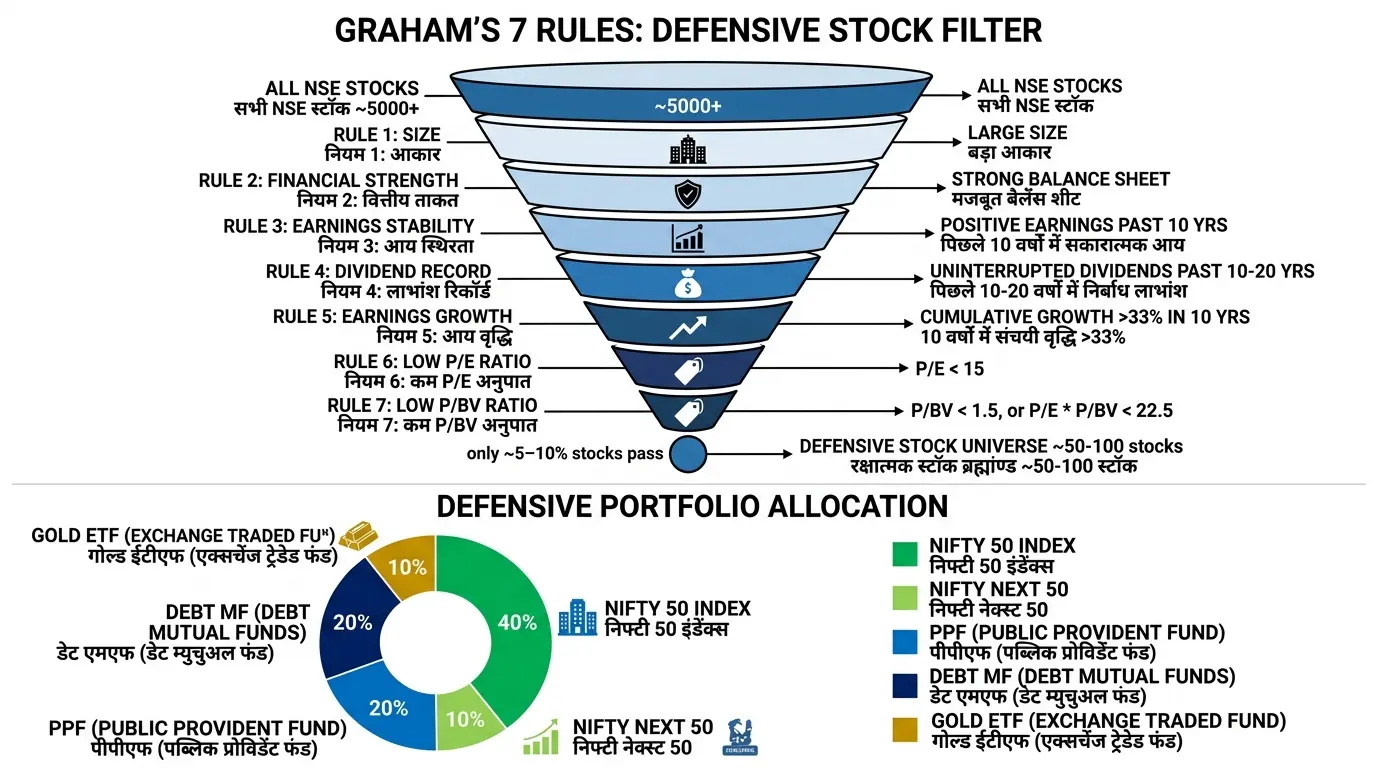
एक defensive investor को सिर्फ वही stocks खरीदने चाहिए जो इन 7 filters को pass करें:
Rule 1: Adequate Size of the Enterprise (कंपनी का आकार)
Indian 2026 Benchmark: Minimum Market Cap ≥ ₹10,000 crore (Large-cap)।
Why: Small-caps में liquidity risk और management risk बहुत ज़्यादा होता है।
Screener.in Filter: Market Cap > 10000
Rule 2: Sufficiently Strong Financial Condition (मज़बूत Balance Sheet)
Current Ratio ≥ 1.5 (Graham का threshold 2:1 था, पर Indian standard 1.5 भी safe है)।
Debt-to-Equity < 0.5 (बहुत कम कर्ज)। Interest Coverage ≥ 5x।
Screener.in Filter: Debt to equity < 0.5 AND Current ratio > 1.5
Rule 3: Earnings Stability (10 साल की Consistency)
Requirement: पिछले 10 सालों में कोई major deficit (loss) नहीं होना चाहिए।
Why: एक साल का profit luck हो सकता है, लेकिन 10 साल का profit “Proven Business Model” है।
Screener.in Check: मैन्युअली P&L में देखें कि Net Profit सभी 10 years में positive है या नहीं।
Rule 4: Dividend Record (लगातार Dividend)
Requirement: Uninterrupted dividend payout (कम से कम 10-20 years)।
Why: Dividend management का confidence दिखाता है कि profits “Real Cash” हैं, न कि सिर्फ accounting tricks।
Rule 5: Earnings Growth (दशक में वृद्धि)
Requirement: Minimum 33% total growth over 10 years (यानी ~3% annual growth)।
Why: Graham defensive investors के लिए spectacular growth की मांग नहीं करते, बस inflation beat करना चाहते हैं।
Rule 6: Moderate P/E Ratio (उचित Price-to-Earnings)
Requirement: P/E ≤ 15–20x।
Note: Graham का Combined Rule: P/E * P/BV ≤ 22.5।
Rule 7: Moderate Price-to-Book Value (P/BV Ratio)
Requirement: P/BV ≤ 1.5x।
Why: अगर Market Price Book Value से बहुत ज़्यादा है, तो आप बहुत expensive शेयर खरीद रहे हैं।
🚀 The Ultimate Defensive Vehicle: Nifty 50 Index Fund SIP
अगर Graham आज 2026 में होते, तो वो defensive Indian investors को Nifty 50 Index Fund SIP ही recommend करते। क्यों? यह automatic diversification देता है, low cost है (0.1% expense ratio), और इसमें weak companies automatic exit हो जाती हैं।
Recommended Portfolio: 40% Nifty 50 Index, 10% Nifty Next 50, 20% PPF, 20% Debt MF, 10% Gold ETF।
SECTION 7: Chapters 6, 7 & 15 — Portfolio Policy for the Enterprising Investor
Enterprising Investor वह है जो “Alpha” (extra returns) निकालने के लिए समय और मेहनत लगाने को तैयार है। लेकिन Graham एक सख्त चेतावनी देते हैं: “If you are not ready to devote time and care, settle for the defensive role.”
Strategy 1: Bargain Hunting (सस्ते में खरीदो)
ऐसी कंपनियों को ढूँढना जो Temporarily Injured हैं, न कि Permanently Broken।
- Temporarily Injured: Fundamentals intact हैं, समस्या fixable है (जैसे: Sector cycle down है या एक temporary scandal आया है) → Bargain Opportunity!
- Permanently Broken: Business model मर चुका है या management corrupt है → AVOID!
Strategy 2: Growth Stocks with Margin of Safety
Growth अच्छी है, लेकिन “Don’t overpay for it.”
The Growth Trap: 2021 के Indian New-age IPOs (Paytm, Nykaa) का उदाहरण लें। “Digital India” की story सच थी, लेकिन P/E 100x+ होने की वजह से stocks crash कर गए। तेजी से वेल्थ क्रिएशन की हकीकत जानने के लिए पढ़ें The Millionaire Fastlane Book Summary in Hindi।
Rule: Growth stocks तभी खरीदें जब P/E reasonable (≤ 25x) हो।
Strategy 3: Net-Net Stocks (The Aggressive Strategy)
यह Graham की सबसे aggressive strategy है। इसमें आप ऐसी कंपनियाँ ढूँढते हैं जिनका Market Cap उनकी Net Current Asset Value (NCAV) से भी कम हो।
Condition: Market Cap < NCAV
Meaning: आप कंपनी को उसके liquid assets से भी कम दाम पर खरीद रहे हैं—business value आपको "मुफ्त" में मिल रही है। (Modern India में यह rare है, पर deep value PSU stocks में मिल सकता है)।
⚠️ The Danger of "Half-Hearted" Investing
यह Indian retail investors के लिए सबसे ज़रूरी चेतावनी है।
Half-hearted active investing = Worst of Both Worlds.
अगर आप सिर्फ surface-level research करके 5-10 stocks चुनते हैं और 2 stocks गिरते ही panic sell कर देते हैं, तो आप न तो Index फंड जितना कमा पाएंगे और न ही professional investor जितना।
SEBI Data Reality: भारत में 85% individual stock pickers 5 साल के बाद Nifty 50 को beat करने में fail हो जाते हैं। इसलिए Graham की सलाह स्पष्ट है: या तो पूरी तरह commit करें (Daily 2-4 hours research) या Defensive (Index Fund) रास्ता चुनें।
Enterprising Investor's Toolkit (Indian 2026)
- Screener.in: Fundamental screening के लिए।
- Tijori Finance: Deep segment data के लिए।
- BSE/NSE Annual Reports: Primary source के लिए।
- Value Research: Mutual fund analysis के लिए।
THE PSYCHOLOGY OF THE MARKET & THE CENTRAL CONCEPT
अब हम उस गहराई में उतरेंगे जहाँ Benjamin Graham की शिक्षाएं एक "Technique" से बदलकर एक "Philosophy" बन जाती हैं। Investing केवल numbers का खेल नहीं है; यह आपकी Psychology (मनोविज्ञान) का खेल है। Market में पैसा वे नहीं कमाते जिनके पास सबसे तेज़ computer है, बल्कि वे कमाते हैं जिनके पास सबसे मज़बूत The Psychology of Money Summary in Hindi जैसी Emotional Discipline होती है।
SECTION 8: "Mr. Market कौन है? — Benjamin Graham की मशहूर Parable"
Graham की सबसे famous allegory — "Mr. Market" — को समझते ही एक investor का behavior पूरी तरह बदल सकता है।
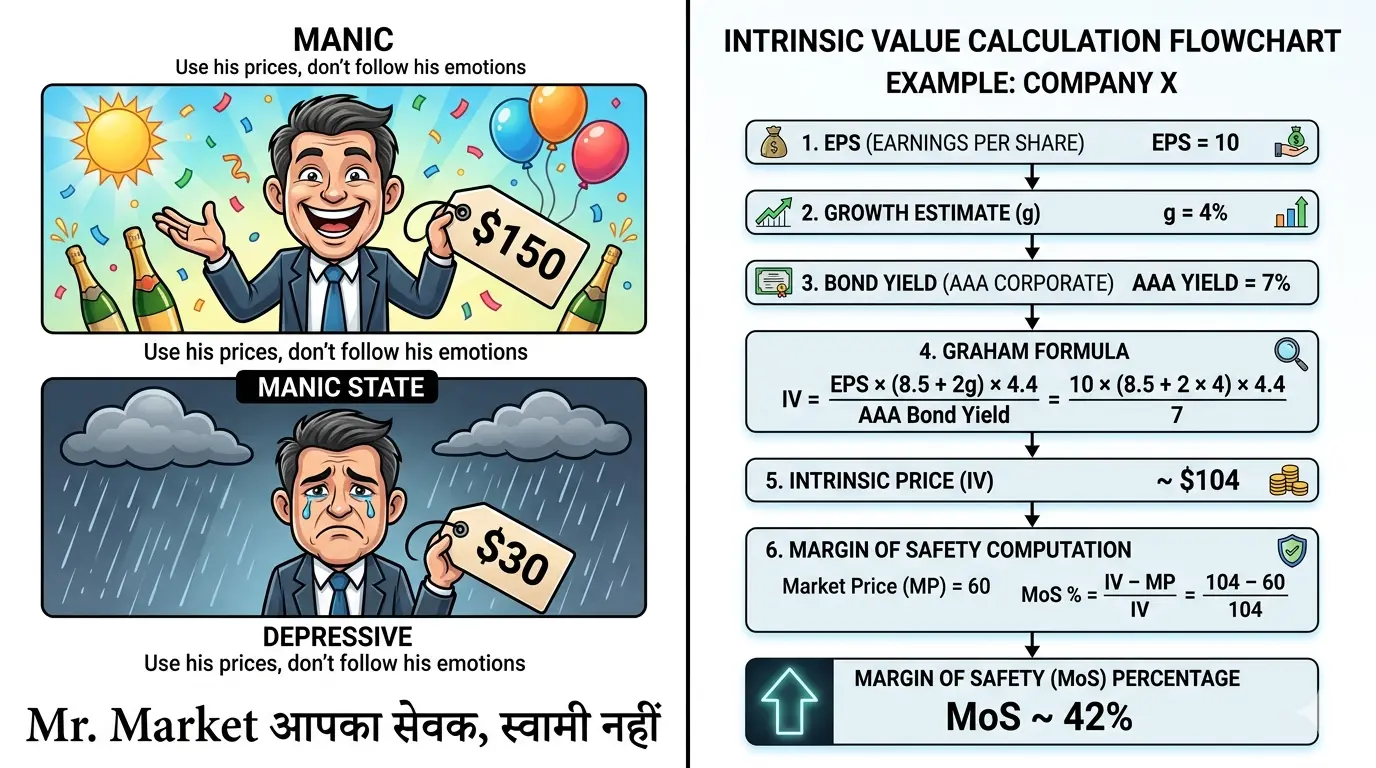
कल्पना कीजिए कि आपका एक business partner है जिसका नाम है "Mr. Market"। वह हर सुबह आपके पास आता है और आपको आपके business share की एक price offer करता है। Mr. Market की personality बहुत ही अजीब है—वह Manic-Depressive है।
- जब market में बहुत उत्साह (Euphoria) होता है, तो वह बहुत खुश होता है और आपको बहुत ऊँची (High) prices offer करता है।
- जब market में डर (Panic) का माहौल होता है, तो वह बहुत उदास हो जाता है और बहुत ही कम (Low) prices offer करता है।
उसकी mood swings का market fundamentals से कोई logical relation नहीं होता—उसकी pricing पूरी तरह से emotion-driven होती है।
यह allegory हमें दो fundamental lessons सिखाती है:
1. Market Prices ≠ Intrinsic Value: Market का price सिर्फ current sentiment और short-term liquidity की reflection है; जबकि intrinsic value कंपनी की real earning power से independent होती है। जीवन में सही संतुलन और संतोष के नियमों को समझने के लिए आप Ikigai Book Summary in Hindi का भी अध्ययन कर सकते हैं।
2. Emotional Discipline: Investor का काम market को predict करना नहीं है, बल्कि market के emotions का फायदा उठाना है—"Buy when others are fearful, sell when others are greedy."
Modern Digital Context (2026): आज के दौर में Zerodha, Upstox जैसे trading apps, social media, और 24/7 news cycle ने Mr. Market की आवाज़ को और भी तेज़ कर दिया है। हर minute का price update आपके impulses को trigger करता है। इसलिए, Graham का lesson आज पहले से कहीं ज़्यादा ज़रूरी है: Mr. Market की quotes को एक Tool बनाइए, न कि अपना Master।
SECTION 9: Chapters 8 & 9 — The Investor and Market Fluctuations & Mutual Funds
Market Volatility: आपका Friend, न कि दुश्मन
Graham का central point है: Market fluctuations आपके दुश्मन नहीं, बल्कि आपके दोस्त हैं—अगर आप disciplined और unemotional हैं। Price volatility "noise" है, जबकि intrinsic value "signal" है। Volatility आपको बेहतरीन businesses को discounted prices पर खरीदने का अवसर देती है।
Key Rules on Fluctuation:
- Don't Time the Market; Time the Valuation: Market timing की कोशिश न करें; valuation को time करने की कोशिश करें (Undervalued में खरीदें, Overvalued में बेचें)।
- Use Declines as Opportunities: अगर company के fundamentals intact हैं, तो market गिरावट को खरीदने के अवसर के रूप में देखें।
- Defensive Strategy: Emotional decisions से बचने के लिए Mutual Funds या Index Funds का उपयोग करें। अपने पर्सनल फाइनेंस को रिपेयर करने के लिए आप The Total Money Makeover Summary in Hindi की मदद ले सकते हैं।
- Enterprising Strategy: अचानक आने वाले market mispricings का फायदा उठाने के लिए हमेशा कुछ Cash Reserve रखें।
Mutual Funds Through Graham's Lens (Indian 2026 Playbook)
Graham के principles आज के Indian Mutual Fund industry पर भी सटीक बैठते हैं:
Defensive Investor: आपको Low-cost Index Funds (जैसे UTI, SBI, या HDFC के Nifty 50 ETFs) या well-managed Large-cap funds को प्राथमिकता देनी चाहिए।
Pro-Tip: Expense Ratio पर ध्यान दें। एक 1% ज़्यादा expense ratio आपकी long-term compounding को बहुत बुरी तरह प्रभावित करता है।
Enterprising Investor: आप actively managed Small-cap या Mid-cap funds में निवेश कर सकते हैं, लेकिन केवल तभी जब fund manager का 5-10 साल का track record consistent हो। "Star Manager" के पीछे भागने से बचें—past performance अक्सर decay हो जाता है।
Fund House Integrity: हमेशा AMC के management, AUM growth, और compliance record की जाँच करें।
Practical Indian 2026 Playbook:
- Defensive Core (80%): 60% Nifty 50 Index Fund SIP + 20% Short-Term Debt Funds।
- Enterprising Satellite (20%): 20% selected active funds या direct equities (rigorous research के बाद); साथ ही opportunistically खरीदने के लिए minimum 20% cash reserve रखें।
Case Study: March 2020 (COVID Panic) — Mr. Market's Depression Turned Opportunity
जब COVID-19 के कारण Nifty 50 कुछ ही हफ्तों में ~40% गिर गया, तब Mr. Market गहरे depression में था। जो investors panic होकर बेच गए, उन्होंने permanent loss कमाया। लेकिन जो disciplined थे और जिनके पास cash reserve था, उन्होंने quality large-caps को huge discounts पर खरीदा। 2021-24 के bull run में उन्हीं लोगों ने multi-fold returns देखे। यह साबित करता है कि Market panics create Margin-of-Safety bargains.
SECTION 10: Chapter 20 — "Margin of Safety" as the Central Concept of Investment
Margin of Safety (MoS) Graham का सबसे महत्वपूर्ण और अंतिम सिद्धांत है। इसका मतलब है: किसी business को उसकी intrinsic value से इतने बड़े discount पर खरीदना कि आपके analysis की गलती, या कोई unexpected 'Black Swan' event (जैसे महामारी या युद्ध) आपके capital को नष्ट न कर सके।
1. The Mathematical Definition
यदि किसी शेयर की Intrinsic Value ₹100 है और Market Price ₹60 है, तो आपका Margin of Safety ₹40 (या 40%) है।
2. Methods to Estimate Intrinsic Value (Practical Indian Approaches)
A. Graham’s Simplified Intrinsic Price Formula (Modern Adaptation):
यह formula एक heuristic (rule of thumb) है जो conservative estimates पर आधारित है।
- EPS: Earnings Per Share.
- g: Expected long-term growth rate (%) — (Stable companies के लिए 2–6% का conservative estimate लें)।
- AAA Bond Yield: वर्तमान Indian sovereign/AAA corporate bond yield (2026 के context में इसे ~7% मान सकते हैं)।
B. Earnings Power Value (EPV):
यह steady-state earnings पर आधारित है:
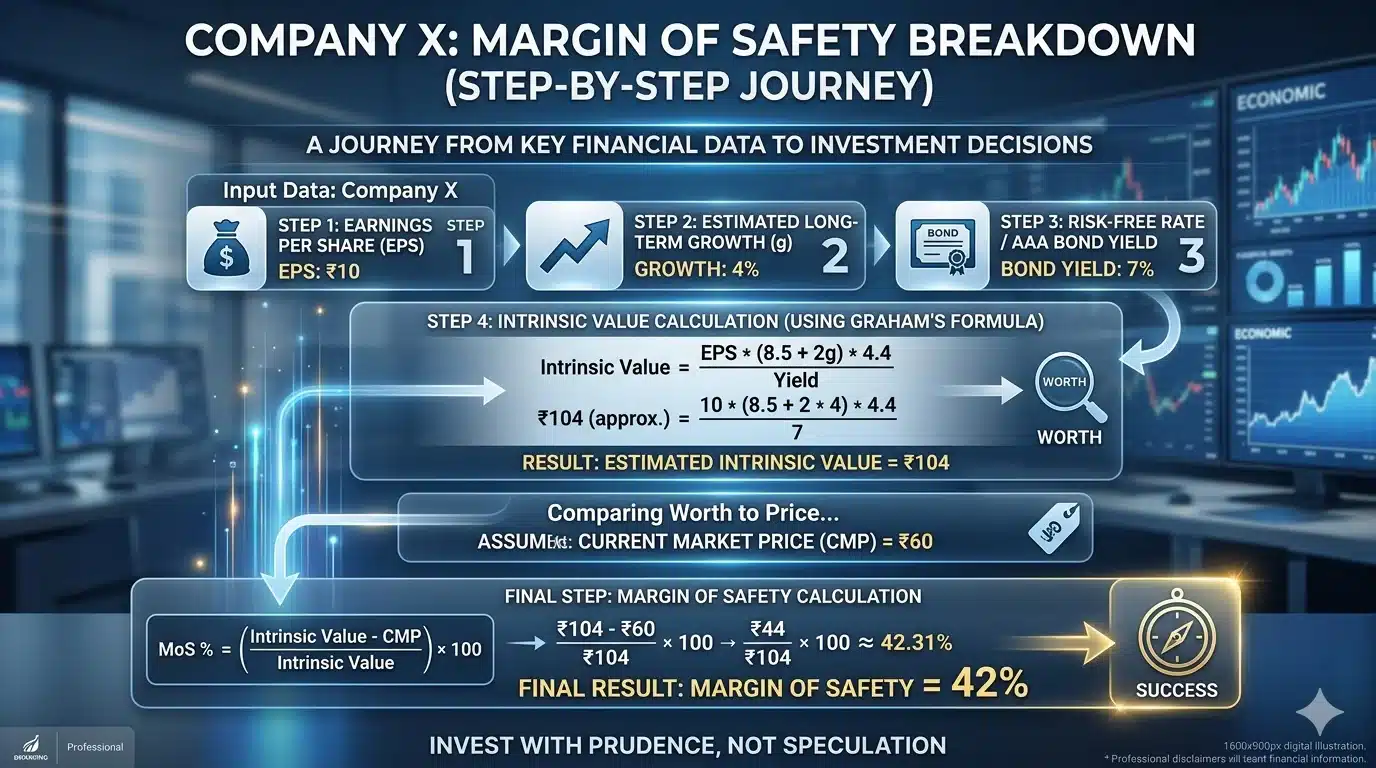
3. Explicit Indian Stock Example — Step-by-Step Calculation
आइए एक काल्पनिक कंपनी "Company X" (एक stable mid-cap manufacturing firm) का विश्लेषण करते हैं:
Scenario Data:
• Normalized EPS (10-year average): ₹10
• Expected long-term growth (g): 4% (0.04)
• Current AAA bond yield (2026): 7% (0.07)
• Current Market Price: ₹60
Step A: Calculate Intrinsic Price using Graham's Formula
• Growth Factor: 8.5 + (2 * 4) = 16.5
• Bond Yield Factor: 4.4 / 7 ≈ 0.6286
• Intrinsic Price: 10 * 16.5 * 0.6286 ≈ ₹104
Step B: Calculate Margin of Safety (MoS %)
• MoS % = [(104 - 60) / 104] * 100 ≈ 42.3%
Interpretation (व्याख्या):
Company X अभी ₹60 में मिल रही है, जबकि इसकी असली कीमत ₹104 होनी चाहिए। यहाँ आपको ~42% का Margin of Safety मिल रहा है।
- Conservative Investors के लिए: ≥ 30% MoS बहुत आकर्षक है।
- Exceptional Buy: ≥ 50% MoS।
⚠️ Practical Warnings:
Graham का formula एक guide है, "Gospel" (अंतिम सत्य) नहीं।
- Input Sensitivity: अगर growth (g) या bond yield में थोड़ा भी बदलाव हो, तो intrinsic value बदल जाएगी।
- Cyclical Firms: ऐसी कंपनियों के लिए हमेशा 5-10 साल के average earnings का उपयोग करें।
- Cross-check: हमेशा balance sheet (Debt) और management quality को भी check करें।

SECURITY ANALYSIS, CRITIQUE & THE MODERN REALITY
हमने Graham के principles और philosophy को समझ लिया है। अब समय है इसे Execution में बदलने का। यह अंतिम भाग आपको एक "Reader" से एक "Analyst" में बदलने के लिए डिज़ाइन किया गया है। यहाँ हम theoretical ज्ञान को practical Indian investment tools और 2026 की modern economic realities के साथ जोड़ेंगे।
SECTION 11: Chapters 11, 12, 13 & 19 — Security Analysis & Valuation Templates (Indian 2026)
Security analysis का असली goal है: यह determine करना कि क्या किसी company की Intrinsic Value > Market Price है, और क्या वहाँ पर्याप्त Margin of Safety उपलब्ध है।
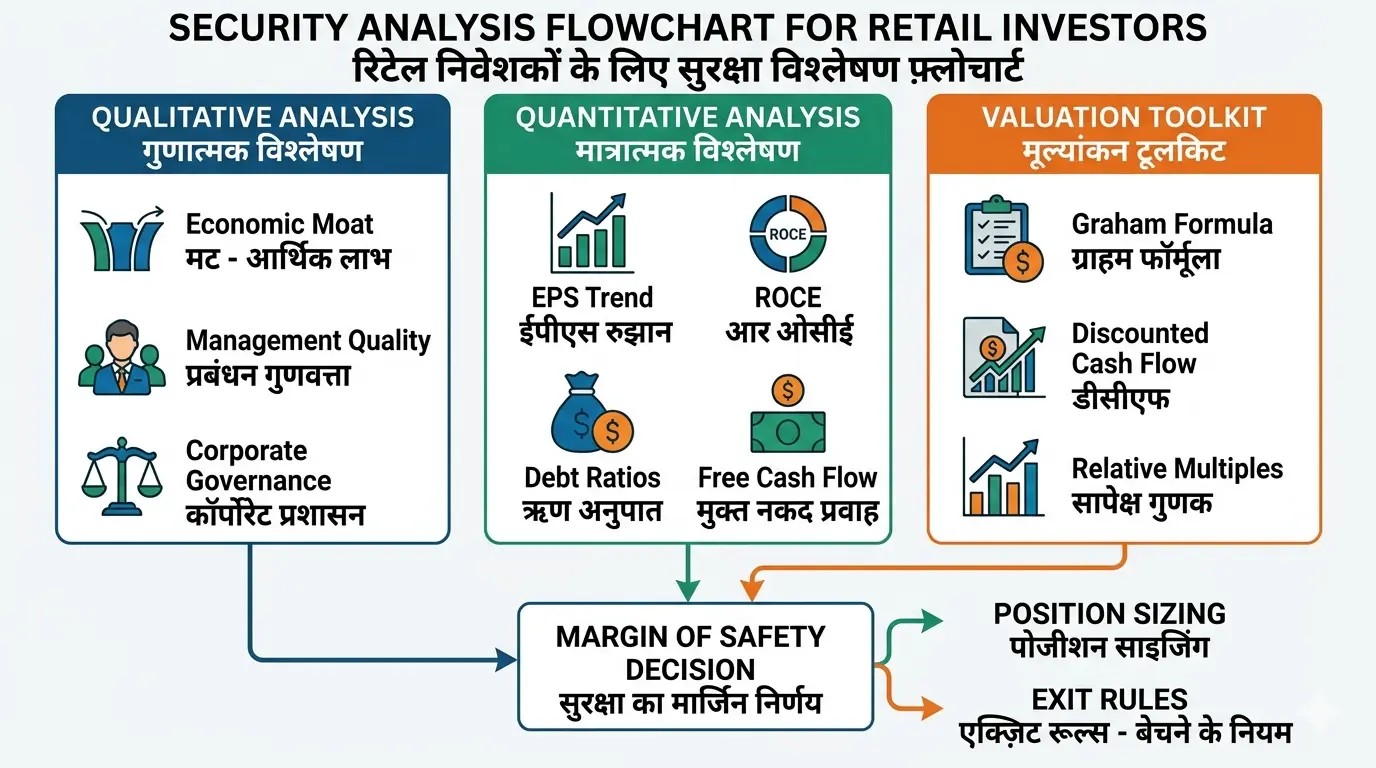
1. Security Analysis — Core Framework (Step-by-Step Checklist)
एक Intelligent Investor के रूप में, आपको इन 8 steps का पालन करना चाहिए:
• Enterprising investors: 12–20% Nominal Return का लक्ष्य रखें।
Indian Check: क्या कंपनी का ROCE (Return on Capital Employed) लगातार 15% से ऊपर रहता है?
• Interest Coverage Ratio: > 5x (ताकि ब्याज चुकाने में समस्या न हो)।
• Promoter Pledging: अत्यधिक pledging (गिरवी रखना) से बचें।
• Compliance: SEBI filings और past legal issues की जाँच करें।
2. Practical Valuation Blueprints (Templates for Retail Investors)
Template A — Quick Graham-Based Intrinsic Price (Fast Check)
यह formula उन निवेशकों के लिए है जो जल्दी एक baseline estimate चाहते हैं।
Template B — Relative Valuation with MoS (Peer Comparison)
- Step 1: अपने sector के 5 quality peers का Median P/E और Median P/B निकालें।
- Step 2: यदि Target Stock का P/E ≤ 0.7 * Median P/E AND P/B ≤ 0.7 * Median P/B है, तो इसे "Relative Bargain" मानें।
Template C — Simplified DCF (Discounted Cash Flow)
• Projection: अगले 5 वर्षों के Free Cash Flows (FCF) का अनुमान लगाएं।
• Discount Rate: 10–12% (Mid-caps के लिए 12%, High-quality Large-caps के लिए 10%)।
• Terminal Growth (g_terminal): 3–4% (Inflation के करीब)।
Template D — Earnings Power Value (EPV)
यह बिना growth के assumption के business की value बताता है:
3. Step-by-Step Screener Filters (Screener.in Copy-Paste Queries)
Defensive Filter (Nifty Large-caps):
Market Capitalization > 10000 AND
Debt to equity < 0.5 AND
Profit after tax > 0 AND
Average return on equity 10years > 15 AND
Dividend yield > 1 AND
Price to Earning < 20 AND
Price to book value < 3
Enterprising Filter (Value Hunt - Mid caps):
Market Capitalization > 500 AND Market Capitalization < 10000 AND
Current ratio > 1.2 AND
Debt to equity < 1.0 AND
Cash from operations > Net profit AND
Price to Earning < (Sector P/E * 0.7)
SECTION 12: Modern Adaptation — Crypto, AI, and Tech Stocks Warning
क्या 2026 के इस era में Graham के principles बेकार हो गए हैं? बिल्कुल नहीं। बस adaptation ज़रूरी है।
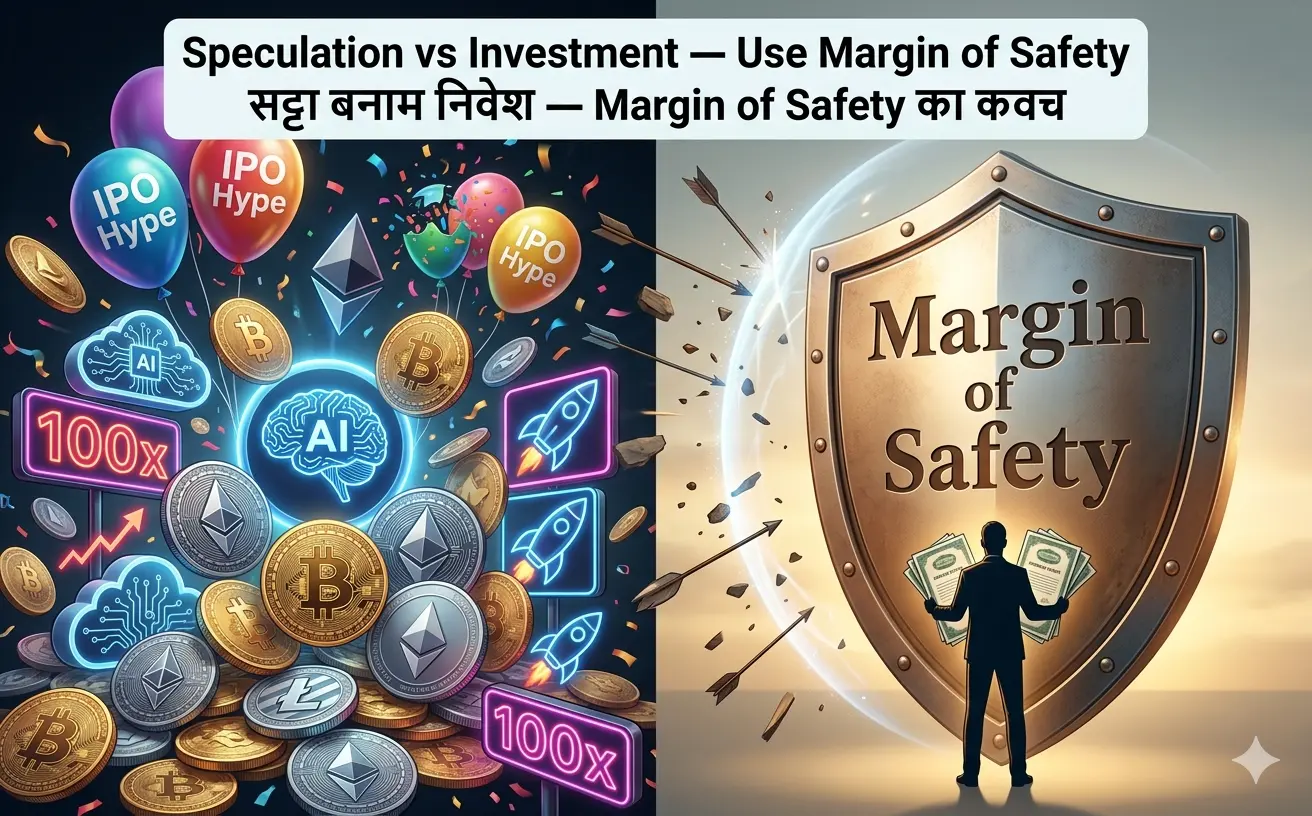
- Crypto (Bitcoin, Altcoins): इनमें no earnings, no cash flows, और no dividends होते हैं। Graham की दृष्टि में, इन्हें Speculation ही माना जाएगा। यदि आप allocate करते हैं, तो इसे अपने portfolio का केवल ≤ 2–5% हिस्सा ही रखें।
- Loss-making Tech IPOs: "Growth at any price" का trap। यदि किसी tech company का path to persistent FCF (Free Cash Flow) साफ़ नहीं है, तो उसे avoid करें। ऐसे stocks के लिए ≥ 40% का Margin of Safety मांगें।
- AI & Platform Businesses: AI companies में "Moat" (प्रतिस्पर्धी लाभ) देखना ज़रूरी है। क्या उनका AI model proprietary है? क्या उनका data advantage defensible है? यदि नहीं, तो यह केवल एक Hype है।
SECTION 13: Critique, Limitations & Modern Reconciliations
Critique: "Graham outdated हैं, वे growth firms को ignore करते हैं।"
Response: Graham का framework conservative है क्योंकि वह Safety को priority देता है। Warren Buffett और Charlie Munger ने Graham की "Margin of Safety" को "Quality/Moat" के साथ मिलाकर modern value investing को जन्म दिया।
Critique: "Intangible assets (Brand, Software) के दौर में Book Value का क्या मतलब?"
Response: Book Value एक tool है, अंतिम सत्य नहीं। Modern investors को Book Value के साथ-साथ FCF-based DCF और Normalized Earnings का भी उपयोग करना चाहिए।
SECTION 14: Practical Indian Playbook — Putting It All Together (2026)
अपनी वित्तीय सुरक्षा और पर्सनल मनी मैनेजमेंट के लिए व्यवस्थित योजना बनाना बेहद आवश्यक है। इसके लिए आप The Total Money Makeover Summary in Hindi के नियमों का भी उपयोग कर सकते हैं।
Your Monthly & Annual Routine:
Monthly Routine:
• SIP Auto-debit: (Defensive core के लिए)।
• Watchlist Update: (Enterprising candidates के लिए)।
• Management Note: Quarterly results के बाद management के guidance को पढ़ें।
Annual Routine:
• Rebalance: अपने target allocation (जैसे 50/50 या 75/25) को वापस लाएं।
• Intrinsic Recalculation: अपने top 10 holdings की intrinsic value फिर से calculate करें।
• Trim Positions: यदि price Intrinsic Value + 40% से ऊपर चला जाए, तो मुनाफा वसूलें (Profit booking)।
Risk Controls:
- Single Stock Exposure: Defensive के लिए ≤ 5%, Enterprising के लिए ≤ 12%।
- Emergency Cash: हमेशा 6 महीने के खर्च के बराबर राशि liquid debt funds में रखें। जीवन में स्थिरता और संतुलन की अधिक समझ के लिए Ikigai Book Summary in Hindi का दृष्टिकोण भी आपकी मदद कर सकता है।
SECTION 15: Final Thoughts & Reading Roadmap
Benjamin Graham ने investing को Science + Psychology का एक शक्तिशाली combo बनाया। 2026 के volatile Indian market में, उनकी conservative lens आपको AI hype और Crypto mania से बचाएगी।
Next Steps for your Journey (रीडिंग रोडमैप):
- "Security Analysis" (Graham & Dodd) — For deep technicals.
- "The Interpretation of Financial Statements" (Graham) — For accounting mastery.
- "The Psychology of Money" (Morgan Housel) — For behavioral discipline.
FAQs
(अक्सर पूछे जाने वाले प्रश्न)
The Intelligent Investor किसने लिखी है?
The Intelligent Investor Benjamin Graham ने लिखी है, जो value investing के father माने जाते हैं।
Warren Buffett ने इस किताब के बारे में क्या कहा था?
Warren Buffett ने इसे "the best book on investing ever written" कहा था।
Margin of Safety क्या होता है?
Margin of Safety वह buffer है जो आप intrinsic value और market price के बीच रखते हैं ताकि investment mistakes या market volatility से capital protect रहे।
Mr. Market कौन है?
Mr. Market Benjamin Graham की एक allegory है, जो market की mood swings को दर्शाती है। वह कभी बहुत उत्साहित होता है, कभी बहुत depressed, और investor को उसी हिसाब से prices offer करता है।
Is The Intelligent Investor A Hard read?
द इंटेलिजेंट इन्वेस्टर, बेंजामिन ग्राहम द्वारा लिखित, वैल्यू इन्वेस्टिंग पर एक क्लासिक बुक है जिसे दशकों से व्यापक रूप से पढ़ा और सम्मानित किया गया है। जबकि पुस्तक को पढ़ना कठिन तो नहीं है, लेकिन इसके कॉन्सेप्ट्स को पूरी तरह से समझने के लिए एक निश्चित स्तर के वित्तीय ज्ञान और शब्दावली की आवश्यकता होती है।
Is The Intelligent Investor good for India?
जी हां, बेंजामिन ग्राहम की द इंटेलिजेंट इन्वेस्टर भारत में निवेशकों के लिए एक अच्छी बुक है। वैसे तो यह पुस्तक मुख्य रूप से अमेरिकी दर्शकों को ध्यान में रखकर लिखी गई थी, लेकिन पुस्तक में उल्लिखित वैल्यू इन्वेस्टिंग और साउंड इन्वेस्टमेंट प्रैक्टिसेज के प्रिंसिपल्स भारत सहित दुनिया भर के निवेशकों पर लागू होते हैं।
Is The Intelligent Investor A Good book for Indian stock market?
बेंजामिन ग्राहम की द इंटेलिजेंट इन्वेस्टर भारतीय शेयर बाजार सहित किसी भी शेयर बाजार में निवेशकों के लिए एक timeless क्लासिक है।
क्या इंटेलिजेंट इन्वेस्टर किताब पढ़ने लायक है?
जी हां, बेंजामिन ग्राहम की द इंटेलिजेंट इन्वेस्टर वैल्यू इन्वेस्टिंग पर एक timeless क्लासिक बुक है जिसे हर एक इन्वेस्टर को अवश्य पढ़ना चाहिए।
Defensive Investor और Enterprising Investor में क्या फर्क है?
Defensive Investor कम time और कम risk के साथ diversified investing करता है, जबकि Enterprising Investor ज्यादा research करके active stock picking करता है।
क्या Graham की value investing strategy Indian investors के लिए useful है?
हाँ, बहुत useful है। Indian investors इसे blue-chip stocks, index funds, dividend stocks, और margin of safety-based stock selection में apply कर सकते हैं।
क्या crypto और AI stocks पर Graham के principles apply होते हैं?
Principles apply होते हैं, लेकिन highly speculative assets में intrinsic value estimate करना मुश्किल होता है। इसलिए Graham-style investors ऐसे assets को extra caution के साथ देखते हैं।
What are the main points of The Intelligent Investor?/What is the summary of The Intelligent Investor
The main points (summary) of The Intelligent Investor by Benjamin Graham are:
1. Invest in stocks with a margin of safety, focusing on their intrinsic value and avoiding speculation.
2. Diversify your portfolio across different asset classes and industries to reduce risk.
3. Use dollar-cost/rupee-cost averaging to invest regularly and avoid market timing.
4. Be patient and disciplined in your investment approach, focusing on long-term results rather than short-term market fluctuations.
5. Be aware of and avoid common investment pitfalls, such as emotional investing, overconfidence, and excessive fees.
6. Understand the difference between investing and speculation, and choose a strategy that aligns with your goals and risk tolerance.
7. Always conduct thorough research and analysis before making investment decisions.
Overall, The Intelligent Investor promotes a conservative, value-oriented approach to investing that emphasizes discipline, patience, and a focus on the long-term.
Graham के 7 defensive stock rules क्या हैं?
ये rules company size, financial strength, earnings stability, dividend record, earnings growth, P/E ratio, और P/BV ratio पर focus करते हैं।
क्या The Intelligent Investor beginners के लिए है?
हाँ, लेकिन कुछ concepts initially technical लग सकते हैं। फिर भी long-term wealth building सीखने के लिए यह beginners के लिए भी बहुत valuable है।
इस book summary का सबसे important takeaway क्या है?
सबसे बड़ा takeaway यह है कि investing में emotions नहीं, discipline, valuation, और margin of safety सबसे जरूरी हैं।
Must Read Book Summaries
(अन्य बुक समरीज़)
- As a Man Thinketh Summary in Hindi: 7 Life-changing Insights
- (James Clear) Atomic Habits Book Summary in Hindi: The 1% Solution to a Better Life
- The Power of Your Subconscious Mind Summary in Hindi- 20 Mind-Blowing Ways to Harness the Power of Your Subconscious Mind.
- The Power of Positive Thinking Summary in Hindi-16 Powerful Ways To Transform Your Mindset
- Do It Today Summary in Hindi-सफलता के 6 राज़
- Think And Grow Rich Summary In Hindi | सोचो और अमीर बनो
- Ikigai Book Summary in Hindi- Ikigai ढूंढने के 4 secret तरीके
- The Richest Man In Babylon Summary In Hindi- 7 Secrets to Become Rich
- The Secret Book Summary in Hindi- 3 अदभुत रहस्य मनचाही चीज़ पाने के
- The 7 Habits Of Highly Effective People Book Summary in Hindi (Complete)
- The Psychology of Money Summary in Hindi (Morgan Housel): 10 Key Money-Making Principles
- The Intelligent Investor Book Summary in Hindi: The Definitive Guide to Value Investing in 2023
- The Millionaire Fastlane Book Summary In Hindi: The Ultimate 10-Step Blueprint
- Chanakya Neeti Book Summary in Hindi-7 Secrets to Success
- The Alchemist Book Summary in Hindi: 7 Powerful Insights
- Attitude Is Everything Book Summary In Hindi: 5 Life-Changing Principles
- (Vatsyasyana)Kamasutra Book Summary in Hindi: 10 Secrets to a Great Sex Life
- (Peter Theil)Zero To One Book Summary in Hindi- 10 Lessons on the Power of Innovation to Create Wealth
- Sapiens Book Summary in Hindi- मानव जाति का संक्षिप्त इतिहास
- (Daniel Kahneman)Thinking Fast and Slow Summary in Hindi- 5 Powerful Insights.
- The Courage To Be Disliked Summary In Hindi- 5 Key Takeaways
- The Compound Effect Summary in Hindi: How to Achieve Your Goals with 1% Daily Progress
- The Almanack of Naval Ravikant Summary in Hindi: 4 Ways to Empower Your Life
- The Power of Now Summary in Hindi: 10 दिनों में तनाव कैसे दूर करें
- The Subtle Art of Not Giving a F*ck Summary in Hindi: 10 Powerful Lessons
- The 5 AM Club Summary in Hindi: 10 Powerful Habits for Success
- The Total Money Makeover Summary in Hindi: The 7 Baby Steps to Financial Freedom
- Men Are From Mars Women Are From Venus Summary in Hindi: The 4 Key Differences Between Men and Women
The Ultimate Intelligent Investor’s Mindset
"The Intelligent Investor हमें केवल अमीर बनना नहीं सिखाती, बल्कि यह सिखाती है कि अपने कमाए हुए पैसे को अज्ञानता और लालच की वजह से खोने से कैसे बचाएं। बाज़ार में उतार-चढ़ाव हमेशा रहेंगे, लेकिन एक सच्चा बुद्धिमान निवेशक वही है जो Mr. Market के मूड स्विंग्स पर नहीं, बल्कि अपने इमोशनल डिसिप्लिन और Margin of Safety पर भरोसा करता है।"
🗣️ अब आपकी बारी है: Let's Discuss!
इस डिटेल्ड गाइड को पढ़ने के बाद, आपको क्या लगता है—अपनी वर्तमान लाइफस्टाइल और रिस्क प्रोफाइल के हिसाब से क्या आप एक Defensive Investor हैं या एक Enterprising Investor?
क्या आप 2026 के इस भारतीय बाज़ार को ओवरवैल्यूड मानते हैं? अपने विचार नीचे Comments में हमारे साथ ज़रूर साझा करें!