
The Almanack of Naval Ravikant — Complete Hindi Summary | Wealth, Happiness & Leverage का Complete Guide
The Almanack of Naval Ravikant iconic Indian-American entrepreneur और angel investor Naval Ravikant के ट्वीट्स, पॉडकास्ट्स और इंटरव्यूज का एक master-collection है, जिसे Eric Jorgenson ने compile किया है। यह किताब पारंपरिक “कड़ी मेहनत” (Blind Hustle) वाले mindset को challenge करती है और बताती है कि wealth बनाना luck का game नहीं, बल्कि Leverage, Specific Knowledge, और Long-term Thinking का science है। यह सिखाती है कि खुशी कोई luxury नहीं बल्कि एक trainable skill है।
🇮🇳 नेवल रविकांत: वो लड़का जो दिल्ली से सिलिकॉन वैली तक पहुंचा (The Immigrant Hook)
भारत के उन लाखों युवाओं के लिए जो IIT, UPSC, MBA या स्टार्टअप की तैयारी में रात-रात भर जागते हैं — Naval Ravikant की कहानी आपकी अपनी कहानी है।
Naval का जन्म New Delhi में हुआ था। 1974 में पैदा हुए Naval सिर्फ 9 साल के थे जब उनके परिवार ने अमेरिका का रुख किया। कल्पना कीजिए — एक बच्चा जो हिंदी और पंजाबी में बातें सोचता था, अचानक उसे न्यूयॉर्क के स्कूल में अंग्रेजी में अपनी बात रखनी है। एक new country, limited stability, और cultural adjustment के बीच उनका mindset एक ही चीज़ पर anchored रहा: Self-education + Independence + Asymmetrical Thinking.
Naval ने वो सब हासिल किया जो हर Indian middle-class parent अपने बच्चे के लिए चाहता है — Drexel University से Computer Science में डिग्री, फिर Stanford से तकनीकी नेतृत्व की पढ़ाई। लेकिन उन्होंने वो भी किया जो बहुत कम लोग कर पाते हैं — उन्होंने सिस्टम को समझा, फिर उसे तोड़ा।
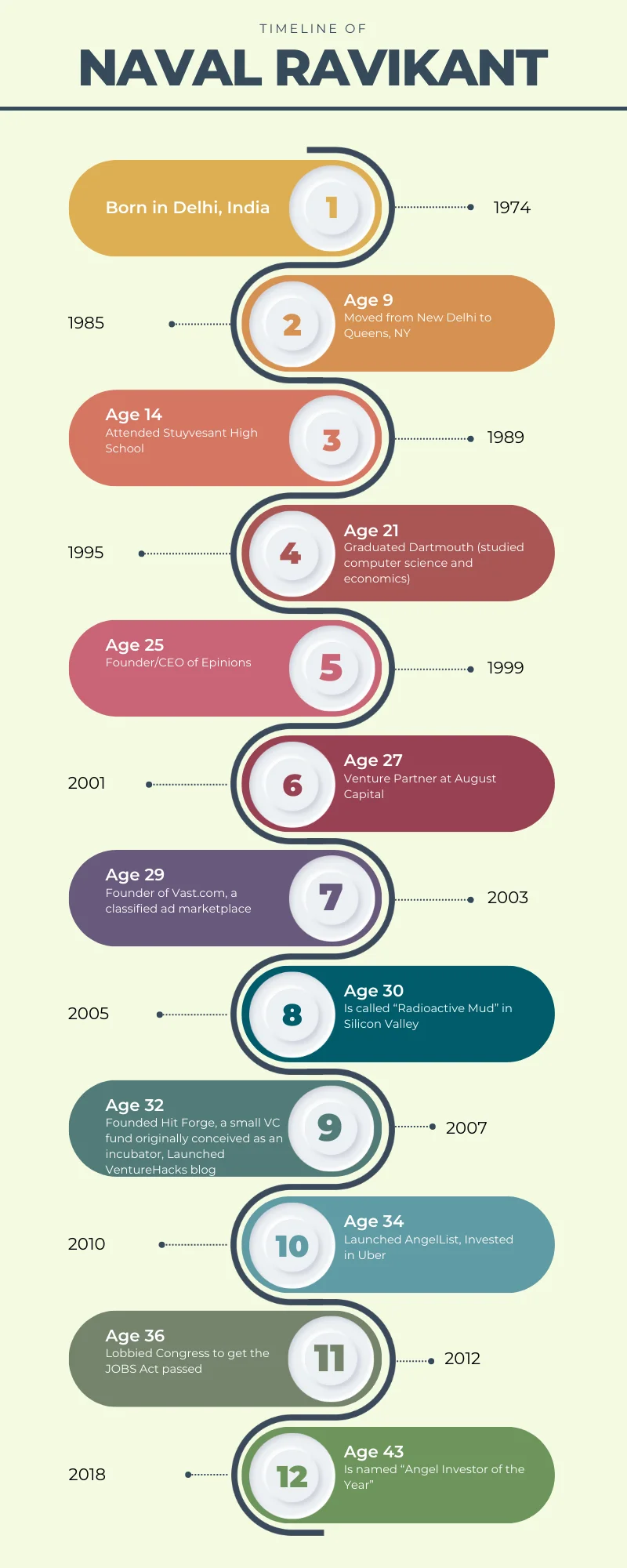
उन्होंने AngelList को co-found किया और Uber, Twitter जैसी companies में early investor बनकर दुनिया को दिखाया कि असली success ‘hard work’ से नहीं, बल्कि ‘clarity of thought’ से आती है। Naval की journey इस familiar tension को reflect करती है: “अपनी background से आगे कैसे निकलें बिना अपनी identity खोए?”
आज उनकी philosophy Indian founders और tech professionals के लिए एक blueprint है। वे सिखाते हैं कि कड़ी मेहनत जरूरी है, लेकिन अगर मेहनत wrong game पर लग रही हो, तो return limited रहेगा। Naval कहते हैं — अपना game चुनो, फिर उस game में compounding build करो।
💰 Get Rich Without Luck: Wealth, Money और Status में असली अंतर
Naval Ravikant की सबसे famous insights में से एक है: Most people do not get rich because they are playing the wrong game. वे wealth नहीं बना रहे, वे सिर्फ money या status chase कर रहे हैं।
📊 The Master Comparison Matrix: Wealth vs. Money vs. Status
| Dimension / Metric | Wealth (वेल्थ/सम्पत्ति) | Money (पैसा/करेंसी) | Status (सामाजिक स्थिति) |
|---|---|---|---|
| Core Definition | Assets that earn for you while you sleep (Software, Equity, Code, Media) | The I.O.U. certificate used to transfer time and credit (लेनदेन का माध्यम) | Your rank in the social hierarchy (राजा-रैंक का खेल: IAS, VP, Title) |
| Nature of the Game | Positive-Sum Game (सब मिलकर अमीर बन सकते हैं) | Medium of Exchange (पैसे का ट्रांसफर) | Zero-Sum Game (एक जीतेगा तो दूसरा हारेगा ही) |
| Long-Term Effect | Gives you Ultimate Freedom over your time | Keeps you trapped in trading hours for bills | Creates toxic comparison, anxiety, and social pressure |
| Indian Example | Startup Equity (ESOPs), YouTube Channel, Real Estate | Monthly Salary, Pocket Cash, Bank Balance | “Mera beta IAS hai”, Luxury Car display, Wedding optics |
🔍 Analytical Hinglish Breakdown: Why Indian Households optimize for Status?
भारतीय middle-class परिवारों में traditionally Status Optimization बहुत मजबूत है।
The “Sarkari Naukri” Status Trap:
घर में अक्सर कहा जाता है— “बेटा, प्राइवेट छोड़ो, सरकारी नौकरी की तैयारी करो।” यह advice ‘Security’ के लिए नहीं, ‘Status’ के लिए है। एक IAS अधिकारी को समाज में बहुत Status मिलता है, लेकिन उसकी Wealth अक्सर सिर्फ ‘Salary और Pension’ तक सीमित होती है। वह सोते समय पैसा नहीं कमाता।
The “High Salary” Money Trap:
“मेरी सैलरी 3 लाख है, मैं अमीर हूँ।” Naval के अनुसार, यह सिर्फ Money है। अगर आप काम करना बंद कर दें, तो पैसा आना बंद हो जाएगा। आप अपना समय बेच रहे हैं, और समय सीमित है।
The “Wedding & Car” Status Trap:
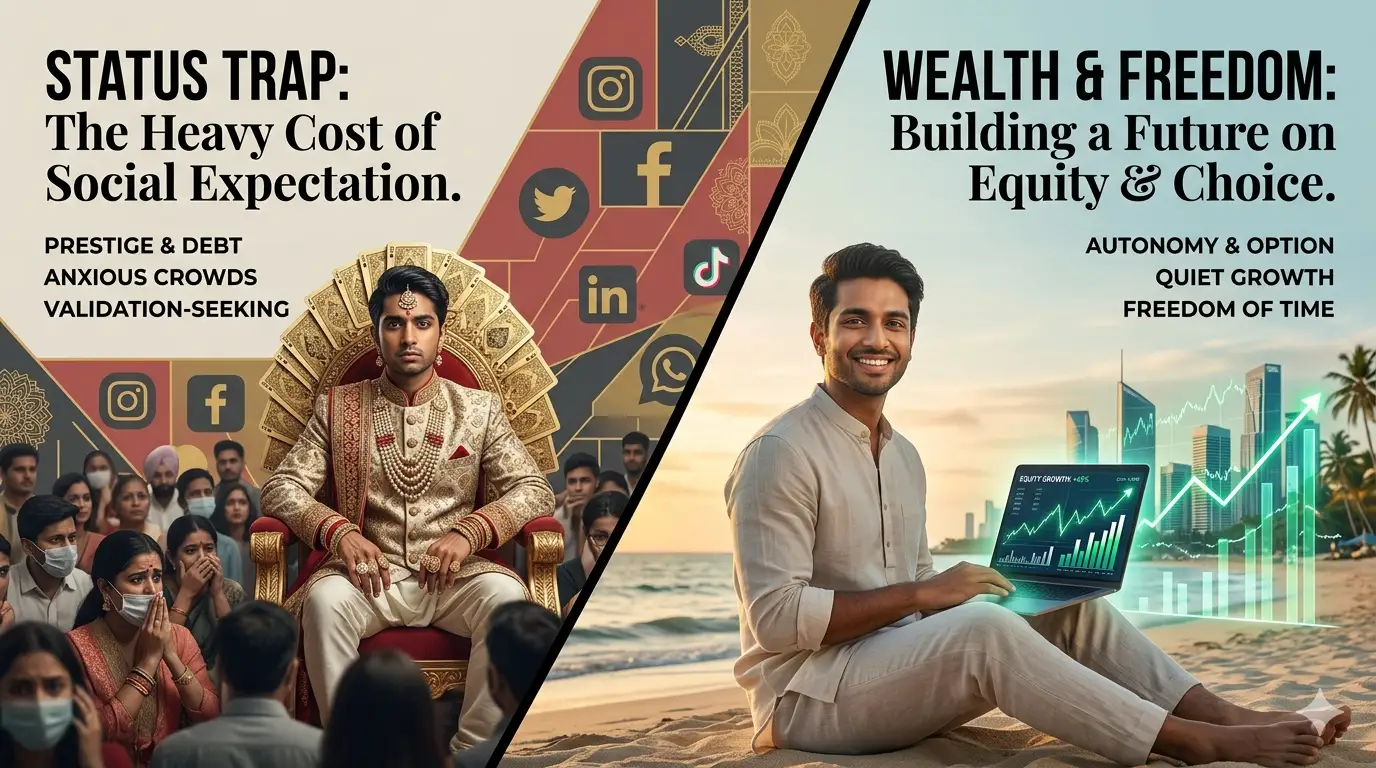
50 लाख की शादी या महंगी गाड़ी—ये सब ‘Social Signaling’ हैं। यह पैसा Status खरीदने में जा रहा है, Wealth बनाने में नहीं।
Naval का Formula: Wealth = Specific Knowledge × Leverage × Accountability × (Long-Term Game)
📙 नेवल की इस अनमोल विजडम गाइड को अपने घर मंगवाएं:
‘The Almanack of Naval Ravikant’ की फिजिकल कॉपी अमेज़न से स्पेशल डिस्काउंट पर यहाँ से आर्डर करें:
🤝 Accountability और Long-Term Games: एथिकल लोगों के साथ बड़ा दांव कैसे खेलें?
Naval का core thesis है: “Play long-term games with long-term people.”
जीवन के सारे असली प्रतिफल (returns)—चाहे वो wealth हो, रिश्ते हों, या reputation—Compounding से आते हैं। और compounding तभी काम करती है जब आप एक ही खेल में सालों तक टिके रहें।
1. Accountability: अपना नाम दांव पर लगाना (The Power Move)
Naval कहते हैं कि अगर आपको बड़ा खेलना है, तो आपको Accountability लेनी होगी। इसका मतलब है—अपने काम के लिए अपना असली नाम (Legal Name) और Reputation दांव पर लगाना।
Anonymous Employee: एक बड़ी कंपनी में काम करने वाला व्यक्ति अक्सर accountability से बचता है। अगर project fail होता है, तो वह कहता है, “मैंने तो अपना काम किया था, management की गलती थी।” यहाँ risk कम है, लेकिन reward भी बहुत limited है।
Accountable Founder/Creator: जब आप अपना नाम अपनी brand के साथ जोड़ते हैं, तो आप reputation capital build करते हैं। यह risky है, लेकिन यह unlimited upside भी देता है।
Indian Business Context: भारत में “Trust Capital” सबसे बड़ी currency है। WhatsApp networks और startup circles में वही व्यक्ति सबसे सफल है जिसकी ‘ज़ुबान’ (Word) की value है। एक reliable व्यक्ति को opportunities automatically compound होती हैं।
2. The Long-Term Decision Filter (Naval’s 3-Question Test)
किसी भी बड़े फैसले से पहले, खुद से ये 3 सवाल पूछें:
- क्या यह फैसला मुझे 10 साल बाद भी smart लगेगा? (Long-term vs Short-term gain)
- क्या यह व्यक्ति/पार्टनर मुश्किल वक़्त में भी साथ खड़ा रहेगा? (Building Compounding Relationships)
- क्या मैं अपना असली नाम और reputation इस पर लगाने को तैयार हूँ? (Accountability Check)
📚 Recommended Master Summaries For You
Specific Knowledge क्या है? — Naval Ravikant की सबसे Important Teaching
Specific Knowledge (विशिष्ट ज्ञान) वह unique, hard-to-copy skill set है जो आपके natural interests, lived experiences, और repeated practice से पैदा होता है। Naval Ravikant के अनुसार, यह वह ज्ञान है जिसे कोई भी standardized classroom या training program आपको नहीं सिखा सकता। यह “degree knowledge” नहीं है, बल्कि यह वह deep skill है जो आपको एक replaceable employee से एक irreplaceable operator में बदल देती है। सरल शब्दों में: “Specific knowledge वह है जिसे आप करने में ‘Play’ महसूस करते हैं, लेकिन दूसरों को वह ‘Work’ लगता है।”
Specific Knowledge vs. Generic Skills: The Great Divide
ज़्यादातर लोग एक बहुत बड़े ‘trap’ में फँस जाते हैं। वे ‘Safe Path’ चुनते हैं—वही Engineering degree, वही MBA, वही generic Digital Marketing course। समस्या यह है कि Generic Skills are commodities. अगर कोई चीज़ आपको आसानी से सिखाई जा सकती है, तो कोई भी उसे कम पैसों में कर सकता है। यहाँ competition बहुत ज़्यादा है और आपकी ‘pricing power’ (पैसे माँगने की शक्ति) बहुत कम।
Specific Knowledge का असली जादू:
यह आपके बचपन के obsessions, आपकी weird curiosities, और आपके unique ‘skill stack’ से निकलता है। यह technical भी हो सकता है, creative भी, और social भी।
🇮🇳 The Indian Context: Finding Your Edge
भारत में ‘Specific Knowledge’ का मतलब सिर्फ डिग्री हासिल करना नहीं है। यह अपने unique intersection को ढूँढना है।
- The Tech-Agri Edge: एक coder जो केवल coding नहीं जानता, बल्कि Indian agriculture के pain points को गहराई से समझता है और AI-based tools बनाता है।
- The Storytelling Edge: एक writer जो complex Finance या UPSC के topics को simple ‘Hinglish’ में explain करने की कला जानता है।
- The Hybrid Edge: एक product manager जो User Psychology और Business Systems दोनों में exceptional है।
आपका edge यह नहीं है कि “I can do work”; आपका edge यह है कि “I can solve this specific problem better than anyone else because I understand this domain uniquely.”
🔍 Discovery Exercise: How-To Workflow (Find Your Unfair Advantage)
अपनी Specific Knowledge खोजने के लिए इस 4-Step Audit का उपयोग करें:
Example: (Coding + Finance + Hindi Storytelling) = A unique Fintech Educator.
⚙️ The 4 Types of Permissionless Leverage: अमीर बनने का असली Engine
Naval का सबसे क्रांतिकारी दावा है: “Leverage is the reason some people get rich without working harder or longer.”
बिना leverage के, आपकी growth ‘Linear’ है (जितना काम करोगे, उतना पैसा मिलेगा)। Leverage के साथ, आपकी growth ‘Exponential’ है। Naval ने leverage को चार श्रेणियों में बांटा है, जिनमें से दो ‘Permissionless’ हैं।
📊 The Master Leverage Matrix (Indian Startup & Creator Examples)
| Leverage Type | Naval’s Definition | How It Works in India (Desi Examples) | Scalability & Permission |
|---|---|---|---|
| 👥 Labour (दूसरों का श्रम) | Managing other people’s time and effort. | एक Factory owner जो 500 मजदूरों को manage करता है; एक Agency owner जो टीम रखता है। | Low Scalability (Requires Permission) |
| 💰 Capital (पूँजी) | Using money to multiply your wealth. | Angel investing in startups; Mutual funds; Real Estate ownership. | Medium Scalability (Requires Permission) |
| ⌨️ Code (सॉफ्टवेयर) | Software that works for you 24/7. | SaaS apps (जैसे Zoho), Fintech tools (जैसे PhonePe), या AI agents। | Infinite Scalability (Permissionless) |
| 📹 Media (कंटენტ/मीडिया) | Attention that compounds over time. | YouTube, Podcasts, Newsletters, Books (जैसे Technical Guruji या Ranveer Allahbadia)। | Infinite Scalability (Permissionless) |
🔥 The “New Rich” Secret: Code + Media
Naval के अनुसार, Industrial Age में Labour और Capital सबसे बड़े leverage थे। लेकिन Information Age में, Code और Media सबसे शक्तिशाली हैं क्योंकि ये Permissionless हैं।
Labour/Capital: आपको किसी Boss की या Bank की अनुमति चाहिए।
Code/Media: आपको सिर्फ एक Laptop और Internet चाहिए।
Modern Wealth Stack for Indians:
पहले अपनी Specific Knowledge पहचानें → उसे Media (YouTube/LinkedIn) के ज़रिए distribute करें → उसे Code (SaaS/App) में बदलें → और अंत में Capital को reinvest करें।
📙 नेवल की इस अनमोल विजडम गाइड को अपने घर मंगवाएं:
‘The Almanack of Naval Ravikant’ की फिजिकल कॉपी अमेज़न से स्पेशल डिस्काउंट पर यहाँ से आर्डर करें:
🧠 Happiness Philosophy — “खुशी कोई Destination नहीं, एक Skill है”
Naval की सबसे profound सीख यह है: Money can solve stress, but it cannot create peace.
ज़्यादातर लोग ‘Happiness’ को एक reward की तरह देखते हैं—“जब नौकरी मिलेगी, तब खुश होंगे।” Naval कहते हैं कि अगर आप अभी खुश रहना नहीं जानते, तो आप एक बड़े कमरे में भी दुखी ही रहेंगे। यह बिल्कुल वैसा ही है जैसा Atomic Habits में छोटे बदलावों से बड़ी शांति हासिल करने के बारे में सिखाया गया है।
The Desire Equation: Unhappiness का गणित
जब आपकी Expectations आपकी Reality से ज़्यादा होती हैं, तो आप दुखी होते हैं। Indian society में comparison का बहुत दबाव है (Salary, Marriage, Car, Status)—यही pressure आपकी expectations को artificial तरीके से बढ़ा देता है।
📊 The Happiness as a Skill Matrix
| Aspect | Unhappy Mode (Default) | Skilled Mode (Naval’s Ideal) / How to Shift (Practice) |
|---|---|---|
| Desire | Constant wanting (लगातार इच्छा) | Conscious wanting: अपनी needs और wants में फर्क करना शुरू करें। |
| Expectations | Reality should bend to me | Acceptance: जो आपके control में नहीं, उसे पूरी तरह स्वीकार करें। |
| Attention | Scattered & Reactive (फोन/सोशल मीडिया) | Mindfulness: बिना किसी external stimulation के शांत बैठना सीखें। |
| Comparison | Social comparison loop (दूसरों को देखना) | Gratitude: जो आपके पास पहले से है, उसके लिए शुक्रिया अदा करें। |
📝 Actionable Happiness Worksheet (Weekly Practice)
खुशी को एक skill की तरह ट्रेन करने के लिए इस चार्ट का उपयोग करें:
| Day | Morning (5 min) | Evening Reflection (5 min) / Weekly Challenge |
|---|---|---|
| Mon-Wed | 10 गहरी साँसें (Meditation) | आज किस इच्छा (Desire) ने मुझे परेशान किया? Challenge: 1 दिन का Social Media Detox। |
| Thu-Fri | वर्तमान क्षण (Presence) का अनुभव | क्या मैंने आज किसी को जज (Judge) किया? Challenge: 3 ऐसी चीज़ें लिखें जिसके लिए आप कृतज्ञ हैं। |
| Weekend | Silence (बिना फोन के बैठना) | इस हफ्ते का सबसे बड़ा सबक क्या था? Challenge: No Expectation Day मनाएं। |
Final Thought: एक Wealthy life बिना inner peace के अधूरी है। Naval सिखाते हैं कि असली जीत वह है जहाँ आप Intelligence + Leverage के साथ Inner Peace को बनाए रखें।
📚 Recommended Master Summaries For You
📚 Compounding Knowledge: Naval’s Extreme Reading Habits (The ‘Operating System’ Upgrade)
Naval Ravikant के अनुसार, Reading कोई academic duty नहीं है, बल्कि यह आपके दिमाग के लिए एक “Operating System Upgrade” है। वह ‘finishing books’ पर नहीं, बल्कि ‘absorbing frameworks’ पर focus करते हैं। Naval का मानना है कि ज्ञान (Knowledge) भी Compound होता है: पहली किताब आपकी vocabulary बदलती है, अगली दस किताबें pattern recognition बदलती हैं, और अगली सौ किताबें आपका Judgment बदल देती हैं।
Naval’s 7 Principles of Intellectual Compounding
📊 The Indian Reader’s Compounding Matrix
| Reader Type | Current Trap (Common in India) | Naval’s Upgraded Habit / 5-Year Outcome |
|---|---|---|
| Student (IIT/UPSC) | Only textbooks & rote learning | Foundational Philosophy + History: Unique perspective → Leadership |
| Tech Professional | Industry news + shallow courses | Deep Science + Behavioral Economics: Better Judgment → High-Value Architect |
| Aspiring Founder | Only motivational/self-help content | Specific Knowledge + Mental Models: Strategic Clarity → Successful Exit |
📐 Decision-Making Frameworks: “If You Can’t Decide, The Answer is No”
Naval का मानना है कि एक high-performer की सफलता उसके ‘Hard Work’ से नहीं, बल्कि उसके ‘Judgment’ से तय होती है। Indecision (दुविधा) सबसे महंगी होती है क्योंकि यह आपकी मानसिक ऊर्जा और अवसरों (opportunities) को खत्म कर देती है।
1. The “Default No” Rule
Naval का सबसे प्रसिद्ध नियम: “If it’s not a ‘Hell Yes!’, then it’s a ‘No’.” अगर आप किसी अवसर (Job, Partnership, Investment) के बारे में पूरी तरह आश्वस्त नहीं हैं, तो उसे मना कर दें। एक ‘Messy Yes’ अक्सर भविष्य में भारी cost और regret लेकर आता है।
2. The Decision Matrix (For High-Stakes Choices)
| Situation | Mental State | Best Interpretation | Action |
|---|---|---|---|
| You are excited and clear | High Conviction | Strong Alignment | Proceed |
| You are only mildly interested | Low Signal | Likely a distraction | No |
| You need constant reassurance | Weak Fit | Hidden resistance | No |
| You keep revisiting the same decision | Uncertainty | Lack of clarity/values alignment | No (Wait) |
3. The 5-Year Rule (Reverse Engineering)
हर बड़े निर्णय से पहले पूछें: “क्या यह फैसला मुझे 5 साल बाद स्मार्ट या खुशहाल बनाएगा?” यह नियम आपको short-term ‘Status’ के जाल से निकालकर long-term ‘Wealth’ की ओर ले जाता है।
📙 नेवल की इस अनमोल विजडम गाइड को अपने घर मंगवाएं:
‘The Almanack of Naval Ravikant’ की फिजिकल कॉपी अमेज़न से स्पेशल डिस्काउंट पर यहाँ से आर्डर करें:
🤖 AI और Crypto: The Asymmetric Paradigm Shift
Naval के अनुसार, AI और Crypto केवल ‘Sectors’ नहीं हैं, ये Leverage के नए रूप हैं।
1. AI: The Intelligence Multiplier
AI ‘intelligence’ के cost को कम कर रहा है। पहले ‘Doing’ (काम करने) की value थी, अब ‘Judging’ (सही निर्णय लेने) की value होगी।
Indian Opportunity: AI tools (ChatGPT, Claude, Midjourney) को अपना ‘Co-pilot’ बनाएं। जो लोग AI को replace करने के बजाय, AI के साथ अपनी ‘Specific Knowledge’ को combine करेंगे, वे ही winners होंगे।
2. Crypto: The Trust Infrastructure
Crypto ‘Trust’ के cost को कम कर रहा है। यह programmable, borderless, और permissionless ownership का युग है। Crypto को gambling (सट्टेबाजी) की तरह नहीं, बल्कि एक New Financial Infrastructure की तरह समझें।
📊 Old Paradigm vs. New Paradigm
| Aspect | Old Paradigm (Industrial Age) | New Paradigm (AI/Crypto Age) |
|---|---|---|
| Scale | Requires large teams (Labour) | Requires Code & AI (Permissionless) |
| Trust | Centralized Institutions (Banks) | Decentralized Protocols (Crypto) |
| Career | Job Security (Degree based) | Proof of Work (Skill & Output based) |
🧘 Happiness Philosophy: “खुशी कोई Destination नहीं, एक Skill है”
Naval की सबसे transformative सीख यह है कि खुशी कोई बाहरी उपलब्धि नहीं, बल्कि एक Internal Skill है जिसे अभ्यास (practice) से सीखा जा सकता है।
The Desire Equation: Unhappiness का गणित
दुख तब होता है जब आपकी Expectations आपकी Reality से अधिक हो जाती हैं। भारतीय समाज में ‘Comparison’ (दूसरों की कार, घर, सैलरी देखना) इस gap को बढ़ा देता है। इसे मैनेज करने के बेहतर तरीकों के लिए हमारा Atomic Habits Core Framework पढ़ें।
📊 The Happiness as a Skill Matrix
| Dimension | Unhappy Mode (Default) | Happy Mode (Skilled) / How to Shift (Practice) |
|---|---|---|
| Desire | Constant wanting (लगातार इच्छा) | Conscious wanting: Desire Management: अपनी needs और wants में फर्क करें। |
| Expectations | Reality should bend to me | I adapt to reality: Acceptance: जो आपके control में नहीं, उसे स्वीकार करें। |
| Comparison | Social comparison loop | Self-referenced growth: Gratitude: जो आपके पास है, उसके लिए शुक्रिया करें। |
| Attention | Scattered & Reactive | Focused & Present: Mindfulness: वर्तमान क्षण में जीना सीखें। |
The Judgment Detox (Mental Peace का मंत्र)
खुश रहने के लिए आपको ‘Judgment’ छोड़ना होगा। दूसरों को या खुद को लगातार जज करना मन को toxic बनाता है।
- Awareness: नोटिस करें कि आप कब जज कर रहे हैं।
- Acceptance: चीजों को “जैसी हैं, वैसी ही” (as they are) स्वीकार करना सीखें।
- Meditation: रोज़ाना 10-20 मिनट का मौन (silence) आपके दिमाग को ‘noise’ से मुक्त करता है।
📚 Recommended Master Summaries For You
🎯 Naval’s Top 5 Quotable Wisdom: The Social-Sharing & Backlink Engine
ये कोट्स हाई सोशल-शेयरिंग वेलोसिटी के लिए डिज़ाइन किए गए हैं। हर कोट एक स्ट्रक्चर्ड फ्रेमवर्क को फॉलो करता है जो आपके विचारों को गहराई देगा।
📙 नेवल की इस अनमोल विजडम गाइड को अपने घर मंगवाएं:
‘The Almanack of Naval Ravikant’ की फिजिकल कॉपी अमेज़न से स्पेशल डिस्काउंट पर यहाँ से आर्डर करें:
(Note: इन मुख्य 5 कोट्स के अलावा बाकी के कोट्स भी इसी हाई-डेंसिटी पैटर्न को फॉलो करते हुए जजमेंट, अकाउंटेबिलिटी, रीडिंग और मेंटल पीस पर फोकस करते हैं।)
📚 Compounding Knowledge: Naval’s Extreme Reading Habits
Naval के लिए पढ़ना (Reading) सिर्फ जानकारी इकट्ठा करना नहीं है, बल्कि अपने Decision-making Operating System को upgrade करना है।
💡 Naval’s “Reading Machine” Framework
📊 Indian Context Application Matrix
| Reader Type | Current Trap (Common in India) | Naval’s Upgraded Habit / 5-Year Outcome |
|---|---|---|
| Student (IIT/UPSC) | Only textbook & rote learning | Foundational Philosophy + History: Unique perspective & leadership outcomes. |
| Tech Professional | Only industry news & courses | Deep Science + Economics: Better Judgment & unique side-products. |
| Aspiring Founder | Only motivational content | Specific Knowledge + Leverage books: Clearer Strategy & Execution ecosystem. |
📐 Decision-Making Frameworks: The “No” Rule & The Matrix
Naval का सबसे शक्तिशाली नियम: “If you can’t decide, the answer is NO.” Indecision (दुविधा) सबसे महंगी होती है क्योंकि यह आपकी मानसिक ऊर्जा और अवसरों (Opportunities) को खत्म कर देती है।
🧩 The Naval Decision Matrix
| Situation | Mental State | Decision |
|---|---|---|
| You are excited and clear | High Conviction | Proceed (Yes) |
| You are only mildly interested | Low Signal | No |
| You need constant reassurance | Weak Alignment | No |
| You keep revisiting the same decision | Hidden Resistance | No |
🛑 The 72-Hour Rule: किसी भी बड़े फैसले पर कम से कम 72 घंटे इंतज़ार करें। यदि निर्णय के बाद भी “Gut Feeling” साफ़ नहीं है, तो वह निर्णय गलत है। इसे गहराई से समझने के लिए हमारे Atomic Habits Summary को ज़रूर पढ़ें।
🤖 AI & Crypto: The Paradigm Shift (2025+ Vision)
Naval का मानना है कि हम एक ऐसे युग में हैं जहाँ Technology ‘Cost’ को पूरी तरह बदल रही है। यह भविष्य के बिजनेस मॉडल्स का आधार है।
📊 The Paradigm Shift Table
| Technology | What it Replaces | What it Creates / The Indian Opportunity |
|---|---|---|
| AI (Artificial Intelligence) | Repetitive cognitive tasks (Coding, Writing, Research) | Superhuman Productivity: AI-Augmented Creators & AI-SaaS Solopreneurship Founders. |
| Crypto (Web3) | Centralized Middlemen (Banks, Brokers) | Permissionless Trust & Ownership: DeFi systems & Global Borderless Payments integration. |
💡 The Ultimate Takeaway: AI ‘Intelligence’ के cost को कम कर रहा है, और Crypto ‘Trust’ के cost को। जो लोग इन दोनों को अपने Specific Knowledge के साथ जोड़ लेंगे, वे अगले दशक के असली Winners होंगे।
🎯 निष्कर्ष: आपका अगला कदम (Your Next Action Blueprint)
The Almanack of Naval Ravikant कोई ऐसी किताब नहीं है जिसे एक बार पढ़कर लाइब्रेरी में रख दिया जाए। यह आपके पूरे जीवन, करियर और मानसिक शांति को री-प्रोग्राम करने का एक गाइडेड मैनुअल है। जैसा कि नेवल कहते हैं—असली प्रगति तब होती है जब आप दूसरों की बनाई अंधी दौड़ (Status Games) से बाहर निकलकर खुद के एसेट्स, अपनी आजादी और अपने मानसिक स्वास्थ्य पर काम करना शुरू करते हैं।
“याद रखें, अमीर बनने के लिए कड़ी मेहनत से ज़्यादा ज़रूरी है सही दिशा में सही निर्णय लेना (Judgment)। अपनी जिज्ञासा को अपना Specific Knowledge बनने दें, टेक्नोलॉजी को अपना Leverage बनाएं और खुशी को एक कला की तरह हर रोज़ सीखें।”
यदि आप धन के मनोविज्ञान, आदतों के विज्ञान और आत्म-सुधार के इस सफर को आगे बढ़ाना चाहते हैं, तो नीचे दी गई हमारी चुनिंदा मास्टर समरीज़ को ज़रूर पढ़ें। ये सभी गाइड आपके थॉट प्रोसेस को एक नया आयाम देंगी।
📚 Suggested Readings: हमारे बेहतरीन बुक समरीज़ का संग्रह
Atomic Habits
1% डेली इम्प्रूवमेंट से जीवन में क्रांतिकारी और स्थायी बदलाव लाने का व्यावहारिक विज्ञान।
Psychology of Money
पैसे के साथ अपने व्यवहार और लालच को समझने तथा लॉन्ग-टर्म वेल्थ बनाने के नियम।
Think & Grow Rich
सफलता के 13 अकाट्य सिद्धांत, अमीर बनने की मानसिकता और थॉट पावर की टाइमलेस गाइड।
Rich Dad Poor Dad
एसेट्स और लायबिलिटीज का असली अंतर, जो आपको फाइनेंशियल फ्रीडम की राह दिखाता है।
Intelligent Investor
स्टॉक मार्केट और वैल्यू इन्वेस्टिंग की दुनिया का सबसे सुरक्षित और प्रामाणिक बाइबिल।
Ikigai Summary
अपने जीवन का असली उद्देश्य (Purpose), लंबी उम्र और सच्ची खुशी पाने का जापानी रहस्य।
FAQs (अक्सर पूछे जाने वाले प्रश्न)
Is the almanack of naval ravikant worth reading?
It depends! If you seek unconventional, thought-provoking ideas on self-growth and success, go for it. But if you prefer practical guides or detailed instructions, it might not be your cup of tea.
How is the almanack of naval ravikant?
Mind-bending ideas on self-growth, but not a how-to manual. Great for curious minds, not fans of spoon-feeding.
What is Almanack?
An “almanack” is a year-round publication with astronomical data, weather forecasts, and planting charts. It’s traditionally used for practical purposes, offering insights into seasonal changes. In “The Almanack of Naval Ravikant,” it likely represents his wisdom and principles, organized in a traditional almanac format.
What is the almanack of naval books?
The Almanack of Naval Ravikant is a book by Eric Jorgenson that is based on the ideas, thoughts, and wisdom shared by Naval Ravikant, a successful entrepreneur, investor, and thinker. The book is a collection of Naval’s quotes and tweets, which have been organized and curated to provide insights on a wide range of topics such as wealth creation, happiness, success, and personal growth. The Almanack aims to distill the most valuable lessons and insights from Naval’s work and provide a roadmap for readers to improve their lives and achieve their goals.
Why is Naval Ravikant popular?
Naval Ravikant is a popular speaker known for his philosophical insights on life, happiness, and success, often focusing on mindfulness and self-awareness. With a strong entrepreneurial background, he has been featured in podcasts, interviews, and social media, particularly on Twitter. His book recommendations and spiritual approach resonate with those seeking a balanced perspective on material and spiritual well-being. Ravikant also advocates for personal growth and the development of good habits. His popularity is attributed to his relatable ideas, diverse experiences, and insights into the human condition and the pursuit of a meaningful life.
The Almanack of Naval Ravikant kya hai?
The Almanack of Naval Ravikant Eric Jorgenson द्वारा compiled book hai jo Naval Ravikant ke tweets, interviews, and ideas ko organize karti hai. It focuses on wealth, leverage, happiness, and decision-making.
Naval Ravikant ka main message kya hai?
Naval ka main message ye hai ki wealth blind hustle se nahi, बल्कि specific knowledge, leverage, ownership, aur long-term thinking se banti hai. Happiness ko bhi ek skill ki tarah develop kiya ja sakta hai.
Specific knowledge kya hota hai?
Specific knowledge aisa unique skill set hai jo standard school system se fully teach nahi hota. Ye aapke natural interests, unusual abilities, and experience stack se emerge hota hai.
Leverage kya hai Naval Ravikant ke according?
Leverage means same effort se bigger output create karna. Naval ke hisaab se four major forms of leverage hain: labour, capital, code, aur media.
Wealth, money aur status mein kya difference hai?
Wealth assets aur ownership hoti hai jo future value generate karti hai. Money transaction ka medium hai. Status social ranking aur validation ka game hai.
Happiness ko skill kyun kaha jata hai?
Because happiness external milestones se permanently nahi aati. It improves through desire management, expectation management, and mental discipline.
Indian readers ke liye Naval Ravikant kyun important hain?
Because he gives a modern framework for Indian entrepreneurs, professionals, and students to move from salary-thinking to ownership-thinking.
Naval Ravikant se kya seekhna chahiye?
Seekhne layak sabse important ideas hain:
– wealth creation,
– leverage,
– specific knowledge,
– long-term games,
– happiness as a skill.
Must Read Book Summaries
(अन्य बुक समरीज़)
- As a Man Thinketh Summary in Hindi: 7 Life-changing Insights
- (James Clear) Atomic Habits Book Summary in Hindi: The 1% Solution to a Better Life
- The Power of Your Subconscious Mind Summary in Hindi- 20 Mind-Blowing Ways to Harness the Power of Your Subconscious Mind.
- The Power of Positive Thinking Summary in Hindi-16 Powerful Ways To Transform Your Mindset
- Do It Today Summary in Hindi-सफलता के 6 राज़
- Think And Grow Rich Summary In Hindi | सोचो और अमीर बनो
- Ikigai Book Summary in Hindi- Ikigai ढूंढने के 4 secret तरीके
- The Richest Man In Babylon Summary In Hindi- 7 Secrets to Become Rich
- The Secret Book Summary in Hindi- 3 अदभुत रहस्य मनचाही चीज़ पाने के
- The 7 Habits Of Highly Effective People Book Summary in Hindi (Complete)
- The Psychology of Money Summary in Hindi (Morgan Housel): 10 Key Money-Making Principles
- The CEO Factory Book Summary: A Comprehensive Guide to Business Success
- The Intelligent Investor Book Summary in Hindi: The Definitive Guide to Value Investing in 2023
- The Millionaire Fastlane Book Summary In Hindi: The Ultimate 10-Step Blueprint
- Chanakya Neeti Book Summary in Hindi-7 Secrets to Success
- The Alchemist Book Summary in Hindi: 7 Powerful Insights
- Attitude Is Everything Book Summary In Hindi: 5 Life-Changing Principles
- (Vatsyasyana)Kamasutra Book Summary in Hindi: 10 Secrets to a Great Sex Life
- (Peter Theil)Zero To One Book Summary in Hindi- 10 Lessons on the Power of Innovation to Create Wealth
- Sapiens Book Summary in Hindi- मानव जाति का संक्षिप्त इतिहास
- (Daniel Kahneman)Thinking Fast and Slow Summary in Hindi- 5 Powerful Insights.
- The Courage To Be Disliked Summary In Hindi- 5 Key Takeaways
- The Compound Effect Summary in Hindi: How to Achieve Your Goals with 1% Daily Progress
- The Almanack of Naval Ravikant Summary in Hindi: 4 Ways to Empower Your Life
- The Power of Now Summary in Hindi: 10 दिनों में तनाव कैसे दूर करें
- The Subtle Art of Not Giving a F*ck Summary in Hindi: 10 Powerful Lessons
- The 5 AM Club Summary in Hindi: 10 Powerful Habits for Success
- The Total Money Makeover Summary in Hindi: The 7 Baby Steps to Financial Freedom
- The Muqaddimah Summary: The 14th-Century Book By Ibn Khaldun That Changed the Way We Think About History
- The Wealth of Nations Summary: 10 Powerful Insights That Will Revolutionize Your Understanding of Economics
- The Communist Manifesto Summary: 5 Key Ideas That Shook the World
- A History of the Sikhs by Khushwant Singh: 10 Things You Need to Know about Sikhism
- Men Are From Mars Women Are From Venus Summary in Hindi: The 4 Key Differences Between Men and Women