
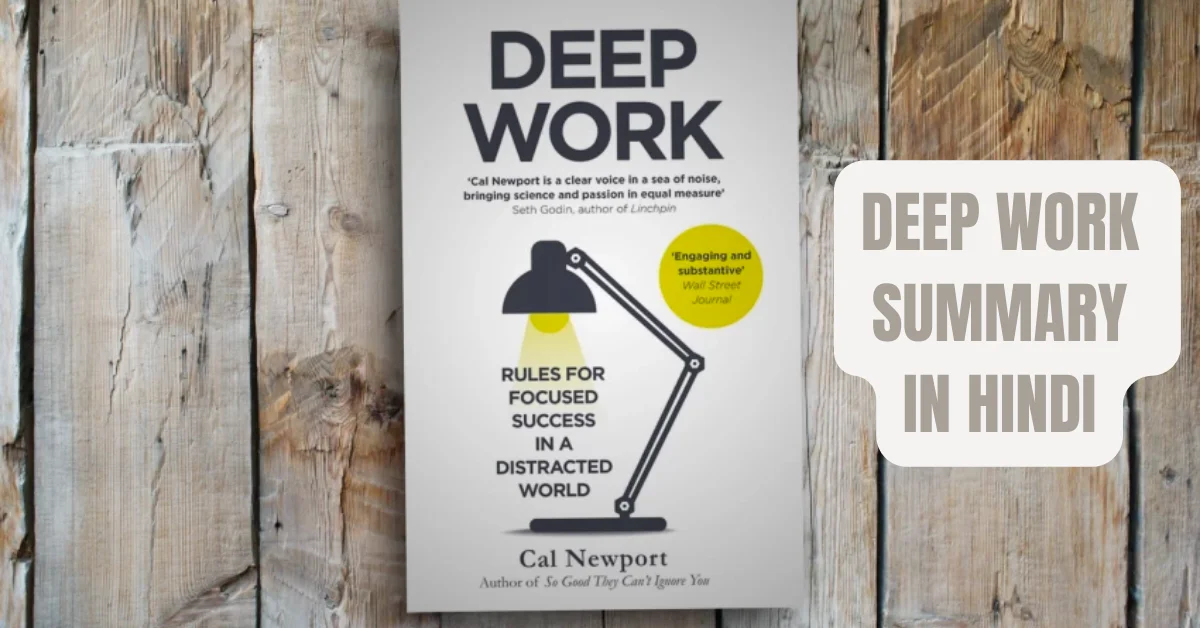
Deep Work Master Guide: Concentration, Focus और High-Value Productivity की Blueprint
CHAPTER 1: INTRODUCTION & FOUNDATION
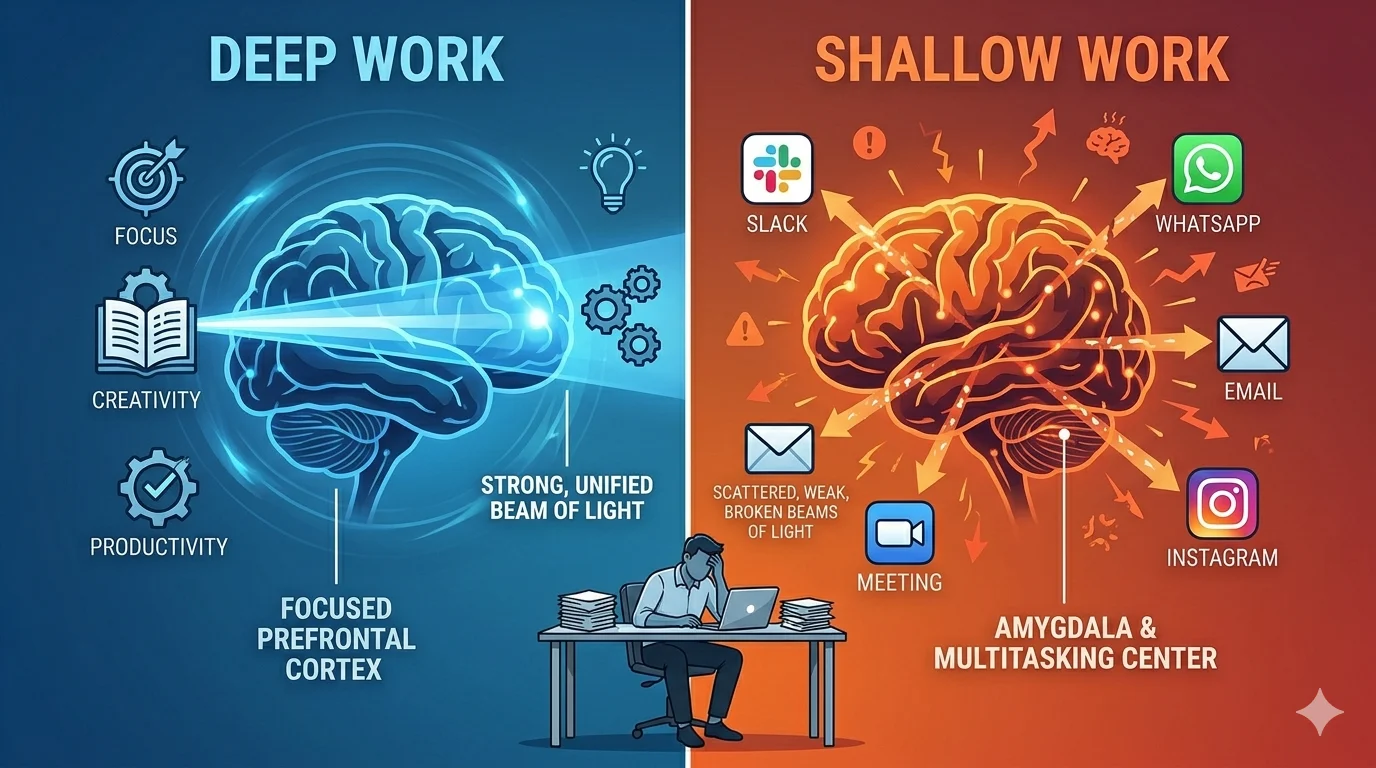
Deep Work vs Shallow Work (Zero-Click Breakdown)
अगर आपको लगता है कि दिन भर busy रहना productivity है, तो आप एक बहुत बड़े delusion में हैं।
आज के hyper-connected era में हम अपना आधा से ज़्यादा समय Shallow Work में बिता देते हैं और हमें लगता है कि हमने बहुत काम किया। चलिए इसको एकदम simple words में समझते हैं:
Deep Work क्या है?
यह वह state of distraction-free concentration है जहाँ आप अपने cognitive capabilities (दिमाग़ की ताक़त) को उनके absolute limit तक push करते हैं। यह काम नया value create करता है, आपकी skills को improve करता है, और इसको recreate करना बहुत मुश्किल होता है।
Shallow Work क्या है?
यह वह tasks हैं जो non-cognitively demanding होते हैं, logistically oriented होते हैं, और जो अक्सर distract होकर भी किए जा सकते हैं (जैसे emails का reply करना, Slack chats में busy रहना, files organize करना, या routine meetings attend करना)। यह tasks दुनिया में कोई नया value create नहीं करते और इनको कोई भी आसानी से replicate कर सकता है।
The Bottom Line:
अगर आप shallow work कर रहे हैं, तो आप आसानी से replace हो सकते हैं (चाहे वह AI से हो या किसी सस्ते resource से)। अगर आप deep work सीख लेते हैं, तो आप ऊँचे levels पर perform कर सकते हैं जिसे replicate करना किसी के लिए भी आसानी से possible नहीं होगा।
Author Authority: Who is Cal Newport? (E-E-A-T Section)
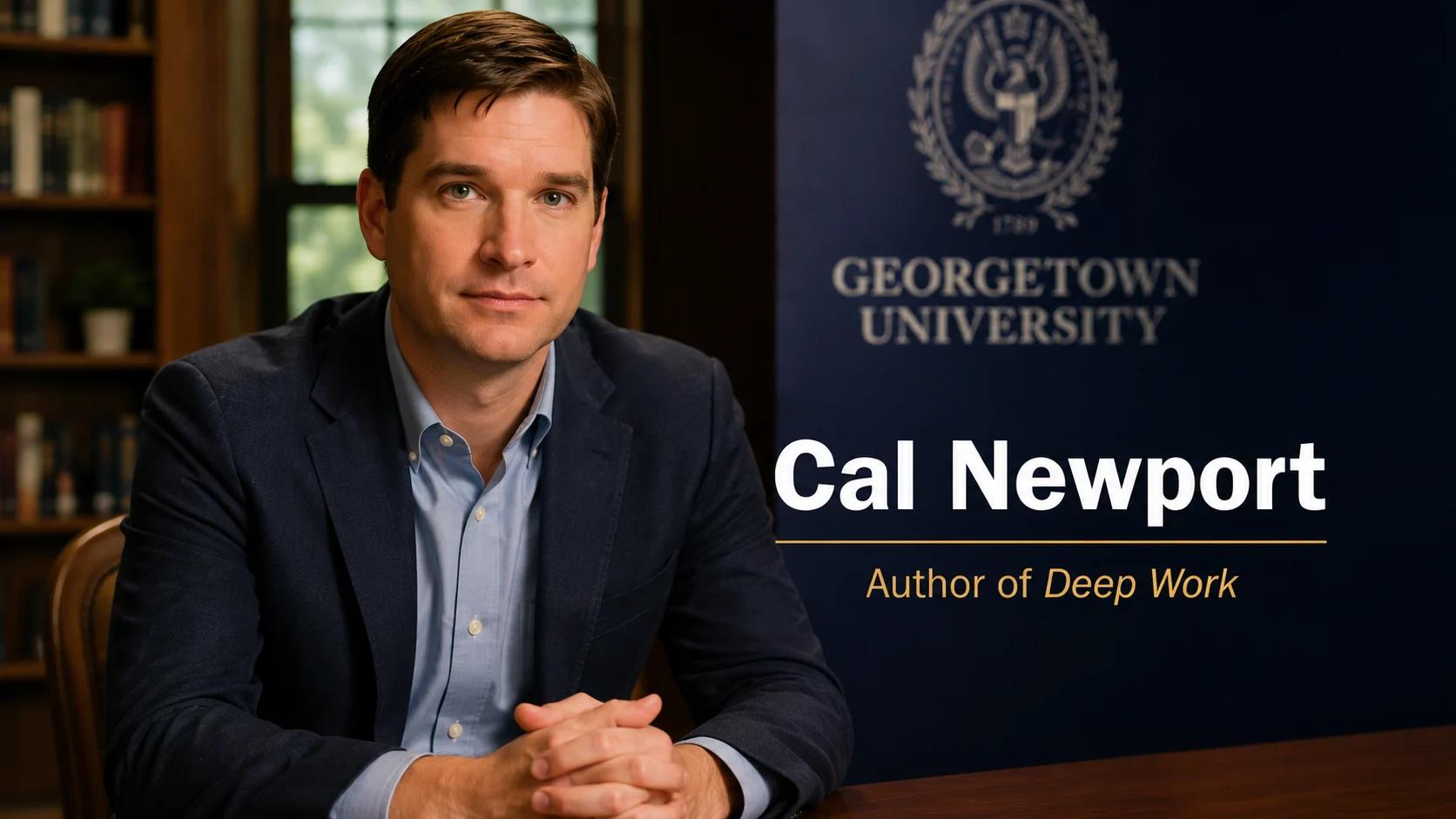
जब हम productivity और deep focus की बात करते हैं, तो Cal Newport का नाम सबसे ऊपर आता है। लेकिन Cal कोई आम self-help guru नहीं हैं जो सिर्फ़ “hustle culture” की बातें करते हैं। उनका background और उनका काम उन्हें इस field में एक highly credible authority बनाता है।
Academic Credentials:
Cal Newport Georgetown University में Computer Science के Associate Professor हैं। उन्होंने अपनी Ph.D. MIT (Massachusetts Institute of Technology) से की है। उनका research area distributed algorithms और complex networks पर focused है।
The “Walk the Talk” Proof:
Cal सिर्फ़ focus पर लिखते नहीं हैं, वह इसको जीते हैं। एक active professor के रूप में, वह हर साल complex academic papers publish करते हैं, उन्होंने कई best-selling books लिखी हैं (जैसे Deep Work, Digital Minimalism, So Good They Can’t Ignore You, और A World Without Email), और उनका एक highly popular blog और podcast भी है।
No Social Media:
सबसे हैरान करने वाली बात यह है कि Cal Newport ने आज तक किसी भी mainstream social media platform (Instagram, X/Twitter, Facebook, LinkedIn) पर account नहीं बनाया है। उनका मानना है कि अगर आप अपने brain को high-value focus के लिए train करना चाहते हैं, तो आपको उन algorithms से दूर रहना होगा जो आपके attention को productize करते हैं।
Fixed-Schedule Productivity:
Cal Newport शाम को 5:30 PM के बाद काम नहीं करते। वह अपना weekend पूरी तरह family और personal life को देते हैं। इसके बावजूद उनका output किसी भी average corporate worker या researcher से कई गुना ज़्यादा है। यह उनकी deep work methodology का live proof है।
The Deep Work Philosophy: Why It Is a Superpower in the 21st Century
हम एक ऐसी economy में रह रहे हैं जिसे Attention Economy कहा जाता है। हर app, हर website, और हर notification आपके attention के लिए fight कर रहा है। इस situation में, deep focus एक generic skill नहीं, बल्कि एक modern-day superpower बन चुका है।
1. The Machine Learning and AI Revolution
आज के दौर में basic programming, routine content writing, और standard data entry जैसे shallow tasks AI tools बहुत आसानी से कर सकते हैं। अगर आपका career सिर्फ़ shallow work पर टिका है, तो आपका skill set जल्दी ही redundant हो जाएगा। Deep work आपको complex skills को जल्दी master करने और ऐसी intellectual properties create करने की ability देता है जिसे AI या किसी algorithm replace नहीं कर सकता।
2. The Attention Residue Effect
Scientist Sophie Leroy ने एक concept introduce किया था जिसे Attention Residue (ध्यान का बचा-कुचा हिस्सा) कहते हैं। जब आप Task A (जैसे एक code लिखना या report बनाना) से Task B (जैसे WhatsApp notification check करना) पर switch करते हैं, तो आपका focus तुरंत switch नहीं होता।
आपके brain का एक बड़ा हिस्सा अभी भी Task A के बारे में ही सोच रहा होता है। जब आप बार-बार switch करते हैं, तो आपका brain “cognitive residue” से भर जाता है, जिससे आपकी thinking depth और decision-making quality drastically drop हो जाती है।
3. High-Quality Work Formula
Cal Newport ने एक simple सा formula दिया है जो productivity का core rule है:
अगर आपके focus की intensity 2/10 है और आप 10 घंटे काम करते हैं, तो आपका output सिर्फ़ 20 होगा। लेकिन अगर आप distraction-free environment में 10/10 की intensity से सिर्फ़ 3 घंटे काम करते हैं, तो आपका output 30 होगा। कम समय में बेहतर result पाने का यही एक रास्ता है।
Real-Life Contexts in India
इसको बेहतर तरीक़े से समझने के लिए चलिए तीन common Indian scenarios को देखते हैं:
Scenario A: The UPSC Aspirant in Rajinder Nagar (Delhi)
Shallow Approach:
एक aspirant सुबह 8 बजे library में बैठता है। Table पर Laxmikanth (Polity) खुली है, लेकिन साथ में phone भी रखा है। हर 15-20 minutes में WhatsApp groups पर current affairs के PDFs scroll होते हैं, दोस्तों के साथ चाय पीने के लिए breaks लिए जाते हैं, और Telegram channels पर topper की strategy देखी जाती है। Aspirant library में 12 घंटे बिताता है, लेकिन उन्हें लगता है कि उनकी पढ़ाई अच्छी नहीं हो रही।
Deep Approach:
एक दूसरा aspirant सुबह 8 बजे से 11 बजे तक (3 घंटे) अपने phone को airplane mode पर डालके room के locker में रख देता है। वह बिना किसी distraction के constitutional provisions के core concepts को actively recall करता है और mock questions के answers लिखता है। इन 3 घंटों में जो progress होती है, वह पहले aspirant के 12 घंटों से कहीं ज़्यादा solid और deep होती है।
Scenario B: The Software Engineer in Bengaluru
Shallow Approach:
एक developer सुबह office आता है। वह IDE (code editor) open करता है, लेकिन हर दूसरे minute में Slack channels check करता है, random memes share करता है, और हर sync-up meeting को attend करता है। उसका code bugs से भरा होता है क्योंकि उसने complex logical flows को ध्यान से analyze ही नहीं किया।
Deep Approach:
एक senior engineer दिन के पहले 2.5 घंटे को “No-Meeting Zone” घोषित करता है। वह Slack close कर देता है और system design के complex microservices architecture पर काम करता है। वह clean, optimized और dry (Don’t Repeat Yourself) code लिखता है जो production में seamlessly चलता है।
Scenario C: The Tech Startup Founder in Gurgaon
Shallow Approach:
Founder दिन भर fire-fighting में लगा रहता है। किसी sales call में चले जाना, random design tweaks पर feedback देना, HR के साथ discuss करना, और हर social media tag पर reply करना। दिन के आख़िर में founder थक जाता है, लेकिन business के direction को लेकर कोई solid strategy नहीं बन पाती।
Deep Approach:
Founder हर Tuesday और Thursday सुबह 7 से 10 बजे तक अपने आप को external communication से block कर लेता है। इस time में वह investor pitch decks refine करता है, long-term product roadmap design करता है, और unit economics calculations को deep-dive करता है।
Deep Work vs Shallow Work: Detailed Comparison Table
| Metric | Deep Work | Shallow Work |
|---|---|---|
| Cognitive Demand | बहुत ज़्यादा (High mental effort और concentration की ज़रूरत होती है) | बहुत कम (Routine tasks, repetitive brain patterns) |
| Value Created | High Value (नए concepts, unique solutions, intellectual property) | Low Value (Administrative support, maintaining status quo) |
| Skill Required | Specialized (आपको deep expertise और analytical skills चाहिए होते हैं) | Generic (कोई भी नया बंदा थोड़ी training के साथ कर सकता है) |
| Replicability | बहुत मुश्किल (इसको replicate करने में सालों की मेहनत लगती है) | बहुत आसानी से (AI या सस्ते offshore resources से replicate हो सकता है) |
| Distraction Tolerance | Zero (एक छोटा सा notification भी पूरी deep state को break कर देता है) | High (आप गाने सुनते हुए या chat करते हुए भी इसे कर सकते हैं) |
| Examples | Code design करना, research paper लिखना, mathematical problem solve करना, deep strategic planning | Emails का reply देना, formatting sheets, status update meetings, social media posting |
| Long-term Career Value | आपको irreplaceable बनाता है, high compensation और promotions दिलाता है | आपको easily replaceable बनाता है, stagnancy लाता है |
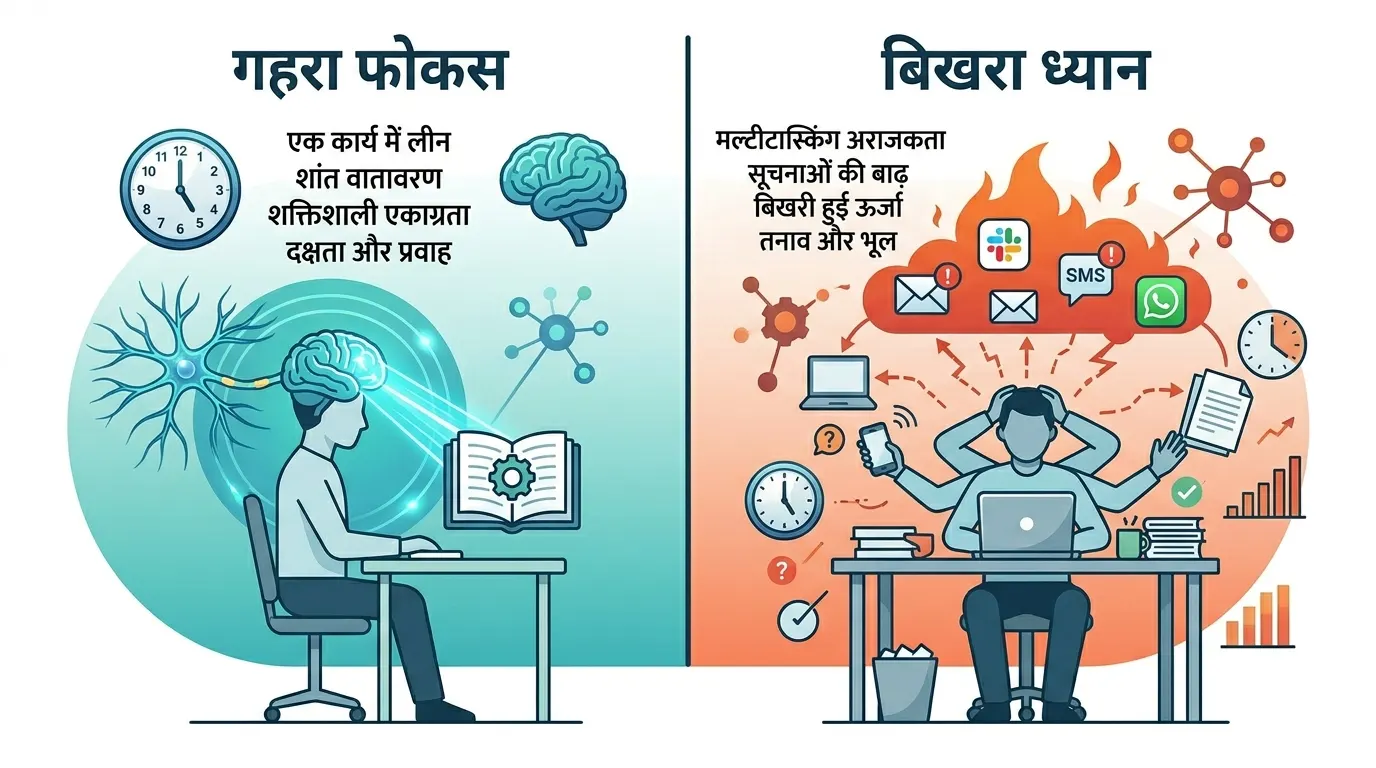
Visual Block: Focus State vs Fragmented State
नीचे दिए गए structural framework से आप समझ सकते हैं कि Deep Work और Shallow Work के दौरान आपके brain का attention किस तरह direct होता है:
DEEP WORK STATE: Focused Channel
(No notifications, no multi-tasking, high intensity focus)
SHALLOW WORK STATE: Fragmented Attention Residue
CHAPTER 2: THE BIOLOGICAL & COGNITIVE SCIENCE OF FOCUS
Deep Work सिर्फ़ एक psychological concept नहीं है; इसके पीछे solid human biology और neuroscience काम करती है। अगर आप यह समझ लें कि आपका brain high-intensity focus के दौरान कैसे operate करता है, तो आप अपने focus sessions को scientifically design कर सकते हैं।
The Role of Myelin in Skill Acquisition
जब आप किसी complex skill को सीखते हैं या कोई मुश्किल काम करते हैं, तो आपके brain में neural circuits fire होते हैं। इस process में एक biological compound का बहुत बड़ा role होता है जिसे Myelin कहते हैं।
Myelin क्या है?
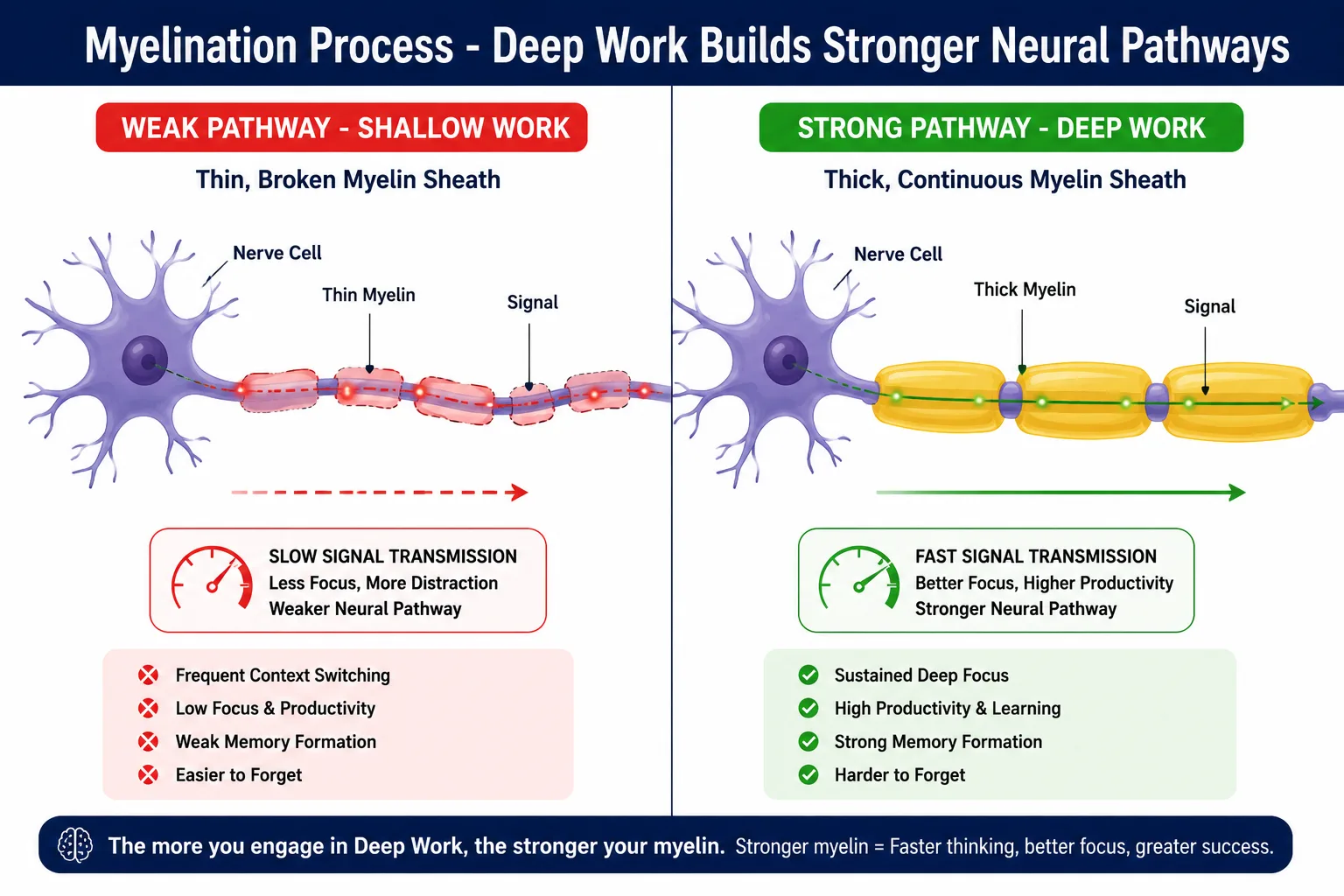
Myelin एक fatty tissue (sheath) है जो आपके brain के nerve fibers (axons) के चारों तरफ़ एक insulation layer की तरह लपेट जाता है। इसको आप ऐसे समझ सकते हैं जैसे electrical wires के ऊपर plastic की coating होती है ताकि current leak न हो और signals तेज़ी से flow करें।
Deep Work और Myelin का Connection:
जब आप किसी specific task पर बिना distract हुए बार-बार focus करते हैं, तो आप एक specific neural circuit को लगातार fire कर रहे होते हैं। यह repetitive, high-intensity firing oligodendrocytes (cells जो myelin बनाते हैं) को trigger करती है कि वह उस specific pathway के ऊपर myelin की परत को और मोटा (thicker) बनाएँ।
The Result:
जितना मोटा myelin का layer होगा, उन neurons के बीच electrical signals उतनी ही तेज़ी और efficiency से travel करेंगे। इसका मतलब है कि आप उस skill में उतने ही expert और fast होते जाएँगे। अगर आप distract होकर पढ़ते हैं या code लिखते हैं, तो अलग-अलग circuits fire होते हैं, जिससे myelin सही जगह पर develop नहीं हो पाता और आप mediocrity में फँसे रहते हैं।
Attention Residue: The Silent Productivity Killer
जैसे हमने Chapter 1 में बात की, Sophie Leroy के research ने यह prove किया कि human brain “multi-tasking” के लिए design नहीं हुआ है। जब आप एक task से दूसरे task पर switch करते हैं, तो एक transition phase होता है।
The Cognitive Cost of “Quick Checks”
आप complex coding कर रहे हैं और आपको लगता है कि “चलो, बस 5 seconds के लिए एक WhatsApp text देख लेता हूँ, इससे क्या ही फ़र्क़ पड़ेगा।”
यह सबसे बड़ा धोखा है जो आप अपने brain को देते हैं। WhatsApp देखने के बाद जब आप वापस code पर आते हैं, तो आपका brain immediately core focus में नहीं लौट पाता। उस 5-second के distraction का cost असल में 15 से 20 minutes का lowered cognitive capacity होता है, क्योंकि आपके attention का एक बड़ा portion अभी भी उस chat के context में फँसा हुआ है।
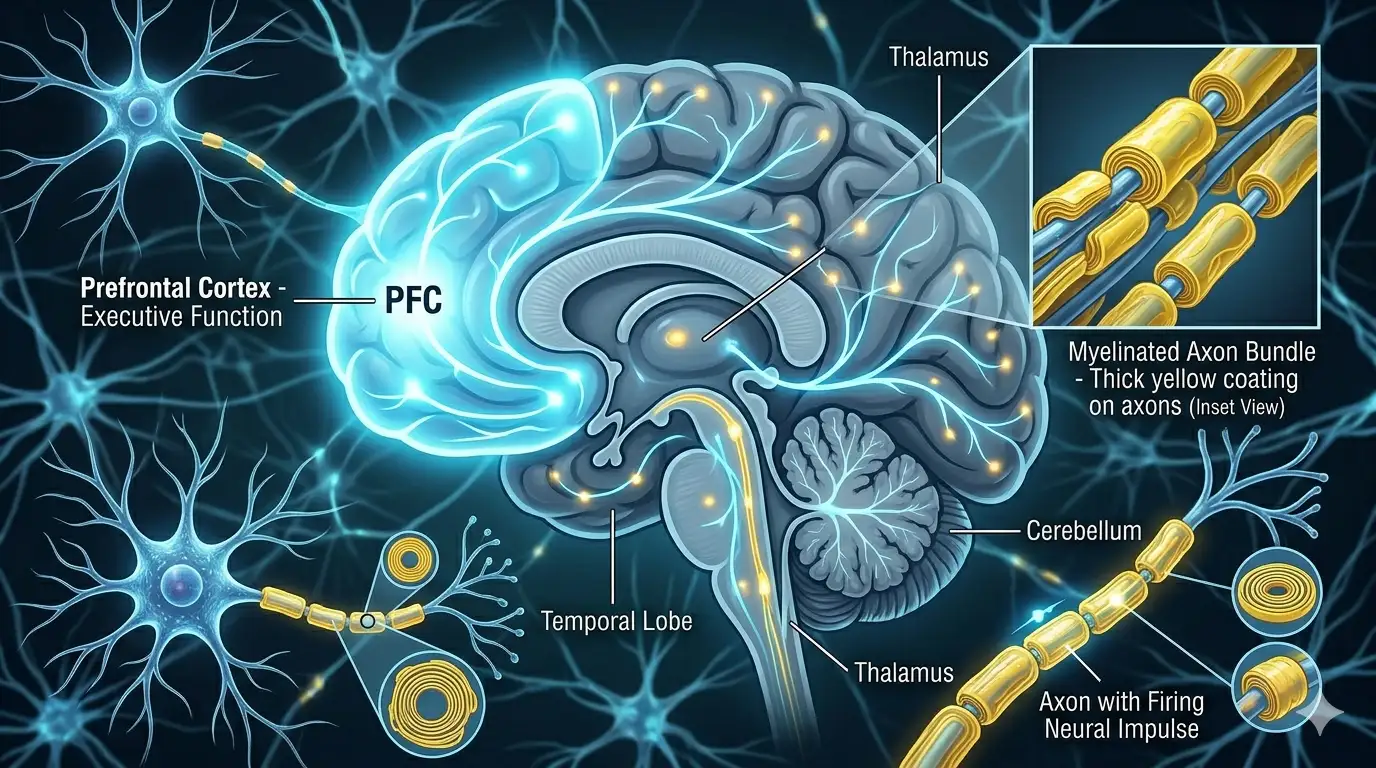
The Executive Function of the Prefrontal Cortex (PFC)
आपके brain का सबसे advanced part जो biological रूप से forehead के ठीक पीछे होता है, उसे Prefrontal Cortex (PFC) कहते हैं। PFC को हमारे brain का “Executive Director” या “CEO” कहा जाता है।
PFC की Responsibilities:
- Goal planning और decision making
- Impulse control (जैसे phone उठाने के मन को दबाना)
- Working memory manage करना
- Sustained focus maintain करना
The Limitation (PFC Fatigue):
PFC की energy limited होती है। यह glucose और oxygen पर चलता है। जब आप shallow tasks में लगातार micro-decisions लेते हैं (जैसे किस email का पहले जवाब दूँ, कौन सा link click करूँ, किस post को like करूँ), तो आपका PFC जल्दी थक जाता है। इस depletion को Decision Fatigue कहते हैं। जब PFC थक जाता है, तो आपका self-control खत्म हो जाता है और आप आसानी से distraction के शिकार हो जाते हैं।
Visual Block: The Myelination Process
WITHOUT DEEP FOCUS: Fragmented Signals
Signal Speed: धीमी और distracted (Leaks information)
WITH SUSTAINED DEEP WORK: High Myelination
Signal Speed: Ultra-Fast और highly efficient (Solid Skill Mastery)
CHAPTER 3: THE FOUR DEEP WORK SCHEDULING PHILOSOPHIES
आपको यह तो समझ आ गया कि deep work ज़रूरी है, लेकिन इसको real life में implement कैसे करें? हर इंसान की life, profession, और scheduling constraints अलग होते हैं। Cal Newport ने इसके लिए चार अलग-अलग scheduling philosophies बतायी हैं। आपको वही चुनना चाहिए जो आपके current life stage और profession को suit करे।
Deep Work Scheduling Choose
Monastic
- Absolute isolation
- No shallow work
- E.g., Bill Gates
Bimodal
- Divide time in blocks
- Days/Weeks of Deep
- E.g., Carl Jung
Rhythmic
- Daily fixed routine
- Best for daily habits
- E.g., UPSC Aspirants
1. The Monastic Philosophy (Sanyasi Approach)
इस philosophy में आप shallow work को पूरी तरह से eliminate कर देते हैं। आप संन्यासी की तरह अपने आप को बिलकुल isolate कर लेते हैं ताकि सिर्फ़ और सिर्फ़ deep work किया जा सके।
How it works:
आप social media, emails, phone calls और unnecessary meetings से 100% दूर हो जाते हैं। आपका एक ही goal होता है—high-value intellectual output produce करना।
Who is it for?
यह approach उन लोगों के लिए है जिनका career सिर्फ़ एक ही बड़ी चीज़ पर dependent है (जैसे novel writers, academic researchers, या deep-tech founders)।
Famous Example:
Donald Knuth, एक famous computer scientist, उनका कोई email address नहीं है। उनका कहना है कि उनका काम complex systems को analyze करना है, और अगर वह emails का reply करने लगेंगे, तो उनका brain fragment हो जाएगा।
How to implement (Indian context):
एक PhD researcher जो अपनी thesis लिख रहा है, वह 3 महीने के लिए सभी social engagements बंद करके, phone switch off करके, किसी remote hill station या library के secluded corner में shift हो जाता है।
2. The Bimodal Philosophy (Do-Rukhi Approach)
इस philosophy में आप अपने time को दो साफ़ हिस्सों में divide करते हैं। कुछ समय के लिए आप बिलकुल monastic हो जाते हैं, और बाक़ी बचे समय में आप normal shallow tasks और social life को manage करते हैं।
How it works:
आप choose कर सकते हैं कि आप हफ़्ते के 4 दिन deep work करेंगे (complete isolation में) और बाक़ी के 3 दिन meetings और normal tasks के लिए रखेंगे। या फिर, साल के 2 महीने बिलकुल गायब होकर deep work करेंगे और बाक़ी के 10 महीने normal regular office work करेंगे।
Who is it for?
यह उन लोगों के लिए अच्छा है जिनके पास ऐसी responsibility है जहाँ उन्हें लोगों से interact भी करना पड़ता है, लेकिन उन्हें heavy execution भी चाहिए (जैसे startup CEOs, consultants, और professors)।
Famous Example:
Carl Jung, जो Swiss psychiatrist थे। उन्होंने Bollingen में एक lake-side tower बनाया था जहाँ उनके पास न electricity थी न phone line। वह वहाँ कुछ दिन बिताकर deep research और writing करते थे, और फिर वापस Zurich आकर अपनी practice और sessions चलाते थे।
How to implement (Indian context):
एक software architect या tech-lead Monday से Wednesday बिलकुल screen block करके core system programming करता है (no meetings allowed), और Thursday-Friday को recruitment interviews, team sync-ups, और client calls के लिए open रखता है।
3. The Rhythmic Philosophy (Rhythm और Habit Approach)
यह scheduling सबसे ज़्यादा practical और highly recommended है उन लोगों के लिए जो standard 9-to-5 job करते हैं या full-time students हैं। इसका main idea है deep work को एक daily habit (rhythm) में convert कर देना।
How it works:
आप हर दिन एक fixed time block decide करते हैं (जैसे सुबह 5:00 AM से 8:00 AM)। चाहे जो हो जाए, इस time block में आप बिना fail हुए deep work करेंगे। इसका aim “cognitive friction” को कम करना है। जब आपका routine fix होता है, तो आपको हर दिन यह decide करने में अपनी brain power ख़र्च नहीं करनी पड़ती कि “मैं कब पढ़ूँगा/काम करूँगा”।
Who is it for?
UPSC/GATE/JEE aspirants, regular corporate software developers, content creators, और side-hustlers के लिए यह absolute gold standard है।
How to implement (Indian context):
एक product manager सुबह जल्दी उठता है और 6:00 AM से 8:30 AM तक, office के calls शुरू होने से पहले, product requirements documents (PRD) और strategic planning पर काम करता है। वह इस time को अपना sacred rhythm बना लेता है।
4. The Journalistic Philosophy (मौक़े-पर-चौका Approach)
इस philosophy में आपको जब भी, जहाँ भी खाली समय मिलता है, आप instantly deep work mode में switch हो जाते हैं।
How it works:
इसमें कोई fixed timing नहीं होती। अगर आपको travel के दौरान 30 minutes का flight delay मिला, तो आप अपना laptop निकालकर instantly deep-dive code लिखना या research paper पढ़ना शुरू कर देते हैं।
Who is it for?
यह उन experienced professionals के लिए है जिनका focus muscle बहुत strong हो चुका है, और जो बहुत busy life जीते हैं (जैसे journalists, high-profile executives, या medical consultants)।
Warning:
यह beginners के लिए बिलकुल recommended नहीं है। अगर आपका focus muscle strong नहीं है, तो fast switching के कारण आपका attention residue बहुत high होगा और आप quality work नहीं कर पाएँगे।
How to implement (Indian context):
एक product startup के co-founder जो लगातार flights में travel करते हैं। वह flight takeoff होते ही अपना laptop open करते हैं, offline mode पर डालते हैं, और slide decks या complex spreadsheets पर 2 घंटे focused work करते हैं।
Comparison Matrix: कौन सी Philosophy आपके लिए सही है?
| Philosophy | Skill Level | Daily Time Required | Ideal For | Execution Friction |
|---|---|---|---|---|
| Monastic | Advanced | Full Day (Weeks/Months) | Independent researchers, authors, deep specialists | Extremely High (Societal pressure) |
| Bimodal | Intermediate | Block of 2-3 Days/Weeks | Business owners, professors, freelancers | High (Requires clear calendar control) |
| Rhythmic | Beginner to Advanced | Fixed 1-4 Hours Daily | Students, 9-to-5 employees, corporate workers | Medium (Requires daily discipline) |
| Journalistic | Expert | Dynamic (Any free slot) | Highly experienced executives, travel-heavy jobs | Extremely High (Hardest to build focus instantly) |
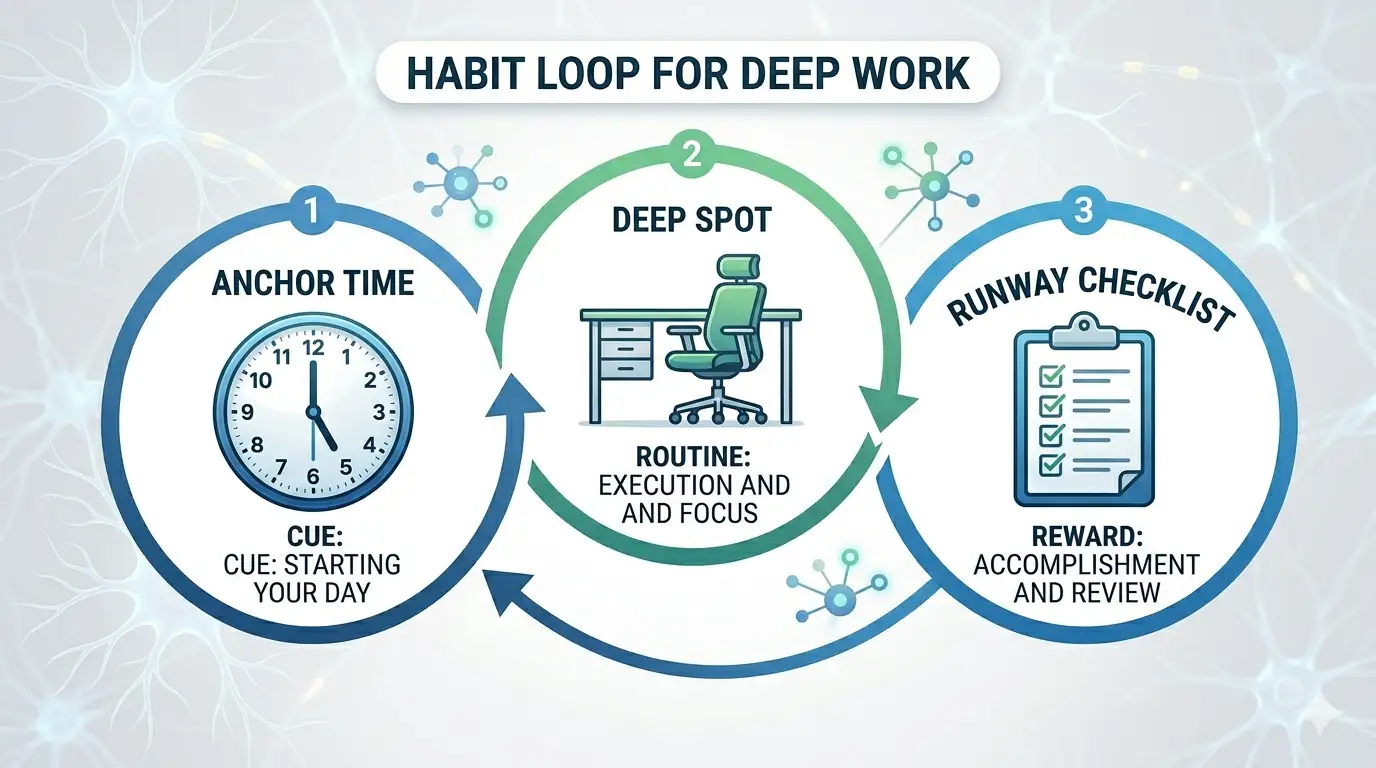
Practical Implementation Step: The “Habit Loop” Setup
अगर आप Rhythmic Philosophy choose कर रहे हैं (जो कि 90% लोग करते हैं), तो इसको start करने के लिए तीन steps का use करें:
1. Define Your Anchor Time:
एक ऐसा slot चुनें जो daily consistent रहे (e.g., सुबह 5:30 AM – 8:30 AM या रात को 9:30 PM – 12:30 AM)।
2. Choose Your Deep Spot:
एक specific chair, desk, या library corner जहाँ आप सिर्फ़ और सिर्फ़ काम करते हैं। वहाँ बैठते ही आपके brain को signal जाना चाहिए कि “अब focus का time है”।
3. The Runway Checklist:
अपने session को start करने से पहले 5-minute का एक routine बनाएँ (e.g., switch off phone, water bottle पास में रखना, notebook में daily goal लिखना, lofi music on करना)।
CHAPTER 4: THE FOUR RULES OF DEEP WORK
Cal Newport ने deep work को एक philosophy से बढ़कर एक actionable system बनाने के लिए चार core rules दिए हैं। इन rules को समझना और apply करना ही इस productivity engine को चालू करने का रास्ता है। चलिए हर एक rule को deeply analyze करते हैं और समझते हैं कि इनको practical life में कैसे fit किया जाए।
Rule #1: Work Deeply
Rituals & Lead Metrics पर focus करें।
Rule #2: Embrace Boredom
Dopamine loop को dismantle करें।
Rule #3: Quit Social Media
Craftsman Approach अपनाएँ।
Rule #4: Drain the Shallows
Schedule करें और “No” कहना सीखें।
Rule #1: Work Deeply (गहराई से काम करें)
हमें अक्सर लगता है कि focus करने के लिए सिर्फ़ willpower (इच्छा शक्ति) की ज़रूरत होती है। लेकिन research कहती है कि willpower एक limited resource है—जैसे phone की battery। अगर आप हर दिन सिर्फ़ अपनी willpower के भरोसे बैठेंगे कि “आज मैं बिना distract हुए 4 घंटे पढ़ूँगा”, तो आप जल्दी थक जाएँगे और हार मान लेंगे।
इसका solution है: Systemize your effort। आपको एक ऐसा structure बनाना होगा जो deep state में enter करने के friction को कम करे।
1. Deciding Your Depth Metric (Lead vs Lag Metrics)
Business और management systems में दो तरह के metrics होते हैं:
- Lag Metrics: यह वह result है जिसे आप control नहीं कर सकते, जो बाद में आता है (जैसे “UPSC civil services crack करना” या “tech startup के लिए $1M raise करना”)।
- Lead Metrics: यह वह behaviors हैं जिसे आप directly control कर सकते हैं और जो lag metric को drive करते हैं (जैसे “इस हफ़्ते deep focus में कितने घंटे काम किया”)।
Deep work को habit बनाने के लिए आपको अपना पूरा ध्यान Lead Metrics पर लगाना होगा। आपको track करना होगा: “मैंने इस हफ़्ते कितने घंटे solid, distraction-free deep work किया?”
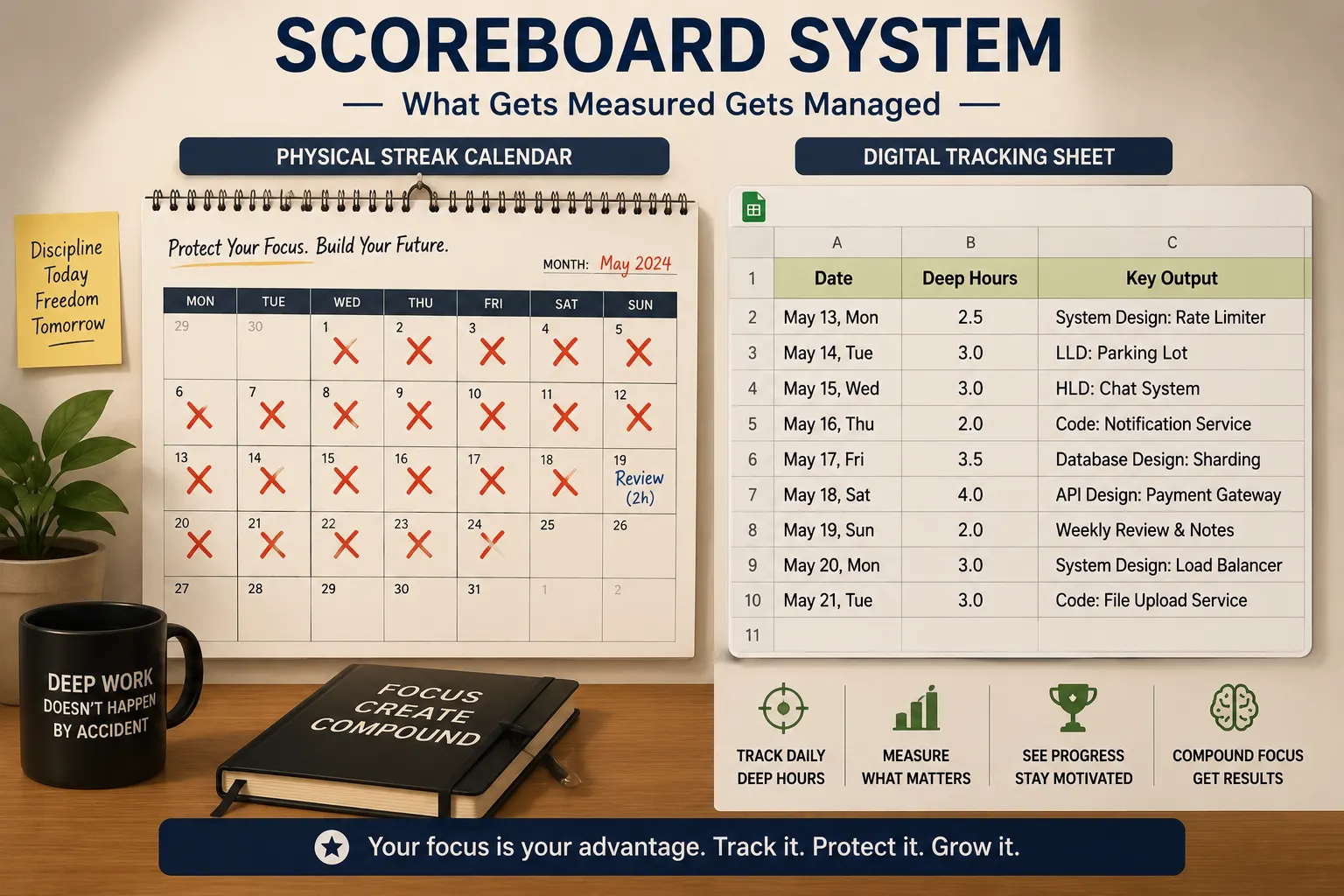
2. The Scoreboard Rule
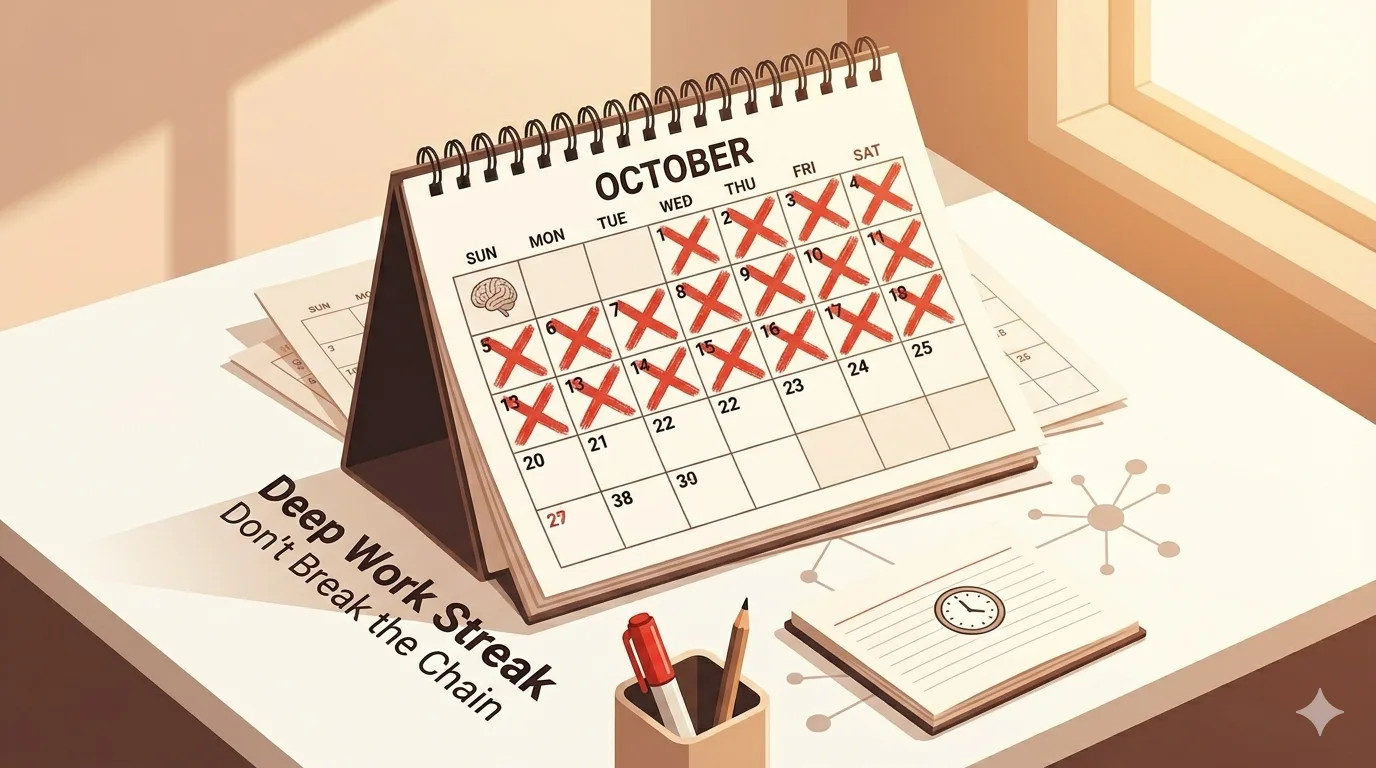
आपको अपने study table या desk के सामने एक physical calendar या tracker रखना चाहिए। हर उस दिन जब आप अपना target deep work block (e.g., 3 घंटे) बिना किसी digital distraction के complete करते हैं, calendar पर एक बड़ा red cross ‘X’ लगाएँ। जब आप consecutive cross देखते हैं, तो आपका brain एक chain बनाने लगता है जिसे break करना मुश्किल होता है।
Rule #2: Embrace Boredom (बोर होने से मत डरो)
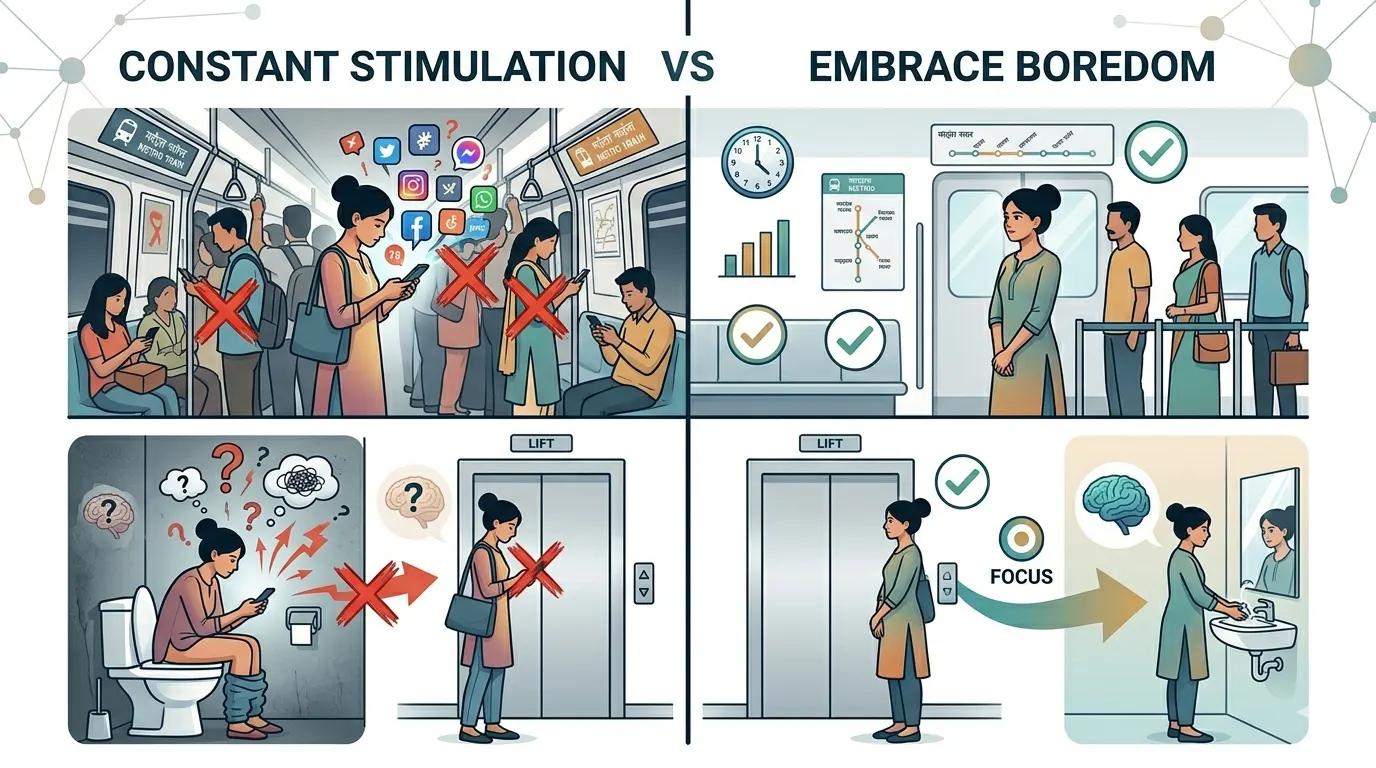
Modern world में हमारे brain को एक dangerous आदत लग चुकी है: Constant Stimulation (लगातार dopamine spikes)।
- जब आप metro का wait कर रहे हैं → Phone out
- जब lift नीचे आ रही है → Instagram Reels scroll
- In fact, जब आप toilet में हैं → YouTube Shorts check
इस constant stimulation का नुकसान यह है कि आपका brain “quiet time” या “silence” को tolerate करने की capacity खो देता है। अगर आप दिन भर हर खाली micro-moment में dopamine seek करते हैं, तो जब आप deep work के लिए बैठेंगे, आपका brain उस quietness को tolerate नहीं कर पाएगा। वह instantly distract होने के लिए तड़पेगा।
1. Cognitive Training: Schedule Your Distractions
अपने brain को train करने के लिए आपको distraction को schedule करना होगा, न कि focus को।
The Strategy:
यह सोचने के बजाय कि “मैं सुबह 9 से 12 focus करूँगा”, आपको सोचना चाहिए: “मैं सुबह 9 से 12 बजे तक phone या internet बिलकुल touch नहीं करूँगा, चाहे जो हो जाए। और मैं internet या chats check करने के लिए 12:00 PM से 12:15 PM का एक fixed window रखूँगा।”
इस तरह, जब आप बिना internet के काम कर रहे होते हैं, तो आपका brain “boredom” और “focus” को resist करना सीखता है। यह focus muscles को strong करने के लिए treadmill पर दौड़ने जैसा है।
2. The Kirana Store / UPI Queue Test (Indian Context)
अगली बार जब आप किसी local grocery shop पर pay करने के लिए UPI scan code खोलते हैं या billing line में खड़े होते हैं, तो उस 1-2 minute के wait में phone मत निकालिए। अपने आस-पास के माहौल को observe कीजिए या सिर्फ़ शांति से खड़े रहिए। यह छोटी सी exercise आपके brain की attention control power को बढ़ाती है।
Rule #3: Quit Social Media (Social Media को छोड़ें/Limit करें)
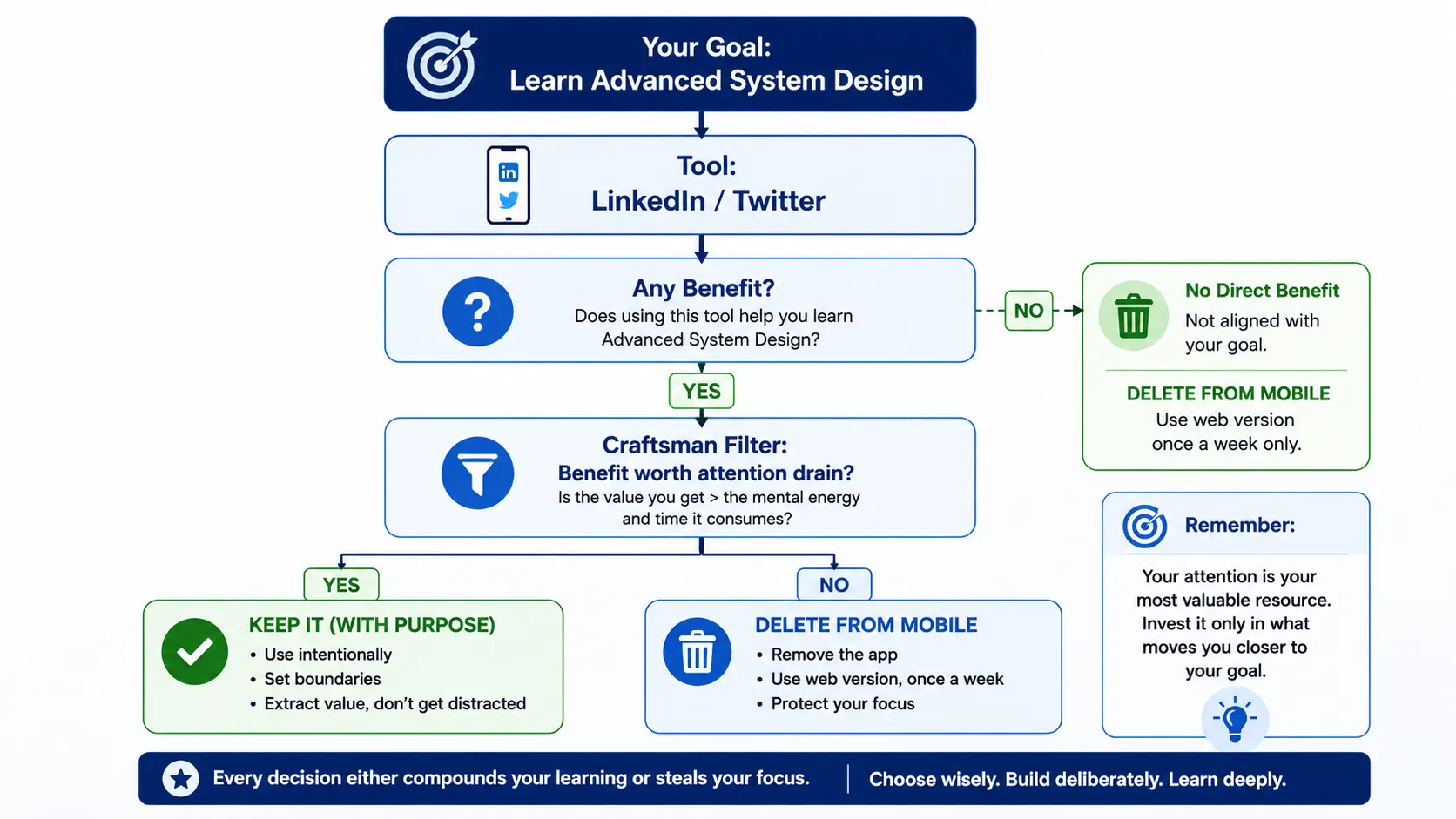
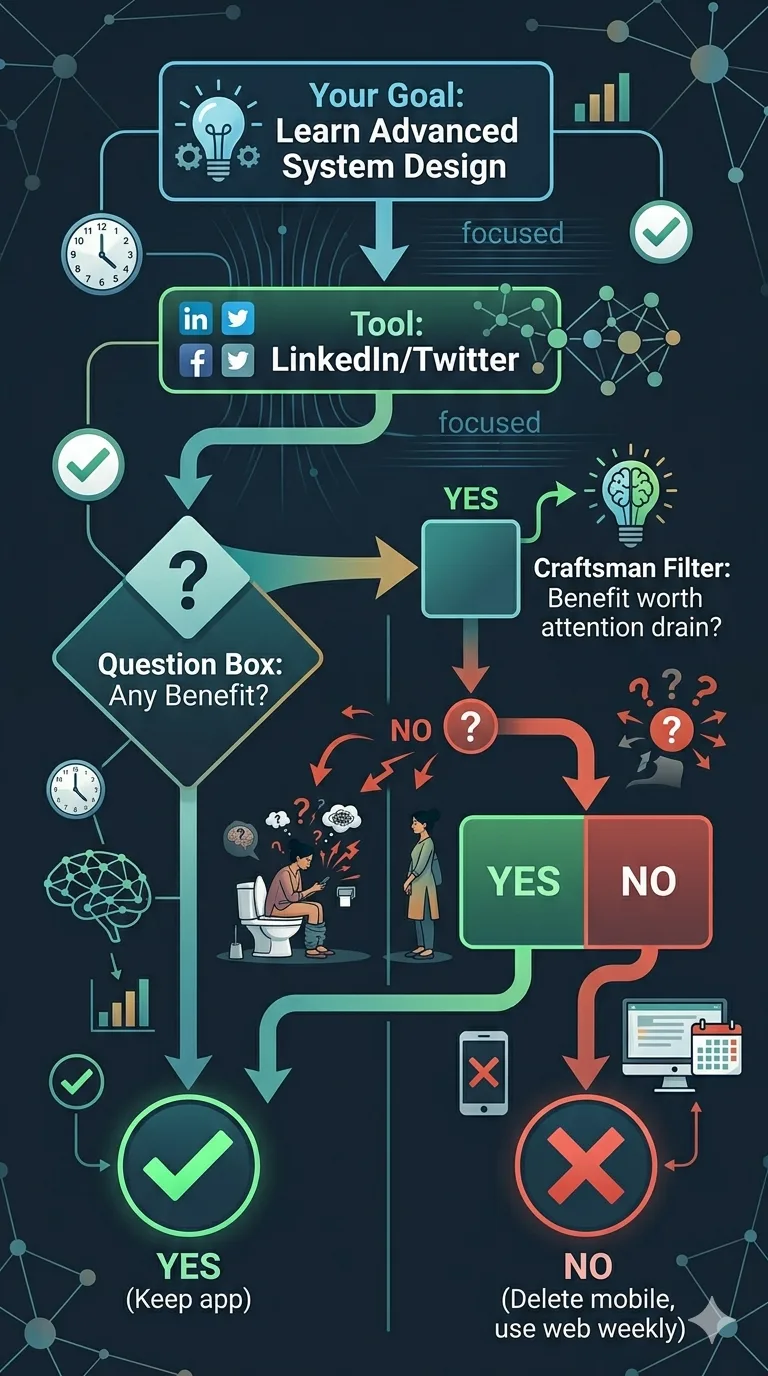
Cal Newport यह नहीं कहते कि social media बुरी चीज़ है, लेकिन उनका मानना है कि हम tools को चुनते वक़्त एक बहुत बड़ी गलती करते हैं जिसे वह “Any-Benefit Approach” कहते हैं।
Any-Benefit Approach:
“मैं Instagram इसलिए चलाता हूँ क्योंकि मुझे कभी-कभी वहाँ से अच्छी news या motivational quotes मिल जाते हैं।” (यानी, अगर किसी चीज़ का थोड़ा सा भी फ़ायदा है, तो हम उसे adopt कर लेते हैं)
The Craftsman Approach (Expert Approach):
एक सच्चा craftsman (कारीगर) वही tool use करता है जो उसके core goals को achieve करने में maximum help करे और जिसके negative impacts उसके positive impacts से कम हों।
How to Evaluate Your Tools
अपने mobile apps (Instagram, YouTube, LinkedIn, Twitter, Reddit) को इस criteria पर judge करें:
- मेरा Main Goal क्या है? (e.g., UPSC पास करना, Software Architecture सीखना, Startup grow करना)
- क्या यह App इस Goal में Directly और Heavily help कर रहा है?
- क्या इसका Distraction Cost इसके Benefit से कहीं ज़्यादा है?
अगर आपको लगता है कि distraction cost ज़्यादा है, तो उसे remove करें या कम से कम computer web-browser से use करें, mobile app से हमेशा के लिए uninstall कर दें।
Rule #4: Drain the Shallows (Shallow Work को बाहर निकालें)
हम सबके पास दिन में 24 घंटे होते हैं, लेकिन shallow work (meetings, chats, administrative tasks) हमारे समय को धीरे-धीरे दीमक की तरह खा जाता है। Rule #4 का मतलब है कि आपको shallow work को minimal level पर लेकर आना होगा ताकि आपके पास deep work के लिए जगह बचे।
1. Schedule Every Minute of Your Day (Time-Blocking)
सुबह काम शुरू करने से पहले 5 minute निकाल कर अपने पूरे दिन को 30-minute या 1-hour के blocks में divide करें।
जब आपका schedule fix होता है, तो आप random tasks के पीछे भागने से बच जाते हैं।
2. The “Say No” Protocol in Indian Offices
Indian corporate culture में managers और colleagues अक्सर बिना किसी warning के calls या random zoom meetings schedule कर देते हैं। इसको manage करने के लिए हमें professional boundaries set करनी होंगी।
Soft No Strategy:
“Sir/Ma’am, मैं अभी एक complex development module pipeline पर काम कर रहा हूँ जो आज deliver होना है। क्या हम इस query को शाम को 4 बजे के sync-up में या email पर address कर सकते हैं ताकि pipeline delay न हो?”
इस तरह से मना करने पर आपकी credibility बढ़ती है क्योंकि आप deliverable quality को prioritize कर रहे हैं।
CHAPTER 5: BUILDING A DEEP WORK RITUAL / SANCTUARY
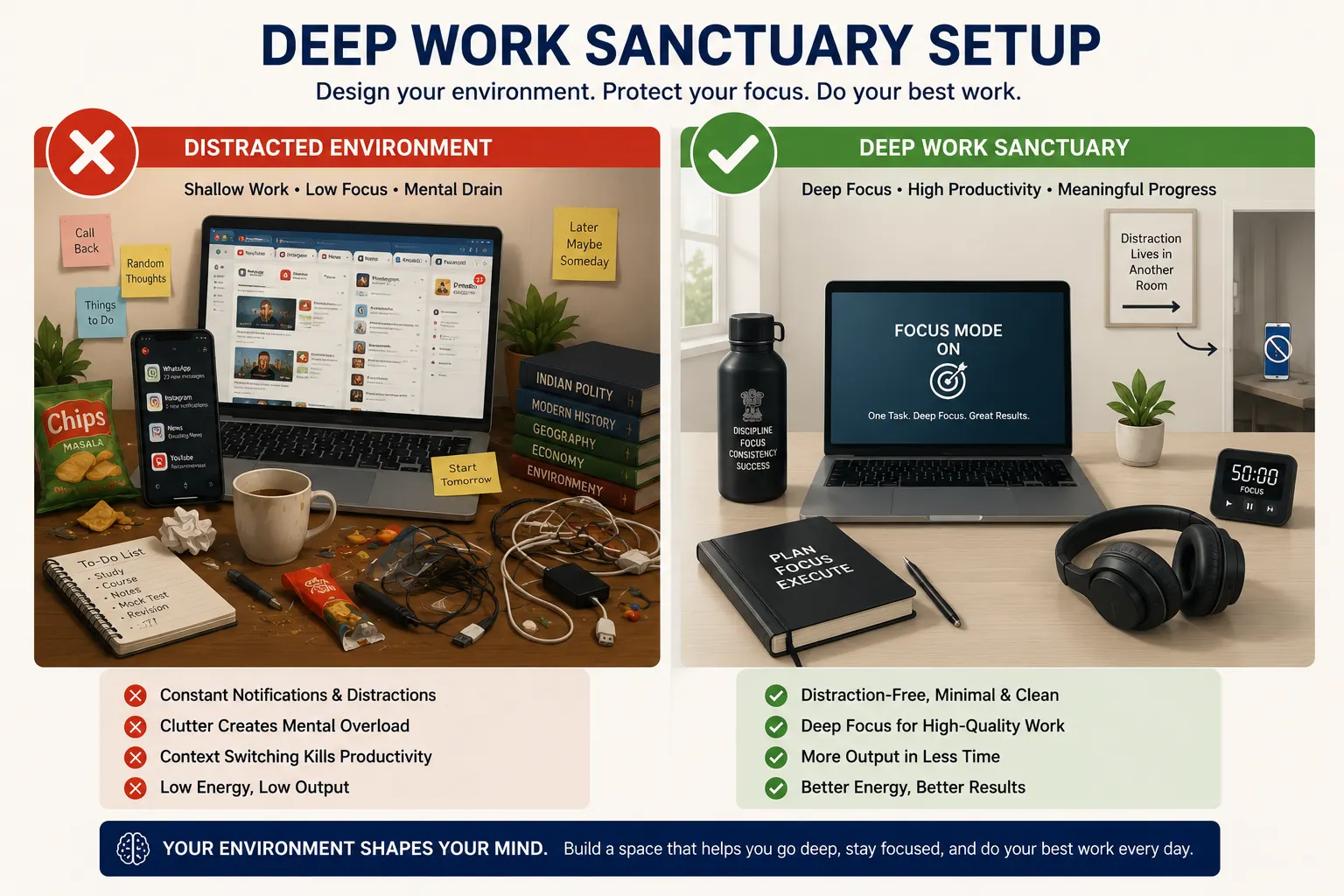
घर पर या office में ऐसी जगह बनाना जहाँ आपका brain बिना सोचे-समझे focus state में चला जाए, उसे हम Deep Work Sanctuary (शांत गुफ़ा) कहते हैं। Human biology environmental cues (माहौल के संकेत) पर बहुत heavily react करती है।
Physical Workspace
– Clutter-free desk
– Proper lighting
– Phone in another room
Digital Setup
– App blockers
– DND / Focus Mode
– Dedicated profiles
Environmental Cues
– Anchor music (Lofi)
– Fixed lighting setup
– Water & notepad ready
Designing the Physical Workspace (घर और Shared Space Solutions)
अगर आप किसी shared apartment, PG, या joint family home में रहते हैं, तो focus करना double challenging हो जाता है। वहाँ हर वक़्त कोई ना कोई distraction होता है। इसको manage करने के steps:
1. The Physical Boundary Method
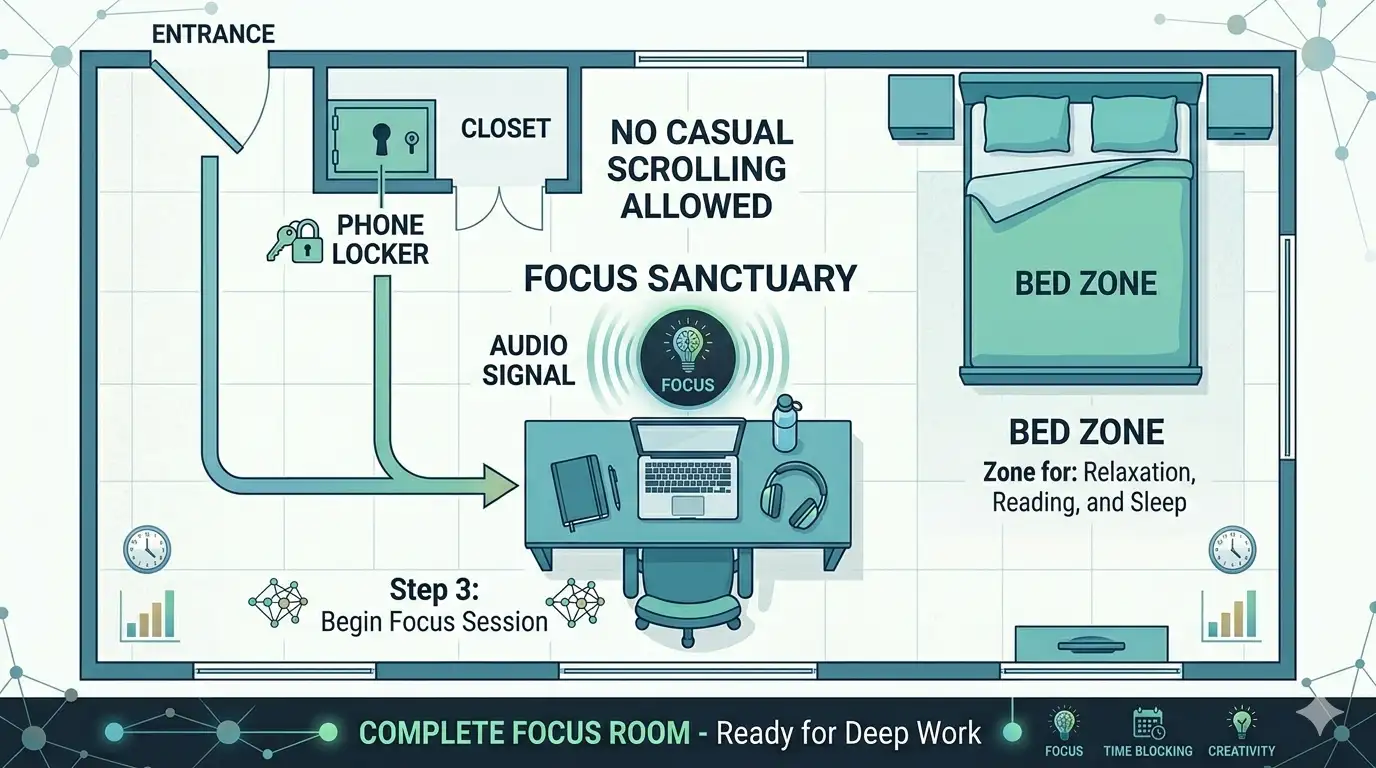
अगर आपके पास personal room नहीं है, तो एक specific “Focus Table” या table का एक specific corner setup करें।
The Rule:
उस desk या corner पर आप कभी भी phone scroll नहीं करेंगे, खाना नहीं खाएँगे, और न ही casual video देखेंगे। उस space को सिर्फ़ deep work के लिए reserve रखें। धीरे-धीरे आपके brain को यह signal मिल जाएगा कि “इस desk पर बैठने का मतलब है सिर्फ़ काम करना।”
The Headphone Signal:
अपने दोस्तों या family members को बताएँ कि जब आप बड़े noise-cancelling headphones पहनकर बैठे हैं, तो इसका मतलब है कि आप busy हैं। उन्हें बिना ज़रूरत के interrupt नहीं करना चाहिए।
2. Managing Digital Screens
आपके work desk पर सिर्फ़ वही devices होने चाहिए जो आपके काम के लिए ज़रूरी हैं।
Phone placement:
Deep sessions के दौरान phone को desk पर मत रखें, चाहे screen नीचे करके ही क्यों न रखा हो। Research कहती है कि phone का physical presence ही आपकी cognitive capacity को कम कर देता है क्योंकि आपका brain लगातार उसे न उठाने के लिए energy use कर रहा होता है। Phone को दूसरे कमरे में या wardrobe के अंदर silent करके रखें।
Digital Boundary Setting: Tools and Apps
आपका physical room जितना भी शांत हो, अगर आपका laptop screens notifications से भरा है, तो deep work नामुमकिन है। इसके लिए कुछ tools use करें:
- Cold Turkey / Freedom: यह software level block tools हैं। आप इनमें daily focus schedule set कर सकते हैं। जब focus mode active होता है, तो यह आपको Instagram, Reddit, या specific news sites open ही नहीं करने देंगे, चाहे आप कितनी भी कोशिश करें।
- Focus Mode on Android/iOS: इस option का use करके आप call and messages को whitelist कर सकते हैं (सिर्फ़ family या emergency contacts के लिए) और बाक़ी सभी apps को hide या disable कर सकते हैं।
The Environmental Cue Sequence (Focus Trigger Routine)
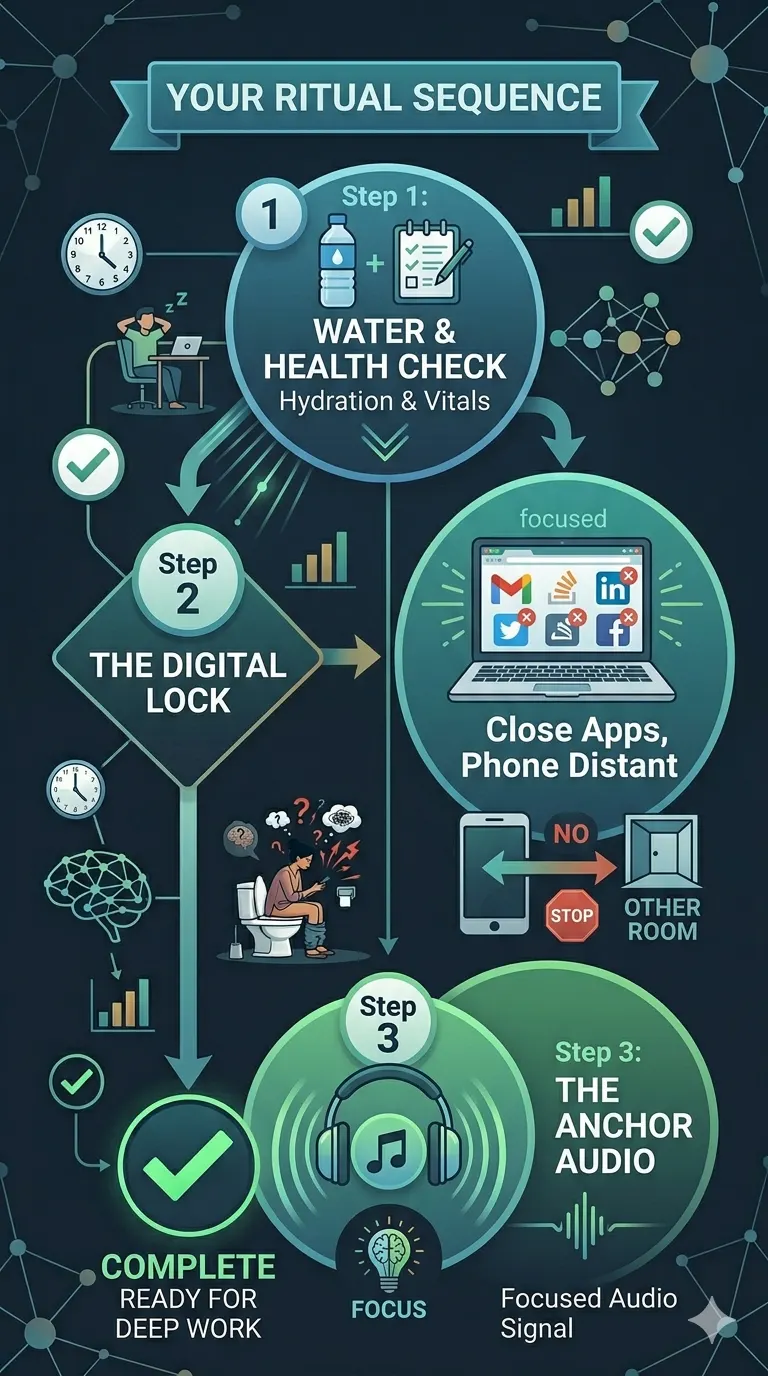
आपको एक daily ritual develop करना होगा जो आपके focus block से ठीक 5 minute पहले start होता है। इस ritual से आपका brain passive state से active deep focus state में transform होता है।
Real-Life Ritual Example (Software Engineer or UPSC Student):
- Water & Health Check: एक साफ़ पानी की bottle और एक diary अपने table पर रखें।
- The Digital Lock: Laptop पर browser के सभी tabs बंद करें, सिर्फ़ वही tab रखें जो current task के लिए चाहिए। Phone को दूसरे कमरे में charger पर लगा दें।
- The Anchor Audio: एक specific sound (जैसे rain sounds, binaural beats 40Hz, या instrumental lofi) play करें। इस audio को आप तभी सुनेंगे जब आप deep work करेंगे। कुछ दिनों में यह music सुनते ही आपका brain automatically focus transition में चला जाएगा।
Visual Block: Focus Room Organization Layout
CHAPTER 6: OVERCOMING COGNITIVE FRICTION & RESISTING DISTRACTIONS
आपने एक अच्छा room बना लिया, schedule fix कर लिया, लेकिन जैसे ही आप काम शुरू करते हैं, आपके अंदर एक अजीब सा uncomfortable pain या laziness महसूस होती है। इस resistance को हम Cognitive Friction कहते हैं।
Understanding Dopamine Loops and Resistance
जब आप कोई complex math problem solve करते हैं, deep code bug ढूँढ़ते हैं, या UPSC के answers framework design करते हैं, तो आपका brain heavy cognitive energy (ATP) consume करता है। Human biology basically energy-saving model पर बनी है। आपका brain energy बचाना चाहता है।
इसलिए, जैसे ही मुश्किल काम आता है, आपका brain आपको signal देता है: “यह बहुत hard है, चलो Instagram check करते हैं वहाँ बिना energy ख़र्च किए dopamine मिलेगा।”
इस resistance को beat करने के लिए हमें “Productive Discomfort” के concept को accept करना होगा।
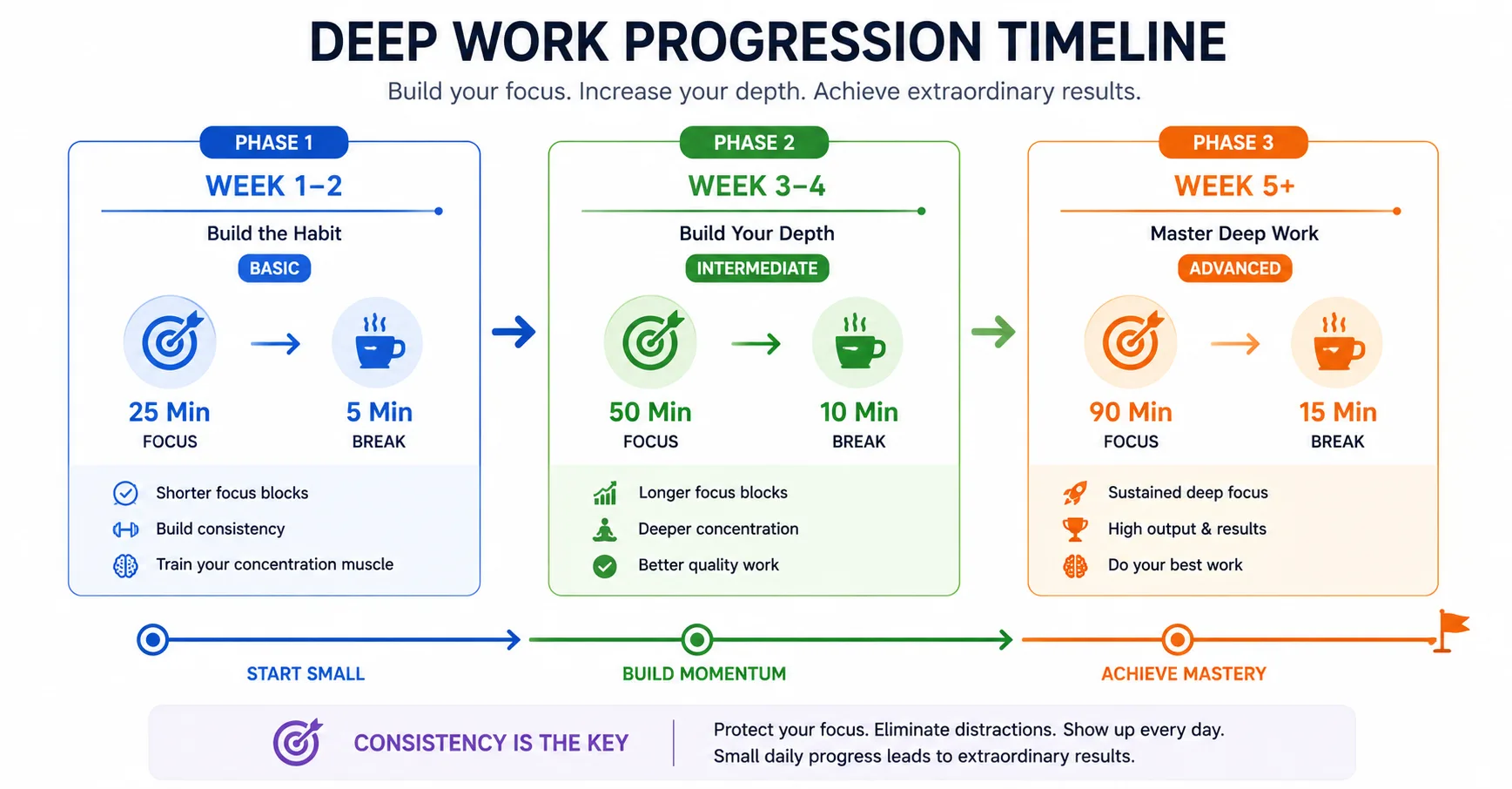
Building Focus Stamina: The Progressive Overload Method
जैसे gym में पहले दिन ही 100 kg का weight नहीं उठाया जाता, वैसे ही पहले दिन से ही 4 घंटे का deep focus session manage करना लगभग नामुमकिन है। आपको focus stamina बढ़ाने के लिए Progressive Overload use करना होगा।
Phase 1: The 25-Minute Block (Basic Pomodoro)
अगर आपका mind बिलकुल शांत नहीं रहता, तो start small। सिर्फ़ 25 minutes का timer लगाएँ और अपने आप से कहें: “मैं अगले 25 minutes तक इस page को active recall के साथ पढ़ूँगा। इस बीच अगर आग भी लग जाए, तो भी मैं अपनी seat से नहीं उठूँगा।” इसके बाद 5-minute का break लें।
Phase 2: The 50-10 Rule (Intermediate Level)
कुछ दिनों बाद इस block को बढ़ा कर 50 minutes करें और break को 10 minutes करें। 50 minutes high value work के लिए काफ़ी efficient होते हैं।
Phase 3: The 90-Minute Focus Sprint (Advanced Level)
हमारे brain का एक natural bio-rhythm होता है जिसे Ultradian Rhythm कहते हैं। Human brain maximum 90 minutes तक peak concentration level maintain कर सकता है। इसके बाद focus drop होने लगता है। एक professional researcher या developer को धीरे-धीरे अपनी capacity को 90-minute blocks तक push करना चाहिए।
Digital Detox Strategies for Indian Environments
Indian family structures में हमेशा social gatherings, festivals, या unexpected relatives का आना-जाना लगा रहता है। इस chaotic environment में focus को sustain कैसे करें?
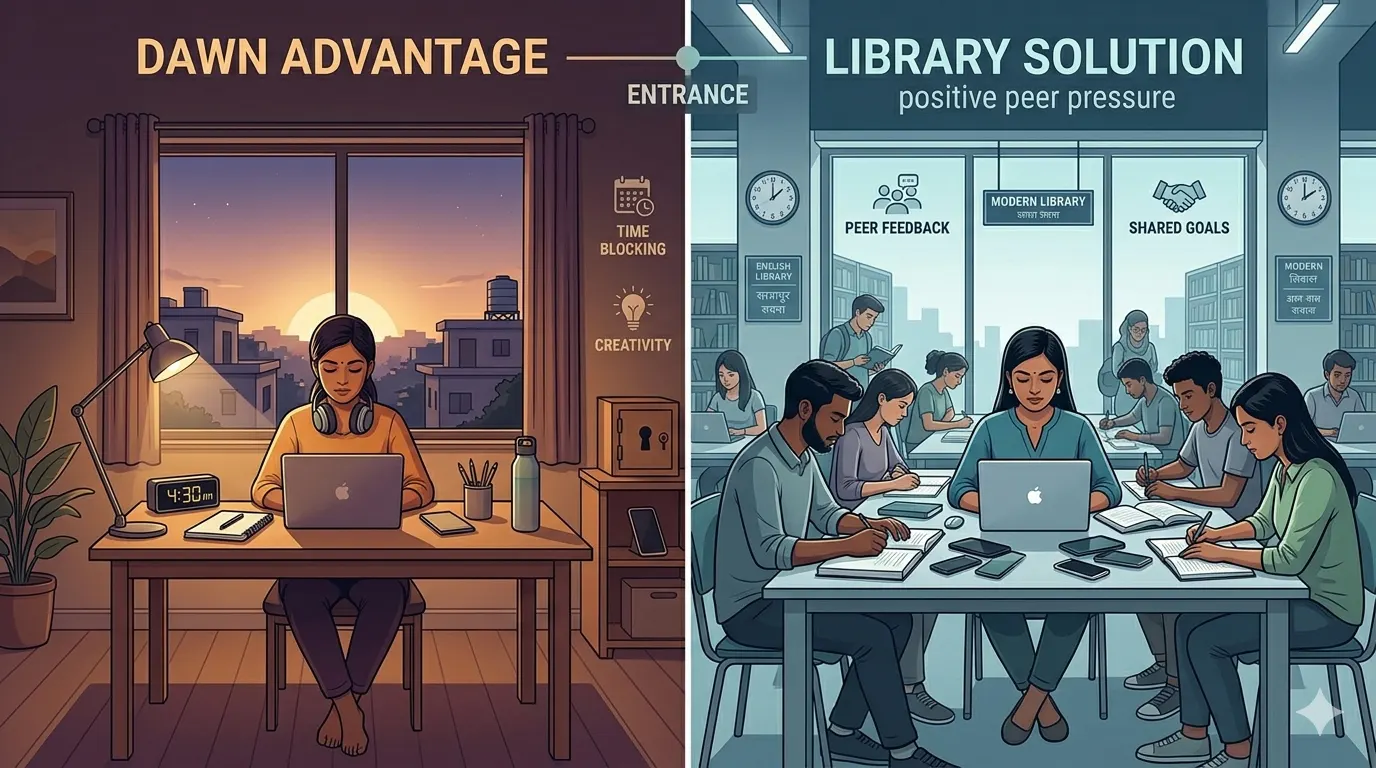
The Dawn Advantage (Early Morning Power)
UPSC aspirants और developers के लिए सुबह 4:30 AM से 7:30 AM का time सबसे best है। इस time पर पूरा मोहल्ला, घर के लोग, और पूरी digital दुनिया सो रही होती है। कोई WhatsApp notification नहीं आता, कोई email delivery नहीं होती, और कोई social interruption नहीं होता। अगर आप दिन शुरू होने से पहले 3 घंटे का deep work निकाल लेते हैं, तो आपका आधा से ज़्यादा mental goal पूरा हो जाता है।
The Library Solution
अगर घर में space नहीं है, तो अपने area में कोई public library या self-study desk library join करें। वहाँ सभी लोग पढ़ रहे होते हैं, जिससे positive peer pressure create होता है। दूसरों को hard work करते देख आपका brain social mimicking करता है और focus रहना थोड़ा आसान हो जाता है।
CHAPTER 7: TACTICAL APPLICATION & TOOLING (THE DEEP WORK TOOLKIT)
हमने deep work के concepts और rules को समझ लिया है, लेकिन इसको daily life में execute करने के लिए हमें सही tools और software environments की ज़रूरत होती है। एक सच्चा knowledge worker अपने digital environment को उसी तरह clean और optimized रखता है जैसे एक surgeon अपने operating theater को रखता है।
Physical Notebook
- Analog capturing
- Minimize screen use
- Brain-dumping task list
Digital Blockers
- Cold Turkey / Freedom
- Forest App (Mobile)
- Focus modes (DND)
Platform Tweaks
- Unhook for YouTube
- Hide Feed (LinkedIn)
- Direct link bookmarking
Digital Tool Minimization (The Clean Desktop Philosophy)
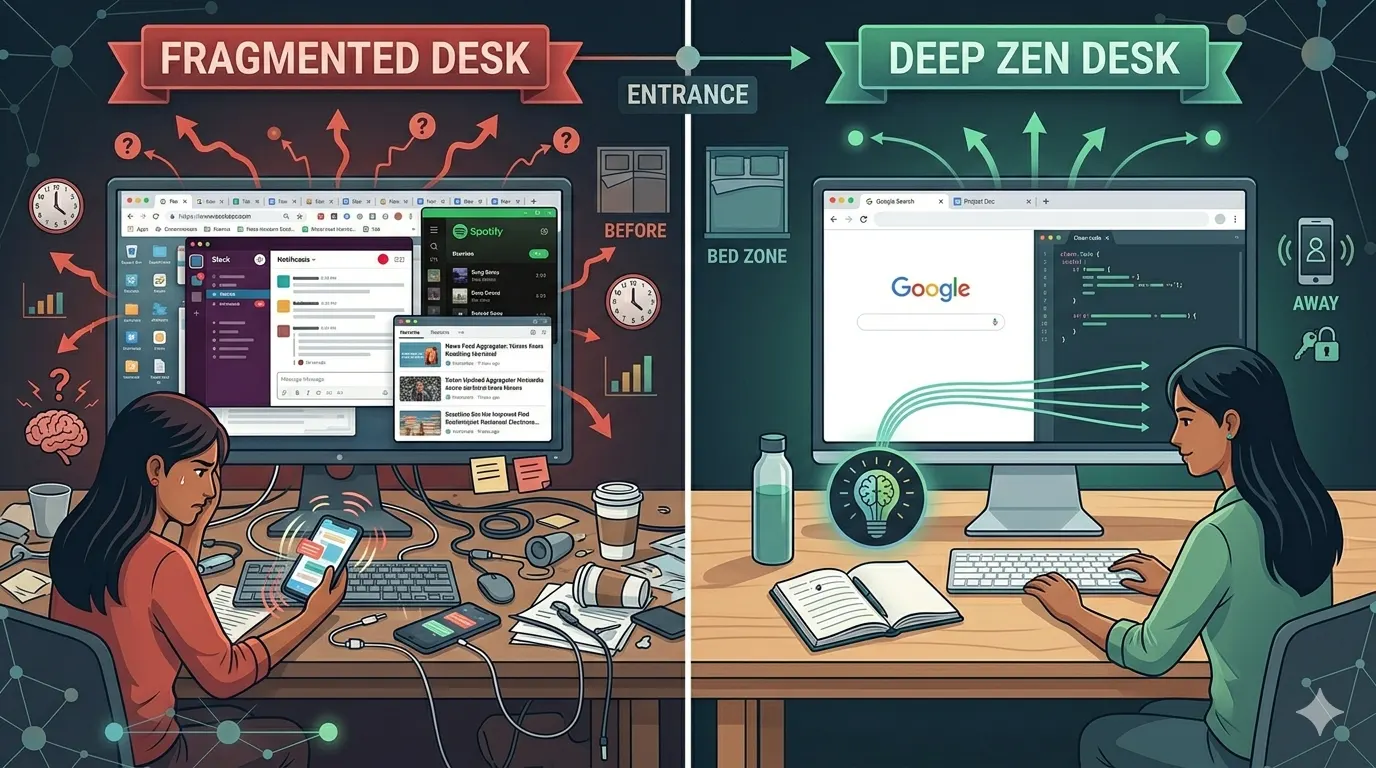
आपका computer screen ही आपका primary workspace है। अगर आपके screen पर 40 browser tabs open हैं, WhatsApp Web background में चल रहा है, और system tray में notifications flash हो रहे हैं, तो आपका brain micro-distractions से थक जाएगा।
1. The Single-Task Browser Setup
हम में से बहुत से लोगों की आदत होती है कि एक ही browser window में personal और professional सभी tabs खुले रहते हैं। इसको change करने के लिए:
- Create Separate Profiles: अपने browser (Chrome, Brave, या Firefox) में अलग-अलग profiles बनाएँ। एक profile सिर्फ़ “Deep Work” के लिए होनी चाहिए, जिसमें कोई personal bookmark, logged-in social media, या news sites न हो। दूसरी profile “Casual Browsing” के लिए होनी चाहिए।
- The Tab Zero Rule: जब आप कोई deep work session start करें, तो उस current session के लिए सिर्फ़ और सिर्फ़ वही 1-2 tabs open होने चाहिए जो काम के लिए relevant हैं। बाक़ी सभी tabs को save करके close कर दें।
2. Specialized Extensions to Fight Algorithms
कुछ specific extensions आपके browser को “algorithm-free zone” में convert कर सकते हैं:
- Unhook (for YouTube): अगर आप पढ़ने या coding के लिए YouTube videos देखते हैं, तो यह extension homepage recommendations, sidebar suggestions, और comments को hide कर देता है। इससे आप सिर्फ़ वही video देखते हैं जिसे search किया है, बिना किसी rabbit hole में फँसे।
- News Feed Eradicator: यह extension LinkedIn, Facebook, और Twitter के feeds को block करके वहाँ एक motivational quote दिखाता है। आप इन platforms पर अपना काम (messages check करना या job post देखना) कर सकते हैं बिना distraction feed में scroll किए।
Real-Life Technical Setup: Indian Context
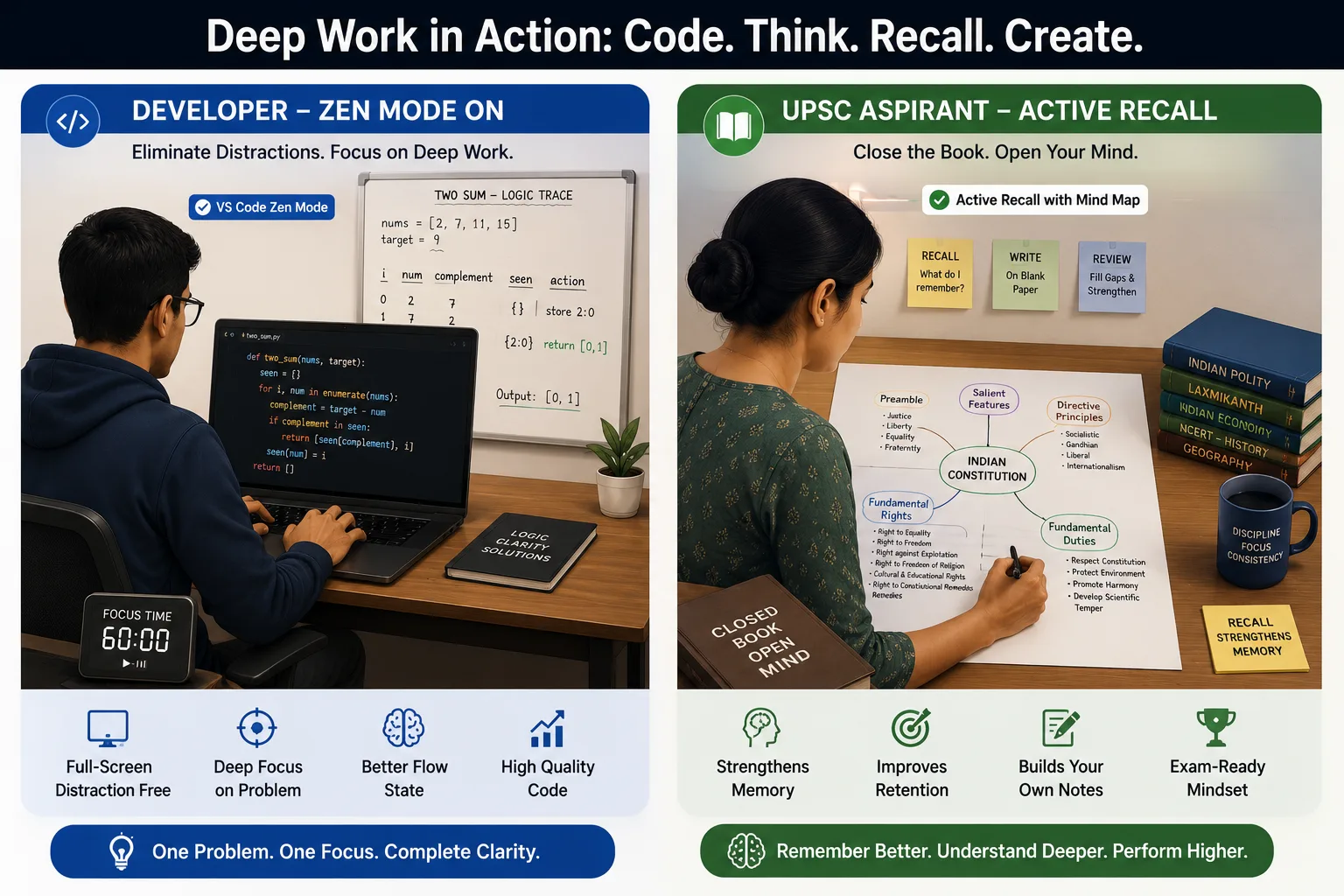
Example A: The Bangalore Backend Developer’s VS Code Workflow
The Problem:
Developer coding कर रहा है, लेकिन error आने पर stack overflow check करते-करते Reddit पर चला जाता है।
The Deep Setup:
- VS Code में “Zen Mode” active करें (इससे sidebar, activity bar, और status bar hide हो जाता है, सिर्फ़ core code दिखता है)।
- Local terminal shortcuts setup करें ताकि browser में जाने के बजाय terminal से ही logs monitor हो सकें।
- अपने physical desk पर एक whiteboard रखें। Error आने पर browser खोलने से पहले screen से ध्यान हटाकर, pen से whiteboard पर code logic trace करें। इससे immediate context switching से बचा जा सकता है।
Example B: The UPSC Aspirant’s Active Recall Notebook Setup
The Problem:
Aspirant digital notes (tablet/iPad) में standard PDF highlighters से paragraphs को highlight करता रहता है। यह passive revision है जिसमें focus बहुत जल्दी loose हो जाता है।
The Deep Setup:
- Aspirant अपनी screen off रखता है। वह physical book से एक chapter पढ़ता है।
- पूरा chapter खत्म करने के बाद, book close करके एक plain A4 size white paper पर memory से framework (mind map) draw करता है।
- इसको Active Recall कहते हैं। यह highly cognitively demanding है और deep brain pathways को active करता है।
Practical Steps to Build Your Digital Tooling Setup
- Block the Red Dots: अपने laptop और mobile पर सभी non-essential applications के notification badges (वह लाल रंग के dots जो बताते हैं कि कितने notifications pending हैं) को disable कर दें। Badges direct dopamine cues होते हैं जो finger click trigger करते हैं।
- Analog Capture Device: अपने desk पर हमेशा एक pocket-sized physical diary या blank index cards रखें। जब आप deep focus में काम कर रहे होते हैं, तो अचानक आपके दिमाग़ में random thoughts आएँगे (e.g., “Electricity bill pay करना है,” “Friend को call करना है”)। उन्हें instantly इस diary में लिख दें ताकि आपका brain उन्हें भूलने के डर से free हो सके और वापस focus कर सके। इस process को “Brain-Dumping” कहते हैं।
[ STANDARD FRAGMENTED DESK ]
Chrome: 45 Tabs Open | Slack (Red Dot) | Spotify | News Feed
[Code Editor/Doc] <─── Constant Notification Flashes ───>
Phone: On Desk (Vibrating on Instagram comments)
[ THE DEEP ZEN DESK SETUP ]
Browser: 1 Profile (Deep Mode), 2 Active Tabs Only
Code Editor/Doc: Full Screen (Zen Mode Activated)
Notifications: 100% Blocked via Cold Turkey App
Desk Tools: Analog Journal & Pen (For Brain Dump)
Phone: Out of Sight (Charging in another room)
CHAPTER 8: METRIC TRACKING & ACCOUNTABILITY (THE SCOREBOARD SYSTEM)
आपने system बनाया, setups किए, लेकिन progress हो रही है या नहीं, यह बिना measurement के पता नहीं चल सकता। Cal Newport कहते हैं कि “What gets measured, gets managed.” अगर आप अपने deep focus hours को track नहीं करेंगे, तो आप ध्यान भटकने पर दोबारा shallow patterns में लौट जाएँगे।
Lead Metric Audit
- Calculate total deep hours
- Match with goals
Time Leak Analysis
- Identify major distractions
- Optimize daily schedule
Target Setting for Week
- Block focus slots early
- Adjust personal commitments
Establishing a High-Visibility Scoreboard
Scoreboard system का basic principle है कि आपकी productivity status बिलकुल clear और visible होनी चाहिए। अगर यह किसी obscure Excel sheet में छुपी है जिसे आप हफ़्तों तक नहीं खोलते, तो इसका कोई फ़ायदा नहीं होगा।
1. The Analog Wall Tracker
अपनी study table या office desk के बिलकुल सामने एक simple calendar printout paste करें।
- The Metric: Daily target deep work duration (e.g., 3 Hours)।
- The Rule: अगर आपने 3 घंटे distraction-free काम किया (no phone, no browser switching), तभी आप उस दिन पर एक बड़ा mark लगाएँगे। अगर आपने 5 घंटे पढ़ा लेकिन बीच में 4 बार social media scroll किया, तो उस दिन आपको mark लगाने का कोई हक़ नहीं है।
2. The Digital Log (Keep it Simple)
अगर आप digital logging पसंद करते हैं, तो Notion या Google Sheets में सिर्फ़ तीन columns बनाएँ:
| Date | Deep Hours Clocked | Key Focus Output (क्या create किया?) |
|---|---|---|
| 2026-05-25 | 3.5 Hours | Developed database schema for auth service |
| 2026-05-26 | 2.0 Hours | Solved 3 complex algebra mock sheets |
The Weekly Review System: The Sunday Audit
हर Sunday शाम को 15 minute निकाल कर अपने गुज़रे हुए हफ़्ते का analysis करें और आने वाले हफ़्ते की planning करें। इस audit के तीन core components होते हैं:
- Lead Metric Audit: “इस हफ़्ते मेरा goal 15 deep hours का था, मैंने कितने किए? अगर सिर्फ़ 10 घंटे हुए, तो बाक़ी के 5 घंटे कहाँ गए?”
- Time Leak Identification: “मुझे सबसे ज़्यादा किस चीज़ ने distract किया? क्या कोई emergency meeting थी, या मैं lazy feel कर रहा था, या कोई family event था?”
- Calendar Blocking for Next Week: आने वाले Monday से Saturday के daily slots को पहले से block करें। अगर आपका calendar पहले से भरा होगा, तो shallow tasks को enter करने का मौक़ा नहीं मिलेगा।
Real-Life Scenario: The Startup Founder’s Accountability Board
Gurgaon के एक early-stage fintech startup के co-founder ने notice किया कि उनका पूरा दिन random chat groups, team queries और operational fires solve करने में बीता जाता है। उन्होंने accountability board apply किया:
- The Board: उन्होंने office के whiteboard पर एक simple table draw किया: “Founder’s High-Value Weekly Targets.”
- The Lead Metric: उन्होंने target रखा कि हर हफ़्ते उन्हें कम से कम 12 घंटे deep, uninterrupted strategic planning और major investor relations पर देने हैं।
- The Rule: उन्होंने अपने calendar पर सुबह 9:30 AM से 11:30 AM को black-out zone घोषित किया। उनकी executive assistant को strict instructions थी कि इस बीच कोई meeting book नहीं होगी और ना ही कोई team member cabin में आएगा।
- The Impact: पहले ही महीने में उनके clocked deep hours 5 घंटे/week से बढ़कर 14 घंटे/week हो गए, जिससे उनकी key product strategies complete हो सकी।
Cal Newport ने अपनी iconic book Deep Work में स्पष्ट रूप से कहा है कि बिना measurements के habits का build होना बेहद मुश्किल है।
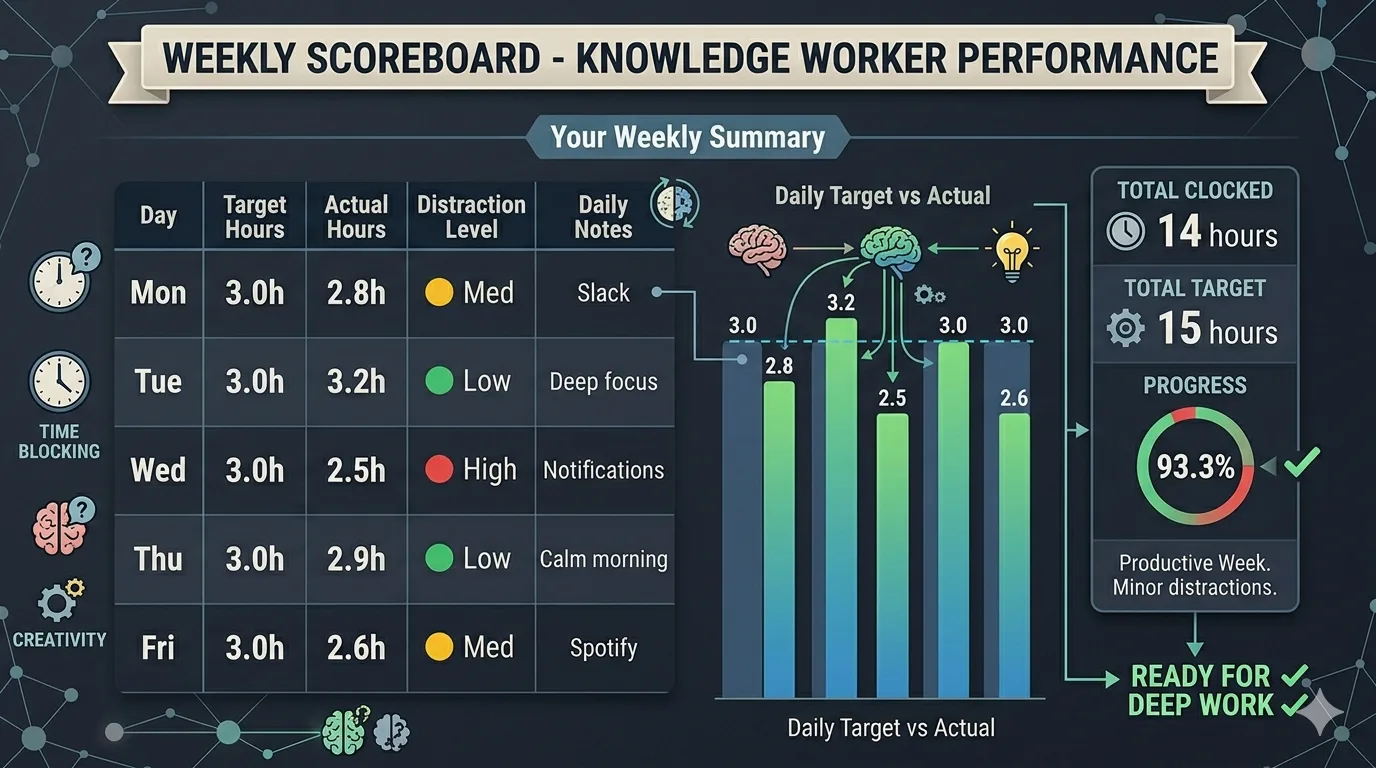
| Day | Target Hours | Actual Hours | Distraction Level (Low/Med/High) |
|---|---|---|---|
| Monday | 3.0 hrs | 3.5 hrs | Low (Phone in locker) |
| Tuesday | 3.0 hrs | 2.0 hrs | High (Ad-hoc sync calls) |
| Wednesday | 3.0 hrs | 3.0 hrs | Low (Early morning start) |
| Thursday | 3.0 hrs | 1.5 hrs | Med (Felt cognitive fatigue) |
| Friday | 3.0 hrs | 4.0 hrs | Low (No-meeting Friday policy) |
Total Clocked: 14.0 Hours | Target: 15.0 Hours | Progress: 93.3%
CHAPTER 9: DEEP REST & SHUTDOWN RITUALS (RECHARGING THE COGNITIVE BATTERY)
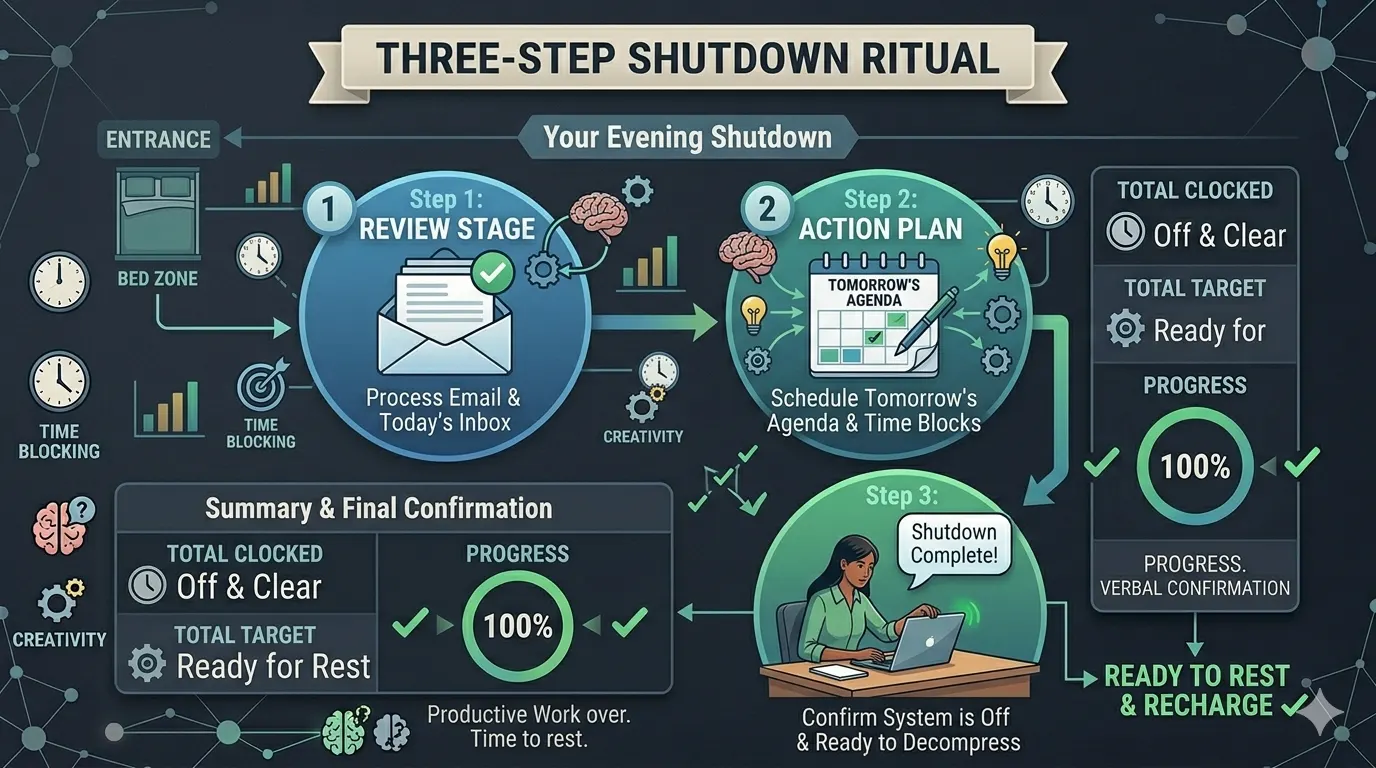
Focus करने के लिए जितनी ज़रूरत focus mode में रहने की है, उतनी ही ज़रूरत focus से पूरी तरह बाहर निकलने की भी है। Cal Newport के deep work framework का एक highly neglected लेकिन super important concept है: The Shutdown Ritual।
The Review Stage
- Check today’s inbox
- Ensure no critical fires
The Action Plan
- Update tomorrow’s agenda
- Clear mental workspace
The Verbal Command
- Physically shut laptop
- Say “Shutdown Complete”
The Neuroscience of Downtime: Why Rest is Non-Negotiable
आपका brain muscle की तरह है। अगर आप gym में लगातार बिना rest लिए heavy weights lift करते रहेंगे, तो आपकी muscles grow करने के बजाय tear हो जाएँगी। Brain के साथ भी बिलकुल ऐसा ही होता है।
The Cognitive Battery:
Deep work के दौरान आपका Prefrontal Cortex बहुत heavy energy consume करता है। अगर आप रात को सोते वक़्त या शाम के बाद भी काम के बारे में सोचते रहते हैं, या notifications scroll करते रहते हैं, तो आपके PFC को rest नहीं मिलता। इससे अगले दिन आपका baseline focus level drastically गिर जाता है।
The Default Mode Network (DMN):
Neuroscience में एक neural network होता है जिसे DMN कहते हैं। जब आप consciously किसी task पर focus नहीं कर रहे होते हैं (जैसे शांति से walk पर जाना, nature को देखना, या खाना बनाना), तब DMN active होता है। DMN हमारे memories को organize करने, creative connections बनाने, और concepts को synthesize करने में help करता है। इसीलिए, research कहती है कि अक्सर सबसे बड़े solutions computer desk पर नहीं, बल्कि एक शांत walk के दौरान दिमाग़ में आते हैं।
Cal Newport’s “Shutdown Complete” Ritual
अगर आप दिन भर काम करने के बाद भी रात को सोते वक़्त tension में रहते हैं कि “क्या मैंने आज सब कुछ ठीक से किया? कल का क्या plan है?”, तो इसका मतलब है कि आपके brain ने काम को mentally close नहीं किया है।
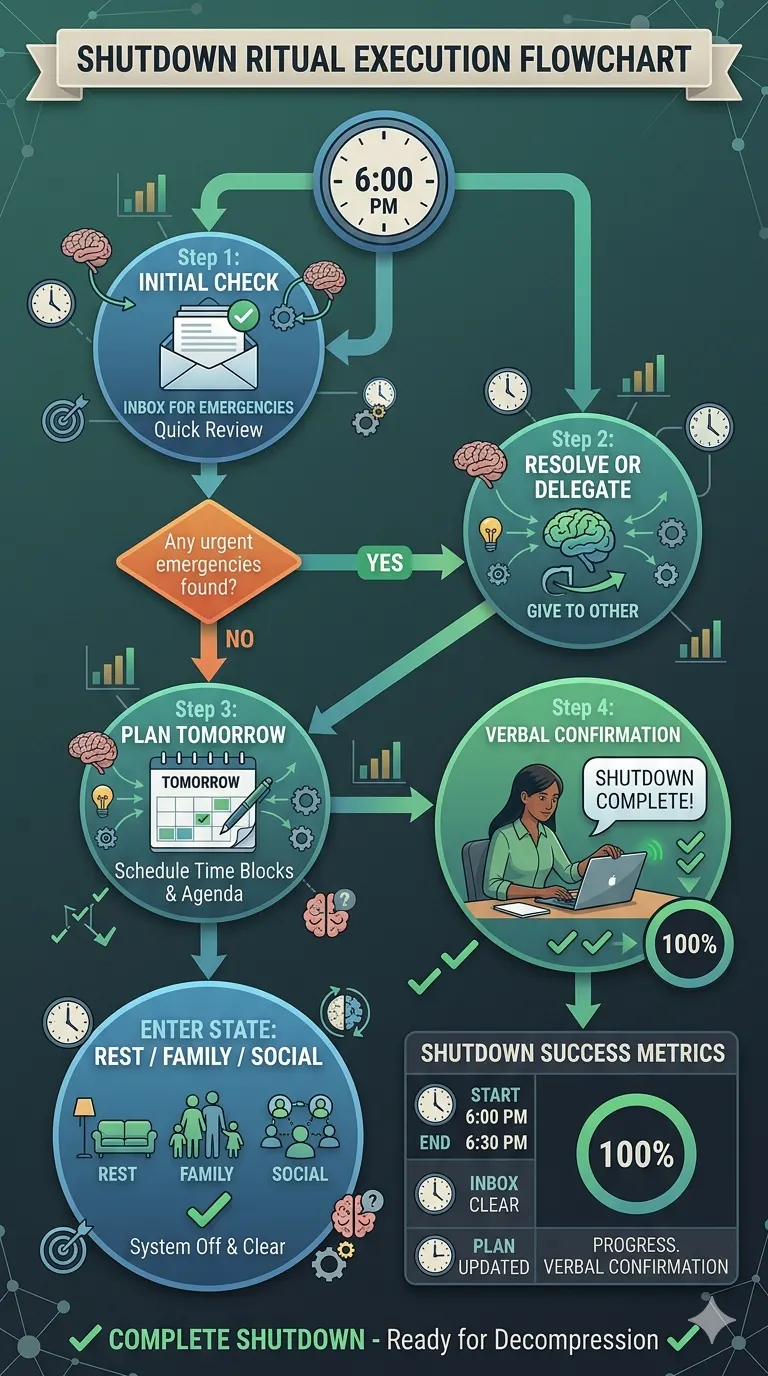
इस problem को solve करने के लिए Cal Newport एक structured Shutdown Ritual follow करते हैं:
Step 1: The Review Stage (5-10 Minutes before finishing work)
- अपना email check करें ताकि आप sure हो सकें कि कोई urgent fire (emergency issue) तो नहीं बची है जिसे अभी address करना ज़रूरी है।
- अपने daily task list को update करें। अगर कोई अधूरा काम रह गया है, तो उसे कल के dashboard में transfer कर दें।
Step 2: The Action Plan for Tomorrow
कल सुबह आपको आते ही किस core task पर काम करना है, उसे पहले से decide करके लिख दें। कल सुबह आकर आपको यह सोचने में दिमाग़ ख़र्च नहीं करना चाहिए कि “आज मैं क्या करूँ?”
Step 3: The Verbal Command
अपने system को shut down करें, notebooks close करें, और physically अपनी desk छोड़ते वक़्त एक verbal phrase बोलें: “Shutdown Complete.”
यह सुनने में थोड़ा बच्चों जैसा लगता है, लेकिन psychology में इसका बहुत बड़ा impact है। यह phrase आपके brain को एक clear cognitive cue देता है कि “अब काम पूरी तरह बंद हो चुका है, अब अगले 12 घंटे तक काम की चिंता करना बिलकुल बेकार है।”
Professional Boundaries in toxic “Hustle Cultures”
बहुत से corporate workers या startup employees कहते हैं: “Sir, हमारे office में तो late-night emails आते हैं, अगर हम shut down कर देंगे तो हमारी rating ख़राब हो जाएगी।”
इस genuine structural issue को solve करने के practical approaches:
- Manage Expectations Early: अपने teammates और manager को पहले से inform करें: “Sir/Ma’am, मैं शाम को 7:30 बजे के बाद systems से disconnect करता हूँ। अगर कोई absolute production critical emergency हो, तभी आप मुझे directly call या SMS कर सकते हैं।” जब आप इस boundary को regularly respect करते हैं, तो दूसरे लोग भी इसको recognize करते हैं।
- No Work Apps on Personal Phone: अपने personal phone से Slack, Teams, या professional email client को remove कर दें। अगर ज़रूरत हो, तो सिर्फ़ work-hours में ही laptop से access करें। इससे attention residue आपके leisure time में enter नहीं करेगा।
(Any critical blockages?)
CHAPTER 10: COMMON OBSTACLES & HOW TO OVERCOME THEM
Deep Work का रास्ता बिलकुल सीधा नहीं होता। जब आप इस system को real life में apply करने की कोशिश करेंगे, तो आपको कई practical hurdles और mental resistance का सामना करना पड़ेगा। चलिए उन major obstacles को देखते हैं जो अक्सर professionals और students को face करनी पड़ती हैं और उन्हें systematically solve करते हैं।
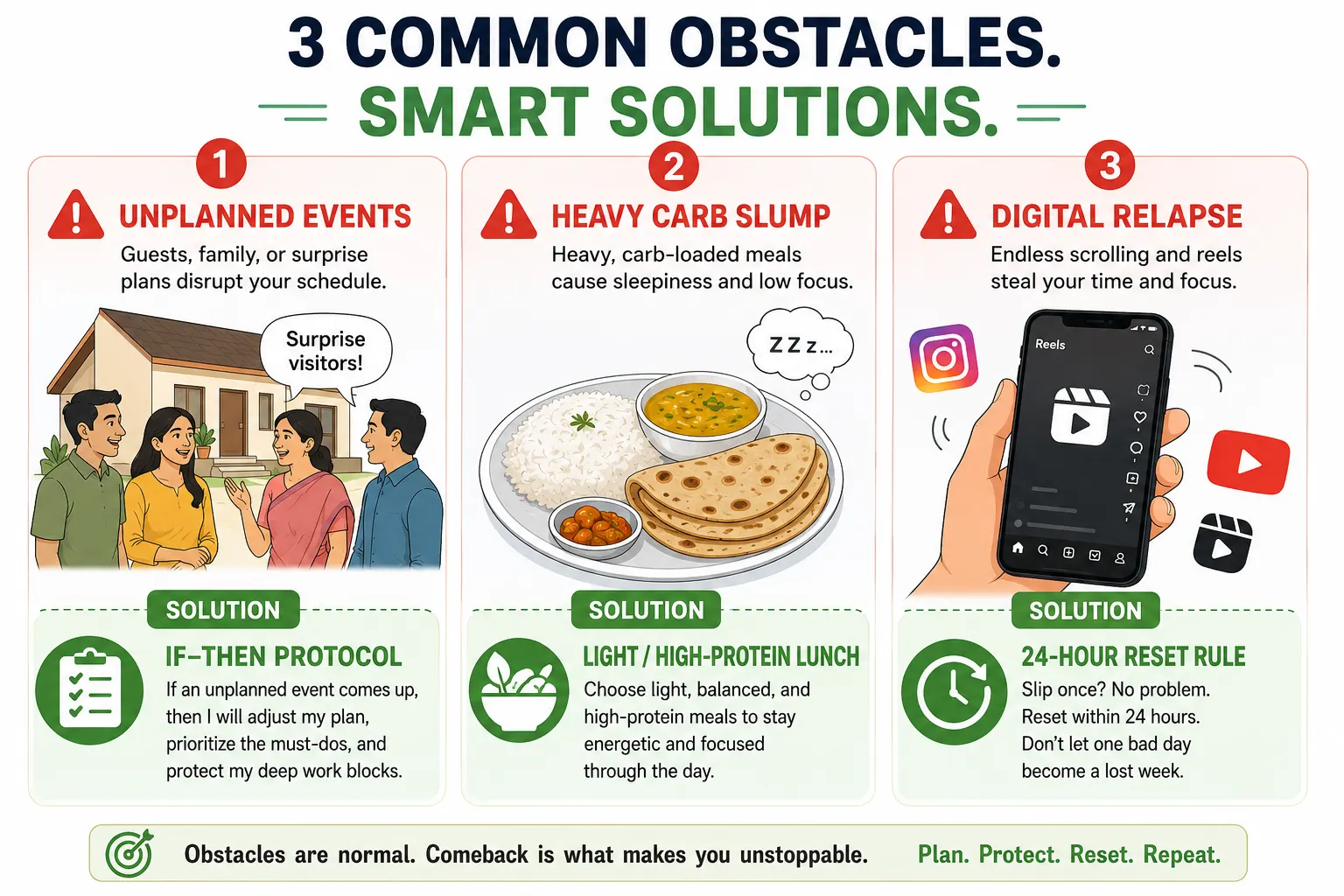
Unplanned Events
- Create “If-Then” rules
- Protect the core hours
Heavy Carb Slumps
- Light/High-protein lunch
- Shift deep slot to dawn
Digital Relapses
- Re-install blockers
- Reset weekly scoreboard
Obstacle #1: The Indian “Ghar Pe Guest Aaye Hain” Scenario
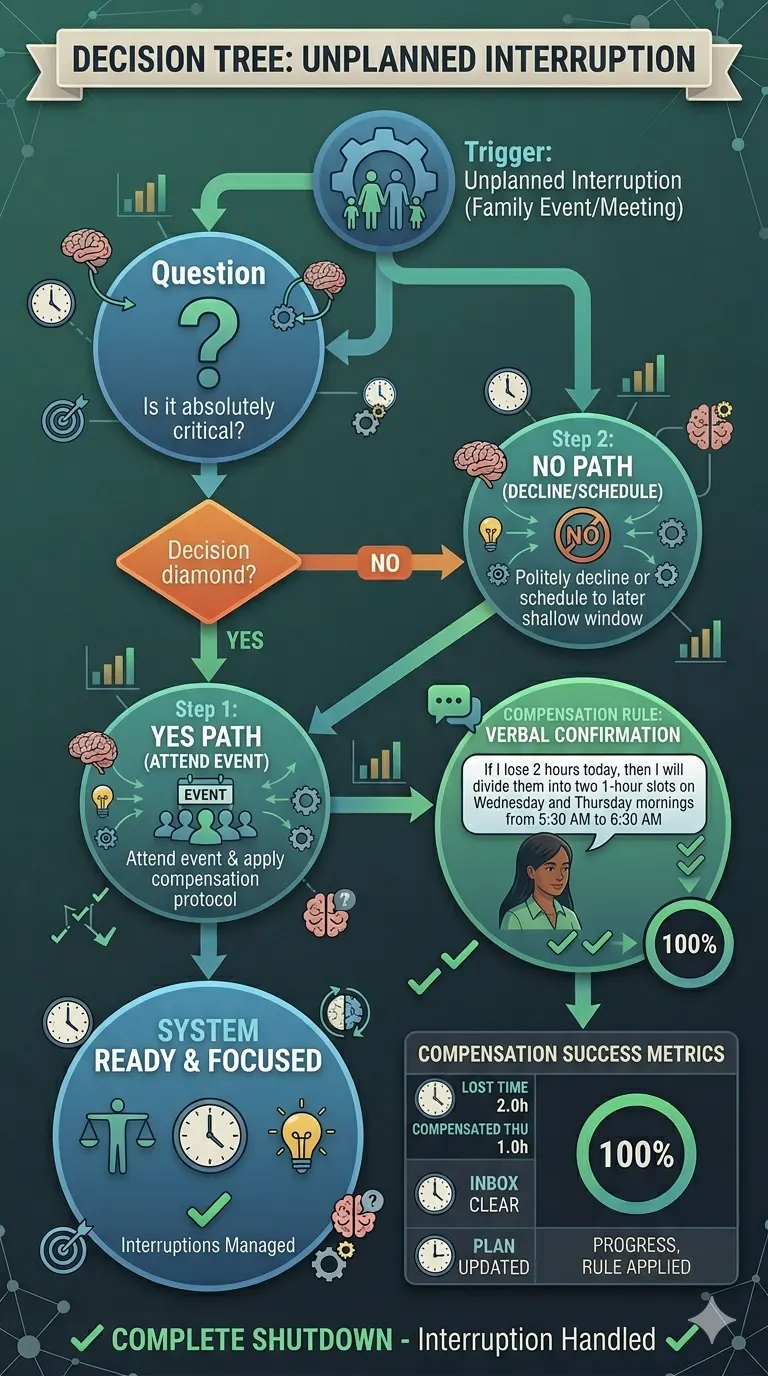
Indian households में unplanned social events, relatives का आना, या family gatherings बहुत common हैं। ऐसे में अगर आपने 3 घंटे का rigid deep work session schedule किया है, तो उसके disturb होने के chances बहुत high होते हैं।
The Solution: The “If-Then” Protocol (Conditional Planning)
आपको हर ऐसी situation के लिए पहले से एक contingency plan (back-up plan) तैयार रखना चाहिए। इसको “If-Then” planning कहते हैं।
Example:
IF मेरे घर पे unexpected guests आते हैं और मेरा सुबह का core session miss हो जाता है, THEN मैं उस दिन रात को 9:30 PM से 11:30 PM तक अपना target sheet/code complete करूँगा, और बचे हुए 1 घंटे को Saturday को compensate करूँगा।
इस तरह के pre-decided decisions लेने से आपका brain panic नहीं करता और आप “guilt spiral” (अपने आप को दोष देना) से बच जाते हैं।
Obstacle #2: The Post-Lunch Brain Fog (Heavy Carb Slump)
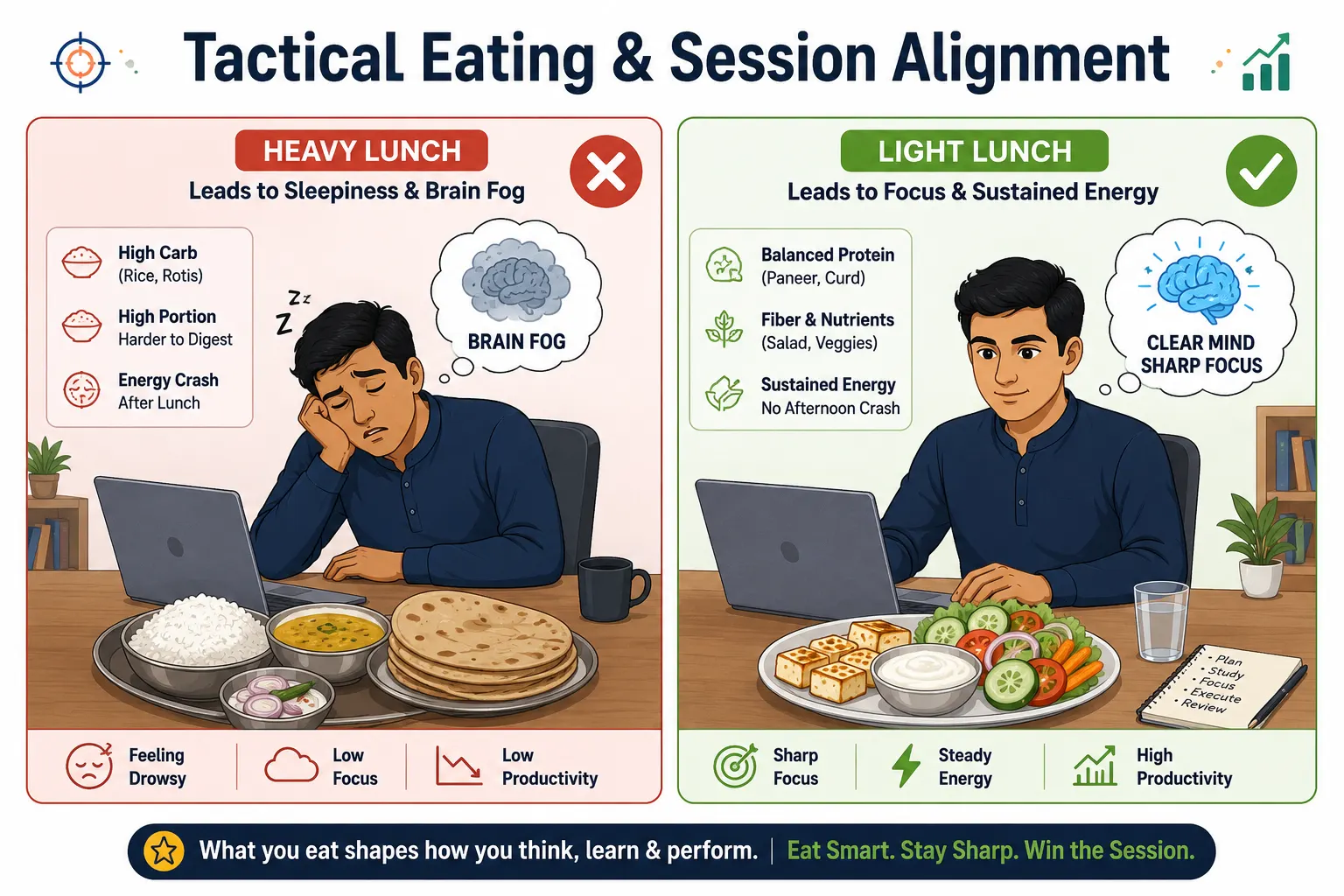
हमारे Indian diet में lunch के दौरान carbs (heavy rice, rotis, dal) का consumption बहुत ज़्यादा होता है। इससे blood circulation digestive system की तरफ़ divert हो जाता है और हमें heavy lethargy और sleepy feel होने लगता है। इस state में deep focus करना लगभग नामुमकिन हो जाता है।
The Solution: Tactical Eating & Session Alignment
- Light/Low-GI Lunches: अगर आपको दोपहर के बाद (e.g., 2:00 PM – 4:00 PM) deep work करना है, तो lunch में complex carbs और high protein consume करें (जैसे paneer, salads, dal, curd) और refined rice या heavy rotis को avoid करें।
- Align with Your Circadian Rhythm: अगर heavy lunch avoid करना possible नहीं है, तो दोपहर के time को shallow work (meetings, email sorting, filing) के लिए reserve रखें। अपने deep work blocks को सिर्फ़ early morning या late evening slots में shift कर दें जब आपकी digestive energy stable हो।
Obstacle #3: The “Digital Relapse” (Failing After a Few Days)
ऐसा बहुत बार होगा कि आप 4-5 दिन तक बहुत discipline के साथ deep work करेंगे, लेकिन फिर अचानक कोई छोटा सा trigger (जैसे कोई trending news या video link) आपकी continuous chain को break कर देगा और आप लगातार 2-3 घंटे reel scrolling में बिता देंगे। इसके बाद बहुत से लोग disappoint होकर पूरा system ही छोड़ देते हैं।
The Solution: The 24-Hour Reset Rule
आपको यह समझना होगा कि relapse होना human nature है। जब आपका focus flow break हो, तो खुद पर गुस्सा करने के बजाय एक 24-Hour Reset apply करें।
Reset का मतलब है: Scoreboard को clear करें, अपने block list (Cold Turkey) को फिर से active करें, और अगले दिन बिना किसी guilt के सुबह के session में बैठ जाएँ। Focus एक muscle है, और एक-दो दिन gap होने से muscle vanish नहीं होती।
CHAPTER 11: LONG-TERM SUSTENANCE & FOCUS MASTERY
Deep work कोई short-term boot camp नहीं है जिसे आप एक महीने करके छोड़ दें। यह एक lifestyle choice है जो आपको आपके domain में एक irreplaceable professional बनाती है। Focus capacity को महीनों और सालों तक sustain कैसे रखा जाए, चलिए इसका science समझते हैं। अगर आप deep focus के इस continuous transition को और गहराई से समझना चाहते हैं, तो Deep Work book को ज़रूर पढ़ें।
Scaling Focus Capacity from 1 Hour to 4 Hours
Human brain की maximum capacity एक दिन में लगभग 4 घंटे of pure deep work की होती है (experts के लिए भी)। अगर कोई कहता है कि वह दिन भर में 10-12 घंटे deep work करता है, तो वह या तो झूठ बोल रहा है या फिर वह shallow work को deep work समझ रहा है।
आपको अपनी capacity को step-by-step scale करना होगा:
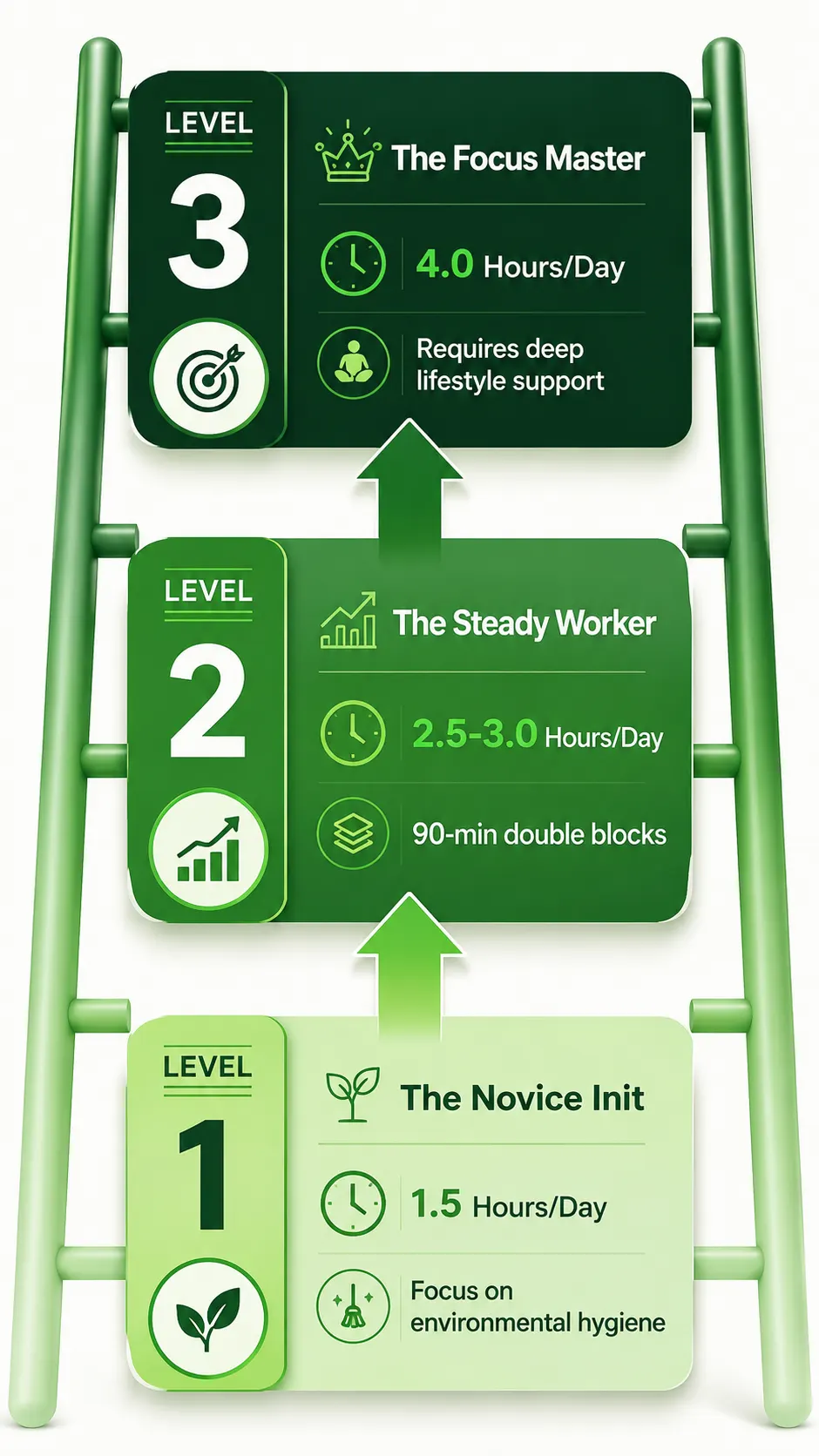
- Month 1 (The Foundation Stage): Target सिर्फ़ 1.5 Hours daily deep work का होना चाहिए। इस stage में आपका focus सिर्फ़ distractions को block करने और एक clean setup बनाने पर होना चाहिए।
- Month 2-3 (The Scaling Stage): जब आप बिना किसी friction के 1.5 घंटे handle करने लगें, तो उसे बढ़ा कर 2.5 से 3 घंटे करें। इस stage में आप 90-minute के दो blocks create कर सकते हैं (e.g., एक सुबह और एक शाम को)।
- Month 4 and Beyond (The Mastery Stage): अब आप peak capacity यानी 4 घंटे तक touch कर सकते हैं। इस level पर आपका deep output किसी भी average worker के weekly output के बराबर हो जाता है।
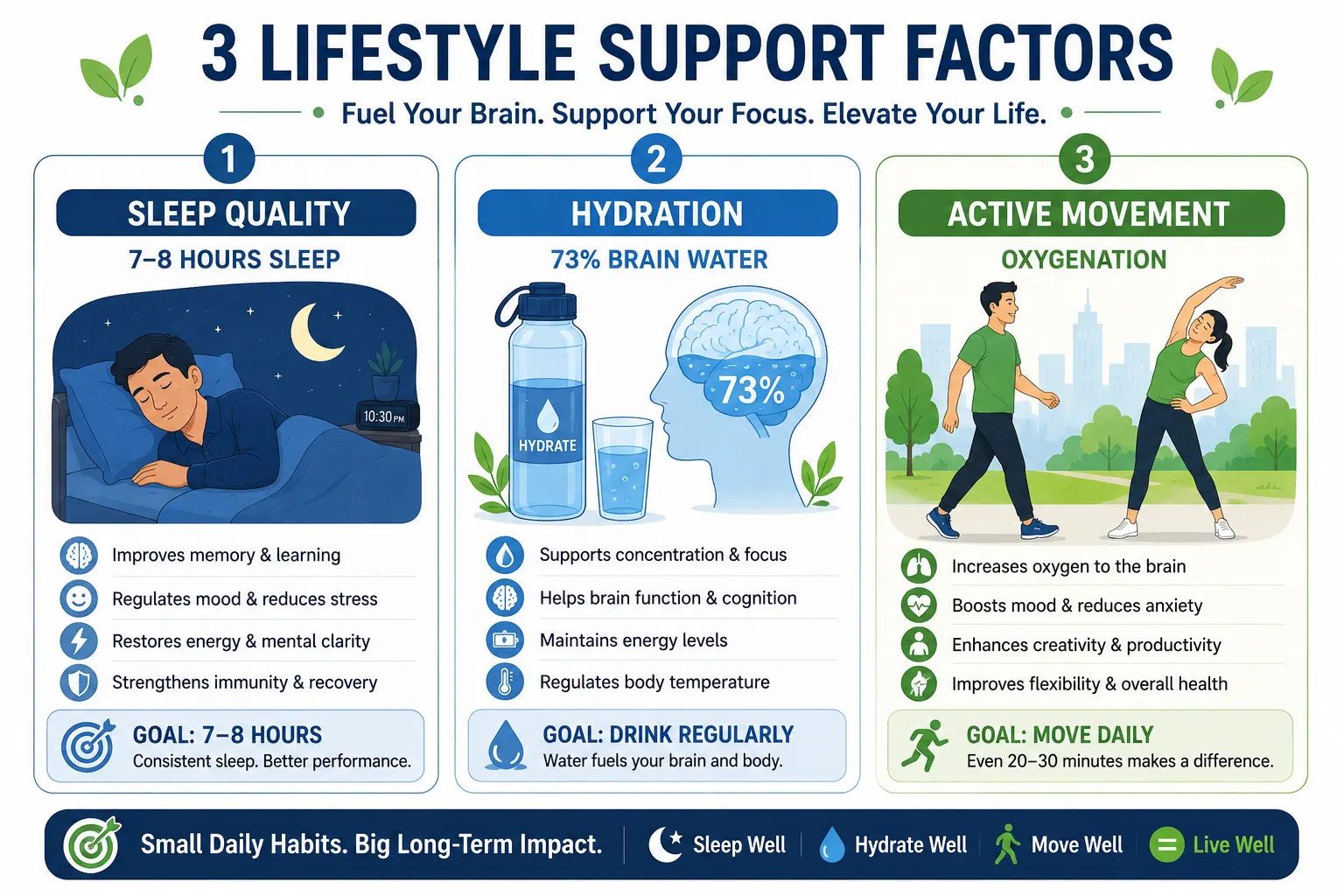
Key Lifestyle Support Factors
आपका brain isolated organ नहीं है; इसका performance आपकी body की overall health पर depend करता है। Focus maintain करने के लिए तीन factors सबसे critical हैं:
- Sleep Quality (PFC’s Fuel): Sleep deprivation (कम सोना) direct आपके prefrontal cortex के cognitive control को block करता है। अगर आप daily 7-8 घंटे की solid sleep नहीं ले रहे हैं, तो आपके brain के neurons efficient signaling नहीं कर पाएँगे, और आपकी willpower बहुत जल्दी deplete हो जाएगी।
- Hydration (पानी की कमी का Impact): Brain लगभग 73% पानी से बना है। हल्का सा dehydration (पानी की कमी) भी आपकी attention span, analytical processing capability, और short-term memory को negative तरीक़े से affect करता है। Deep session के दौरान हर 30 minutes में पानी की एक sip ज़रूर लें।
- Active Movement (Oxygenation): अगर आप लगातार 3 घंटे desk पर बैठे रहेंगे, तो body में circulation block हो जाता है और दिमाग़ शांत होने लगता है। अपने breaks के दौरान 5-minute की active walk करें, deep breaths लें, या थोड़ी stretches करें ताकि fresh oxygenated blood दोबारा brain तक पहुँच सके।
THE NOVICE INIT → 1.5 Hours/Day
Focuses on environmental hygiene, removing simple digital notifications, and starting consistent blocks.
THE STEADY WORKER → 2.5 – 3.0 Hours/Day
Executes 90-minute double blocks with intermediate focus stamina, tracking weekly deep metrics.
THE FOCUS MASTER → 4.0 Hours/Day
Reaches absolute peak biological capacity. Supported by premium hydration, sleep hygiene, and solid environmental cues.
CHAPTER 12: THE 30-DAY DEEP WORK CHALLENGE BLUEPRINT
आपके इस master guide के concepts को direct action में बदलने के लिए हमने एक simplified, highly structured 30-Day Step-by-Step Challenge design किया है। इस roadmap को follow करके आप एक gradual transition complete कर सकते हैं।
Week-by-Week Implementation Plan
Digital and Physical Environmental Hygiene (Clean-Up Week)
Day 1-3: अपने laptop पर Cold Turkey blocker install करें और browser में एक clean, login-free profile setup करें।
Day 4-5: अपने mobile से Instagram, LinkedIn, और बाक़ी heavy distraction apps को uninstall करें। Non-emergency notification alerts हमेशा के लिए switch off कर दें।
Day 6-7: अपने physical study/work area को clean करें। Desk से फ़ुज़ूल papers और wires हटा कर उसे minimal बनाएँ।
Establishing the Anchor Block (The Habit Week)
Day 8-12: अपने daily routine में एक absolute anchor block decide करें (recommended: 6:00 AM – 7:30 AM)। इस 1.5-hour के block में phone बिलकुल check नहीं करना है।
Day 13-14: हर session से पहले अपना Environmental Cue Routine follow करें (पानी की bottle, notepad रेडी रखना, quiet background sound select करना)।
Clocking and Measuring (The Tracking Week)
Day 15-21: अपने study desk के सामने physical wall calendar check list लगाएँ। हर उस दिन जब आप distraction-free targeted slot execute करें, calendar पर cross ‘X’ लगाएँ।
Sunday Audit: हफ़्ते के आख़िर में calculate करें कि पूरे week में कितने deep hours clock हुए।
Progressive Overload & Optimization (The Mastery Week)
Day 22-28: अपने target block को 1.5 घंटे से बढ़ा कर 2 घंटे या 2.5 घंटे (90-minute slot + 10-minute break + 30-minute slot) पर ले जाएँ।
Day 29-30: Shutdown ritual start करें। Daily काम ख़त्म होने पर “Shutdown Complete” phrase बोलें और complete digital disconnect maintain करें।
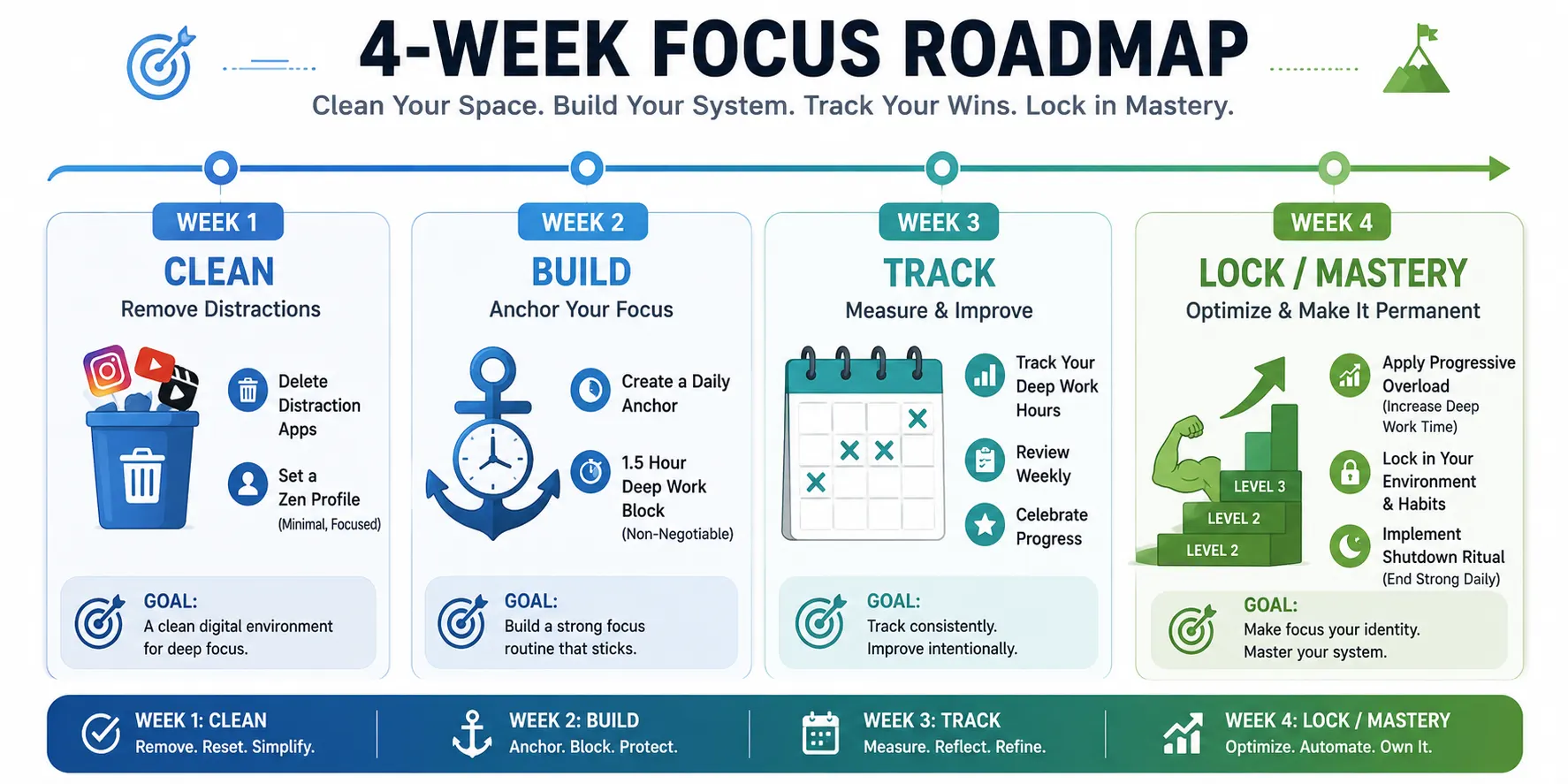
Actionable Roadmap Checklist for Beginners
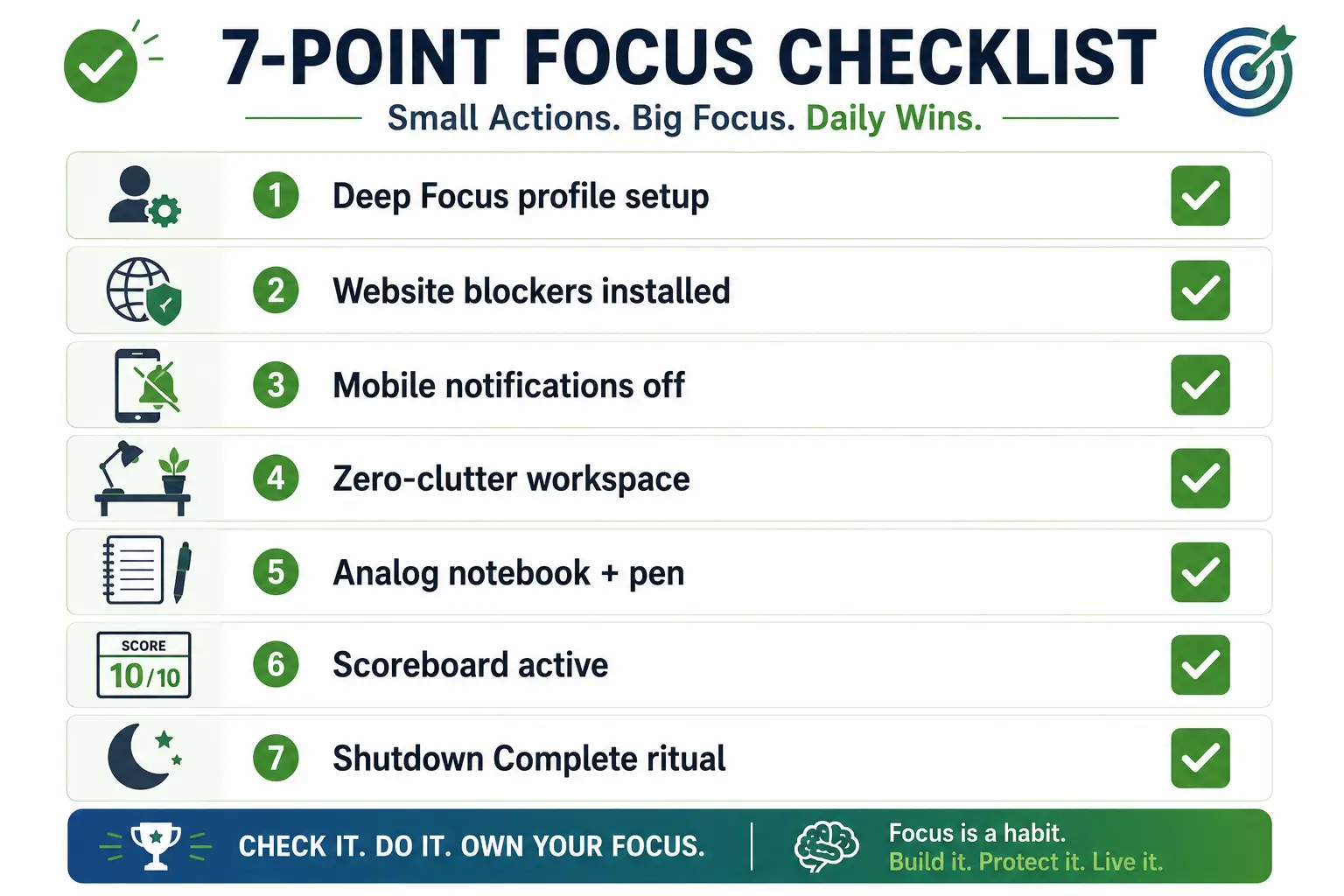
CONCLUSION: THE QUIET SUPERPOWER OF HUMAN FOCUS
इस 21st century में deep focus एक normal skill नहीं है। यह एक ऐसी critical superpower है जो हमारे career, education और mental peace को revolutionize करने की capacity रखती है।
यह journey शुरुआत में शायद uncomfortable या थोड़ी boring लग सकती है क्योंकि हमारे brain को continuous stimulation (fast rewards) की आदत पड़ चुकी है। लेकिन जैसे-जैसे आप consistent रहते हैं, myelin layers strong होते हैं, attention residue कम होता है, और focus करना आसान और rewarding होने लगता है।
आपको हर दिन एक flawless execution नहीं करना है; बस हर दिन थोड़ा और बेहतर focused effort लगाना है। अपने tools को select कीजिए, distractions को reject कीजिए, shutdown rituals follow कीजिए, और धीरे-धीरे अपनी biological capability के top tier performance level को महसूस कीजिए।
Best of luck on your Deep Work journey!
निष्कर्ष और अगला कदम (Conclusion & Next Steps)
Deep Work सिर्फ़ एक किताब या productivity system नहीं है, बल्कि यह आज के hyper-distracted युग में एक महत्वपूर्ण lifestyle choice है। हम आशा करते हैं कि इस guide में दिए गए practical steps और frameworks आपकी daily life में focus और productivity को बेहतर बनाने में थोड़ी मदद करेंगे। याद रखें, बदलाव रातों-रात नहीं आता, लेकिन हर दिन लिया गया एक छोटा सा step आपके career और personal growth को एक नया आयाम दे सकता है।
📖 Deep Work को विस्तार से समझें:
अगर आप Cal Newport के सिद्धांतों, scientific research और focus state की गहराइयों को विस्तार से पढ़ना चाहते हैं, तो अभी Amazon से Deep Work Book मँगा सकते हैं।
🌐 Digital Infrastructure Setup:
यदि आप इस 30-Day challenge के दौरान अपना digital portfolio, website या blog deploy कर रहे हैं, तो technical glitches और slow loading की distractions से बचें। एक solid और high-performance environment के लिए आप Hostinger Business Hosting का इस्तेमाल कर सकते हैं।
💡 हमारी अन्य लोकप्रिय Book Summaries (Suggested Readings):
- अपनी daily habits को बदलने और बेहतरीन routine बनाने के लिए: Atomic Habits Book Summary in Hindi
- Procrastination को खत्म करने और आज से काम शुरू करने के लिए: Do It Today Summary in Hindi
- सुबह की शुरुआत productivity के साथ करने का रहस्य जानें: The 5 AM Club Summary in Hindi
- consistency की ताकत से बड़े लक्ष्यों को हासिल करने के लिए: The Compound Effect Summary in Hindi
- सफल लोगों की सात बेहद महत्वपूर्ण आदतों को समझने के लिए: The 7 Habits of Highly Effective People Book Summary in Hindi
- Naval Ravikant के जीवन, विचारों और wealth creation की रणनीतियों के लिए: The Almanack of Naval Ravikant Summary in Hindi
FAQs
(अक्सर पूछे जाने वाले सवाल)
What is the concept of deep work?
Deep work is the skill of immersing yourself in cognitively challenging tasks for prolonged durations, free from disruptions. This focused state enables the creation of substantial and valuable work, a feat that would be challenging, if not unattainable, amidst continual interruptions or divided attention.
What are the 4 rules of deep work?
The 4 rules of deep work are as follows-
1. Work deeply: Schedule non-negotiable blocks for uninterrupted focus.
2. Embrace boredom: Allow your brain to wander and create without distraction.
3. Quit social media: Minimize attention-fragmenting platforms.
4. Drain the shallows: Prioritize high-value tasks, minimize shallow ones.
What is the book deep work about?
Deep Work: Rules for Focused Success in a Distracted World by Cal Newport is a guide to cultivating “the ability to perform cognitive demanding tasks without distraction.” In essence, it’s about mastering focus in our digital age to achieve greater productivity, creativity, and satisfaction.
Is deep work a skill?
Whether deep work is a skill or not depends on how you look at it. Here are two perspectives:
1. Deep work as a skill:
It requires learning and practice to develop the ability to focus intensely for extended periods without distraction.
It involves mastering techniques like scheduling, minimizing distractions, and maintaining concentration.
Just like any skill, improving your deep work ability takes effort and repetition.
The benefits of being “deep worker” – increased productivity, creativity, and problem-solving – are valuable in many aspects of life.
2. Deep work as a mindset:
It’s more about prioritizing focused attention and meaningful work over constant distractions and shallow tasks.
It requires a conscious shift in approach and lifestyle choices to minimize distractions and carve out time for deep work.
While not everyone may need to be a “deep work master,” adopting the principles of focused attention and minimizing distractions can benefit anyone.
Ultimately, whether you consider deep work a skill or a mindset, it’s a powerful tool for achieving focused work, enhancing creativity, and producing high-quality results in the face of today’s constant distractions.
How do I start deep work?
Initiating deep work is more straightforward than you might anticipate! Follow this concise guide:
1. Identify your deep tasks: Opt for activities that require concentrated attention and creativity, such as writing, problem-solving, or intricate analysis.
2. Schedule deep work sessions: Allocate dedicated time slots in your calendar that are non-negotiable, preferably during your peak cognitive hours. Begin with shorter durations, like 15-30 minutes, and progressively extend as you adapt.
3. Create a distraction-free zone: Locate a quiet environment, reduce notifications, and mute your phone. Consider using noise-canceling headphones or white noise machines to enhance focus.
4. Embrace “boredom”: Resist the temptation to constantly stimulate your mind. Allow moments of silence and unstructured time to encourage your brain to wander, fostering creativity.
5. Start small and celebrate progress: Avoid overwhelming yourself. Commence with manageable sessions and incrementally establish consistency. Monitor your advancements and reward yourself for completing deep work intervals.
Must Read Book Summaries
(अन्य बुक समरीज़)
- As a Man Thinketh Summary in Hindi: 7 Life-changing Insights
- (James Clear) Atomic Habits Book Summary in Hindi: The 1% Solution to a Better Life
- The Power of Your Subconscious Mind Summary in Hindi- 20 Mind-Blowing Ways to Harness the Power of Your Subconscious Mind.
- The Power of Positive Thinking Summary in Hindi-16 Powerful Ways To Transform Your Mindset
- Do It Today Summary in Hindi-सफलता के 6 राज़
- Think And Grow Rich Summary In Hindi | सोचो और अमीर बनो
- Ikigai Book Summary in Hindi- Ikigai ढूंढने के 4 secret तरीके
- The Richest Man In Babylon Summary In Hindi- 7 Secrets to Become Rich
- The Secret Book Summary in Hindi- 3 अदभुत रहस्य मनचाही चीज़ पाने के
- The 7 Habits Of Highly Effective People Book Summary in Hindi (Complete)
- The Psychology of Money Summary in Hindi (Morgan Housel): 10 Key Money-Making Principles
- The Intelligent Investor Book Summary in Hindi: The Definitive Guide to Value Investing in 2023
- The Millionaire Fastlane Book Summary In Hindi: The Ultimate 10-Step Blueprint
- Chanakya Neeti Book Summary in Hindi-7 Secrets to Success
- The Alchemist Book Summary in Hindi: 7 Powerful Insights
- Attitude Is Everything Book Summary In Hindi: 5 Life-Changing Principles
- (Vatsyasyana)Kamasutra Book Summary in Hindi: 10 Secrets to a Great Sex Life
- (Peter Theil)Zero To One Book Summary in Hindi- 10 Lessons on the Power of Innovation to Create Wealth
- Sapiens Book Summary in Hindi- मानव जाति का संक्षिप्त इतिहास
- (Daniel Kahneman)Thinking Fast and Slow Summary in Hindi- 5 Powerful Insights.
- The Courage To Be Disliked Summary In Hindi- 5 Key Takeaways
- The Compound Effect Summary in Hindi: How to Achieve Your Goals with 1% Daily Progress
- The Almanack of Naval Ravikant Summary in Hindi: 4 Ways to Empower Your Life
- The Power of Now Summary in Hindi: 10 दिनों में तनाव कैसे दूर करें
- The Subtle Art of Not Giving a F*ck Summary in Hindi: 10 Powerful Lessons
- The 5 AM Club Summary in Hindi: 10 Powerful Habits for Success
- The Total Money Makeover Summary in Hindi: The 7 Baby Steps to Financial Freedom
- Men Are From Mars Women Are From Venus Summary in Hindi: The 4 Key Differences Between Men and Women
1 thought on “Deep Work Summary In Hindi: 2024 के लिए 4 शक्तिशाली नियम”